Poorest Countries In Africa

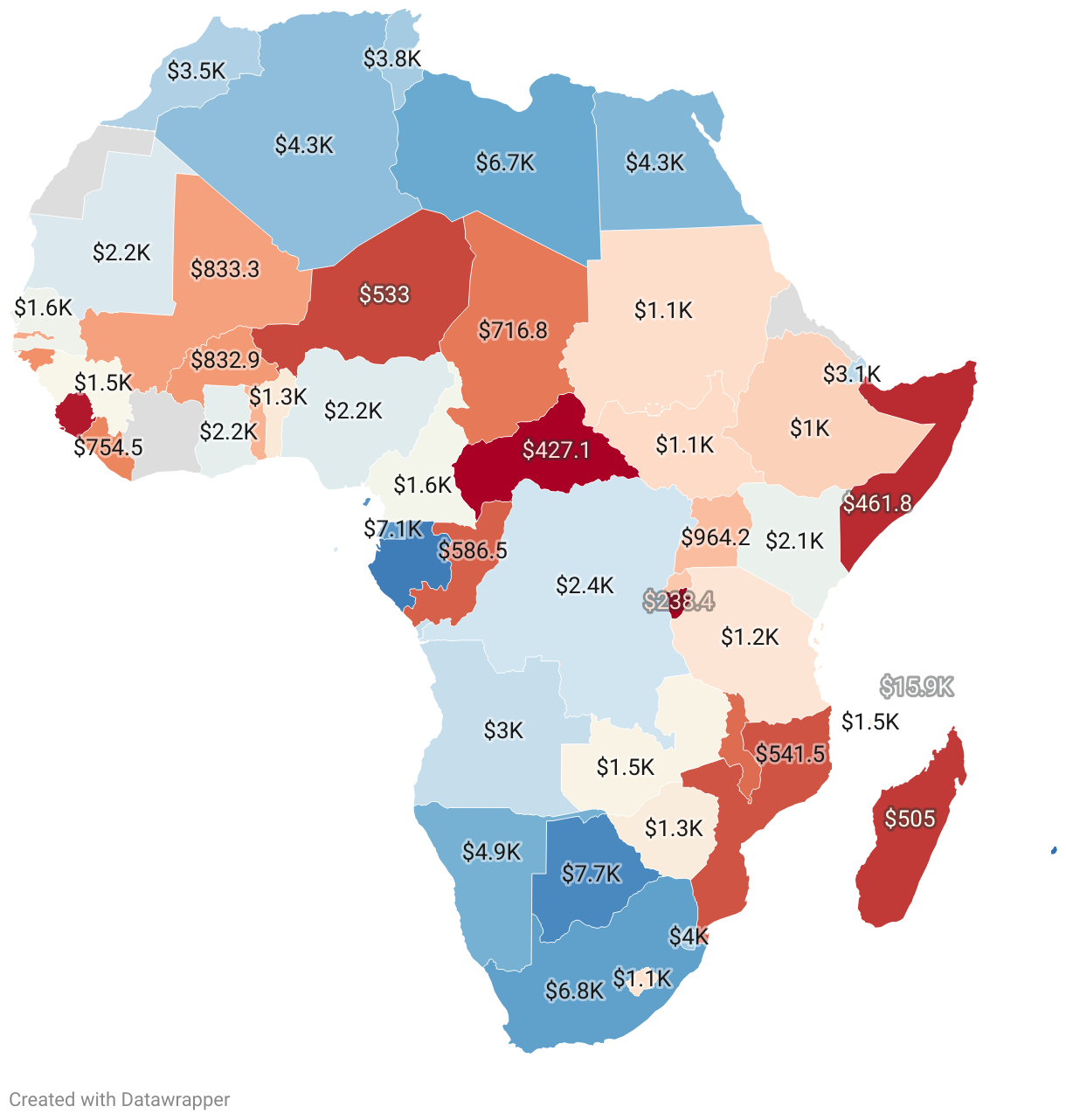
1 |  | Burundi | 238.4 |
2 |  | Central African Republic | 427.1 |
3 |  | Sierra Leone | 461.4 |
4 |  | Somalia | 461.8 |
5 |  | Madagascar | 505 |
6 |  | Niger | 533 |
7 |  | Mozambique | 541.5 |
8 |  | Republic of the Congo | 586.5 |
9 |  | Malawi | 645.2 |
10 |  | Chad | 716.8 |
11 |  | Liberia | 754.5 |
12 |  | Guinea Bissau | 775.8 |
13 |  | Burkina Faso | 832.9 |
14 |  | Mali | 833.3 |
15 |  | Gambia | 840 |
16 |  | Togo | 918.4 |
17 |  | Uganda | 964.2 |
18 |  | Rwanda | 966.3 |
19 |  | Ethiopia | 1,027.6 |
20 |  | South Sudan | 1,071.8 |
21 |  | Sudan | 1,102.1 |
22 |  | Lesotho | 1,107.4 |
23 |  | Tanzania | 1,192.4 |
24 |  | Zimbabwe | 1,267 |
25 |  | Benin | 1,303.2 |
26 |  | Comoros | 1,484.9 |
27 |  | Zambia | 1,487.9 |
28 |  | Guinea | 1,531.7 |
29 |  | Cameroon | 1,588.5 |
30 |  | Senegal | 1,598.7 |
31 |  | Kenya | 2,099.3 |
32 |  | Ghana | 2,175.9 |
33 |  | Nigeria | 2,184.4 |
34 |  | Mauritania | 2,190.7 |
35 |  | Sao Tome and Principe | 2,404.3 |
36 |  | DR Congo | 2,448 |
37 |  | Angola | 2,998.5 |
38 |  | Djibouti | 3,136.1 |
39 |  | Morocco | 3,527.9 |
40 |  | Tunisia | 3,776.7 |
41 |  | Eswatini | 4,039.5 |
42 |  | Algeria | 4,273.9 |
43 |  | Egypt | 4,295.4 |
44 |  | Namibia | 4,911.3 |
45 |  | Libya | 6,716.1 |
46 |  | South Africa | 6,776.5 |
47 |  | Equatorial Guinea | 7,053.5 |
48 |  | Botswana | 7,737.7 |
49 |  | Gabon | 8,820.3 |
50 |  | Mauritius | 10,216.3 |
51 |  | Seychelles | 15,874.5 |
Last updated June 25, 2026
Key Takeaways
- Burundi has the lowest income per person in Africa, about $238 a year, the only country in the dataset below $250.
- Seychelles sits at the top at $15,874 a person, roughly 67 times Burundi's figure.
- The typical country earns near $1,485 a year, but 18 of the 51 countries fall below $1,000 a person.
- The countries on the floor share structural conditions, not a single cause: conflict or post-conflict histories and, in seven of the poorest fifteen, no coastline.
All Metrics
| Region ↕ | Gross National Income per Capita↕ | HDI 2023↕ |
|---|---|---|
| Seychelles | $15,874.5 | |
| Mauritius | $10,216.3 | |
| Gabon | $8,820.3 | |
| Botswana | $7,737.7 | |
| Equatorial Guinea | $7,053.5 | |
| South Africa | $6,776.5 | |
| Libya | $6,716.1 | |
| Namibia | $4,911.3 | |
| Egypt | $4,295.4 | |
| Algeria | $4,273.9 | |
| Eswatini | $4,039.5 | |
| Tunisia | $3,776.7 | |
| Morocco | $3,527.9 | |
| Djibouti | $3,136.1 | |
| Angola | $2,998.5 | |
| DR Congo | $2,448.0 | |
| Sao Tome and Principe | $2,404.3 | |
| Mauritania | $2,190.7 | |
| Nigeria | $2,184.4 | |
| Ghana | $2,175.9 | |
| Kenya | $2,099.3 | |
| Senegal | $1,598.7 | |
| Cameroon | $1,588.5 | |
| Guinea | $1,531.7 | |
| Zambia | $1,487.9 | |
| Comoros | $1,484.9 | |
| Benin | $1,303.2 | |
| Zimbabwe | $1,267.0 | |
| Tanzania | $1,192.40 | |
| Lesotho | $1,107.4 | |
| Sudan | $1,102.1 | |
| South Sudan | $1,071.8 | |
| Ethiopia | $1,027.6 | |
| Rwanda | $966.3 | |
| Uganda | $964.2 | |
| Togo | $918.4 | |
| Gambia | $840.0 | |
| Mali | $833.3 | |
| Burkina Faso | $832.9 | |
| Guinea Bissau | $775.8 | |
| Liberia | $754.5 | |
| Chad | $716.8 | |
| Malawi | $645.2 | |
| Republic of the Congo | $586.5 | |
| Mozambique | $541.5 | |
| Niger | $533.0 | |
| Madagascar | $505.0 | |
| Somalia | $461.8 | |
| Sierra Leone | $461.4 | |
| Central African Republic | $427.1 | |
| Burundi | $238.4 |
The Poorest Country in Africa Earns About $20 a Person a Month
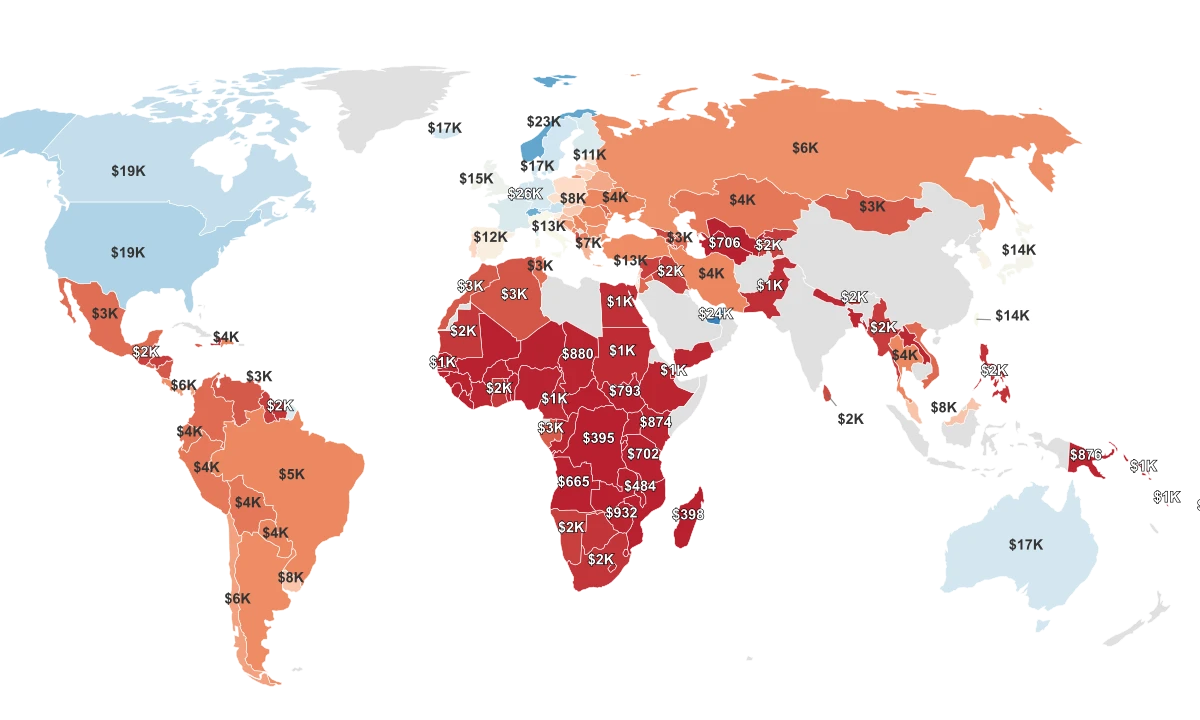
The measure behind this ranking is gross national income per capita: the income a country's residents earn from all sources, at home and abroad, divided by the number of people. The figures come from the World Bank, which converts each country's income to US dollars using its Atlas method, a three-year exchange-rate average that smooths out currency swings. A lower number means lower measured income per person. It is not a verdict on a country or the people who live there.
By that measure, Burundi sits at the bottom at about $238 a year, the only country in the dataset below $250. That works out to roughly $20 a month for each person. At the other end, Seychelles records $15,874 per person, the highest in Africa. The dataset spans 51 countries, and the distance between the two extremes is wide: the top figure is about 67 times the bottom one.
Between those poles, the table thins out quickly at the top and crowds at the bottom. A handful of countries clear several thousand dollars a person, but most do not come close. The rest of this page looks at how tightly the bottom clusters, and why the same kinds of countries keep landing there.
Most of Africa Earns Less Than the Continent's Average
The arithmetic average across these 51 countries is about $2,655 a person. That number is misleading, because most countries earn far less than it suggests. The typical country, the one sitting in the exact middle of the ranking, takes in closer to $1,485 a year. The average runs high because a few economies sit so far above everyone else that they pull it upward.
Three countries do most of that pulling: Seychelles, Mauritius, and Gabon, each of them several thousand dollars above the pack. They are small island and resource economies that spread high-value output, tourism and fisheries in the Seychelles case, over very small populations, which lifts income per person. Strip them out and the picture flattens into a long, low band rather than a smooth climb.
That low band is where most of the continent lives. Eighteen of the 51 countries earn under $1,000 a person a year, and the bottom third is packed into a narrow stretch below that line. The same small group also tends to top the United Nations' Human Development Index, which folds income together with health and schooling, so a country's income and its broader development tend to move together. The cluster at the bottom, not the gap at the top, is the real shape of the data.
Conflict and Landlocked Borders Set the Floor
The countries anchoring the bottom are not poor at random. Most carry conflict or post-conflict histories. Burundi, the Central African Republic, Somalia, and Sierra Leone all sit in the lowest tier, and each has lived through civil war or sustained instability. The World Bank treats this directly, calling fragility, conflict, and violence a key barrier to poverty reduction in Sub-Saharan Africa and noting that nearly two-thirds of the region's countries have been designated fragile or conflict-affected at least once since 1998.
Geography sets a second floor. Seven of the fifteen poorest countries here are landlocked, including Burundi, the Central African Republic, Niger, Malawi, and Chad. The UN reports that landlocked developing countries, cut off from ports and distant from world markets, pay more than double the transport costs of their coastal neighbors. Every import and export crosses someone else's border first, and that toll compounds over decades.
Neither cause works alone, and neither is the whole story. Conflict, isolation, and weak institutions tend to overlap in the same places, reinforcing one another rather than acting in sequence. What the ranking shows is a floor held in place by structure, not a single failing, which is why the countries at the bottom tend to stay there.
Sources & Notes
Measure of overall human development combining life expectancy, education, and income levels.