Median Income By Country

1 |  | Luxembourg | $26,321 |
2 |  | United Arab Emirates | $24,292 |
3 |  | Norway | $22,684 |
4 |  | Switzerland | $21,490 |
5 |  | United States | $19,306 |
6 |  | Canada | $18,652 |
7 |  | Austria | $18,405 |
8 |  | Sweden | $17,625 |
9 |  | Denmark | $17,432 |
10 |  | Netherlands | $17,154 |
11 |  | Australia | $17,076 |
12 |  | Iceland | $17,017 |
13 |  | Germany | $16,845 |
14 |  | France | $16,372 |
15 |  | Finland | $16,332 |
16 |  | Belgium | $16,157 |
17 |  | United Kingdom | $14,793 |
18 |  | Malta | $14,543 |
19 |  | Ireland | $14,520 |
20 |  | Japan | $14,255 |
21 |  | Taiwan | $13,605 |
22 |  | Italy | $13,170 |
23 |  | Cyprus | $13,053 |
24 |  | South Korea | $12,507 |
25 |  | Slovenia | $11,878 |
26 |  | Spain | $11,786 |
27 |  | Israel | $10,866 |
28 |  | Estonia | $10,651 |
29 |  | Czech Republic | $10,046 |
30 |  | Poland | $8,885 |
31 |  | Portugal | $8,439 |
32 |  | Lithuania | $8,267 |
33 |  | Slovakia | $7,991 |
34 |  | Latvia | $7,971 |
35 |  | Lebanon | $7,712 |
36 |  | Hungary | $7,684 |
37 |  | Uruguay | $7,533 |
38 |  | Malaysia | $7,512 |
39 |  | Croatia | $7,196 |
40 |  | Greece | $6,936 |
41 |  | Belarus | $6,507 |
42 |  | Chile | $6,293 |
43 |  | Panama | $6,254 |
44 |  | Bosnia and Herzegovina | $5,925 |
45 |  | Bulgaria | $5,696 |
46 |  | Russia | $5,504 |
47 |  | Costa Rica | $5,457 |
48 |  | Maldives | $5,409 |
49 |  | Argentina | $5,319 |
50 |  | Seychelles | $5,314 |
51 |  | Turkey | $5,251 |
52 |  | Romania | $5,206 |
53 |  | Brazil | $4,559 |
54 |  | Saint Lucia | $4,519 |
55 |  | Ukraine | $4,434 |
56 |  | Serbia | $4,416 |
57 |  | Iran | $4,360 |
58 |  | Thailand | $4,356 |
59 |  | Paraguay | $4,334 |
60 |  | Montenegro | $4,193 |
61 |  | Dominican Republic | $4,060 |
62 |  | North Macedonia | $3,857 |
63 |  | Mauritius | $3,832 |
64 |  | Peru | $3,678 |
65 |  | Kazakhstan | $3,661 |
66 |  | Bolivia | $3,631 |
67 |  | Ecuador | $3,525 |
68 |  | Tunisia | $3,366 |
69 |  | Mexico | $3,315 |
70 |  | Colombia | $3,259 |
71 |  | Azerbaijan | $3,193 |
72 |  | Jordan | $3,185 |
73 |  | Vietnam | $3,149 |
74 |  | Moldova | $3,133 |
75 |  | El Salvador | $3,095 |
76 |  | Jamaica | $2,899 |
77 |  | Trinidad and Tobago | $2,868 |
78 |  | Mongolia | $2,800 |
79 |  | Tonga | $2,782 |
80 |  | Gabon | $2,779 |
81 |  | Morocco | $2,716 |
82 |  | Venezuela | $2,710 |
83 |  | Nicaragua | $2,697 |
84 |  | Algeria | $2,612 |
85 |  | Albania | $2,578 |
86 |  | Samoa | $2,537 |
87 |  | Fiji | $2,460 |
88 |  | Bhutan | $2,446 |
89 |  | Sri Lanka | $2,277 |
90 |  | Georgia | $2,273 |
91 |  | Armenia | $2,216 |
92 |  | Tuvalu | $2,099 |
93 |  | Guatemala | $2,036 |
94 |  | Guyana | $2,003 |
95 |  | Syria | $1,996 |
96 |  | Tajikistan | $1,994 |
97 |  | Namibia | $1,962 |
98 |  | Honduras | $1,959 |
99 |  | Iraq | $1,951 |
100 |  | Belize | $1,927 |
101 |  | Myanmar | $1,909 |
102 |  | Kyrgyzstan | $1,892 |
103 |  | Ghana | $1,779 |
104 |  | Mauritania | $1,760 |
105 |  | Suriname | $1,659 |
106 |  | South Africa | $1,624 |
107 |  | Botswana | $1,596 |
108 |  | Philippines | $1,581 |
109 |  | Kiribati | $1,489 |
110 |  | Egypt | $1,485 |
111 |  | Micronesia | $1,413 |
112 |  | Djibouti | $1,403 |
113 |  | Comoros | $1,401 |
114 |  | Pakistan | $1,399 |
115 |  | Gambia | $1,383 |
116 |  | Vanuatu | $1,379 |
117 |  | Sudan | $1,277 |
118 |  | Cameroon | $1,245 |
119 |  | Haiti | $1,162 |
120 |  | Lesotho | $1,157 |
121 |  | Nepal | $1,155 |
122 |  | Yemen | $1,150 |
123 |  | Bangladesh | $1,131 |
124 |  | Eswatini | $1,097 |
125 |  | Laos | $1,065 |
126 |  | Solomon Islands | $1,028 |
127 |  | Ivory Coast | $987 |
128 |  | Timor Leste | $970 |
129 |  | Zimbabwe | $932 |
130 |  | Ethiopia | $907 |
131 |  | Sao Tome and Principe | $901 |
132 |  | Republic of the Congo | $892 |
133 |  | Chad | $880 |
134 |  | Papua New Guinea | $876 |
135 |  | Kenya | $874 |
136 |  | Senegal | $844 |
137 |  | Guinea | $843 |
138 |  | Nigeria | $825 |
139 |  | Uganda | $804 |
140 |  | South Sudan | $793 |
141 |  | Sierra Leone | $765 |
142 |  | Liberia | $753 |
143 |  | Burkina Faso | $748 |
144 |  | Niger | $738 |
145 |  | Turkmenistan | $706 |
146 |  | Tanzania | $702 |
147 |  | Benin | $699 |
148 |  | Mali | $689 |
149 |  | Togo | $683 |
150 |  | Angola | $665 |
151 |  | Rwanda | $621 |
152 |  | Uzbekistan | $591 |
153 |  | Zambia | $545 |
154 |  | Mozambique | $529 |
155 |  | Central African Republic | $491 |
156 |  | Guinea Bissau | $486 |
157 |  | Malawi | $484 |
158 |  | Burundi | $475 |
159 |  | Madagascar | $398 |
160 |  | DR Congo | $395 |
Last updated June 24, 2026
Key Takeaways
- Luxembourg has the world's highest median income, with the typical resident taking home about $26,300 a year in purchasing-power terms.
- At the other end, the typical earner in the Democratic Republic of the Congo lives on roughly $395, with Madagascar and Burundi close behind.
- That puts the middle earner in the richest country ahead of the middle earner in the poorest by about 60 to 1.
- The biggest surprise is what median income reveals that a GDP ranking hides: Ireland has one of the highest GDP-per-capita figures on Earth, yet its typical worker earns less than the typical worker in a dozen plainer economies.
All Metrics
What the Person in the Middle Actually Earns, Country by Country
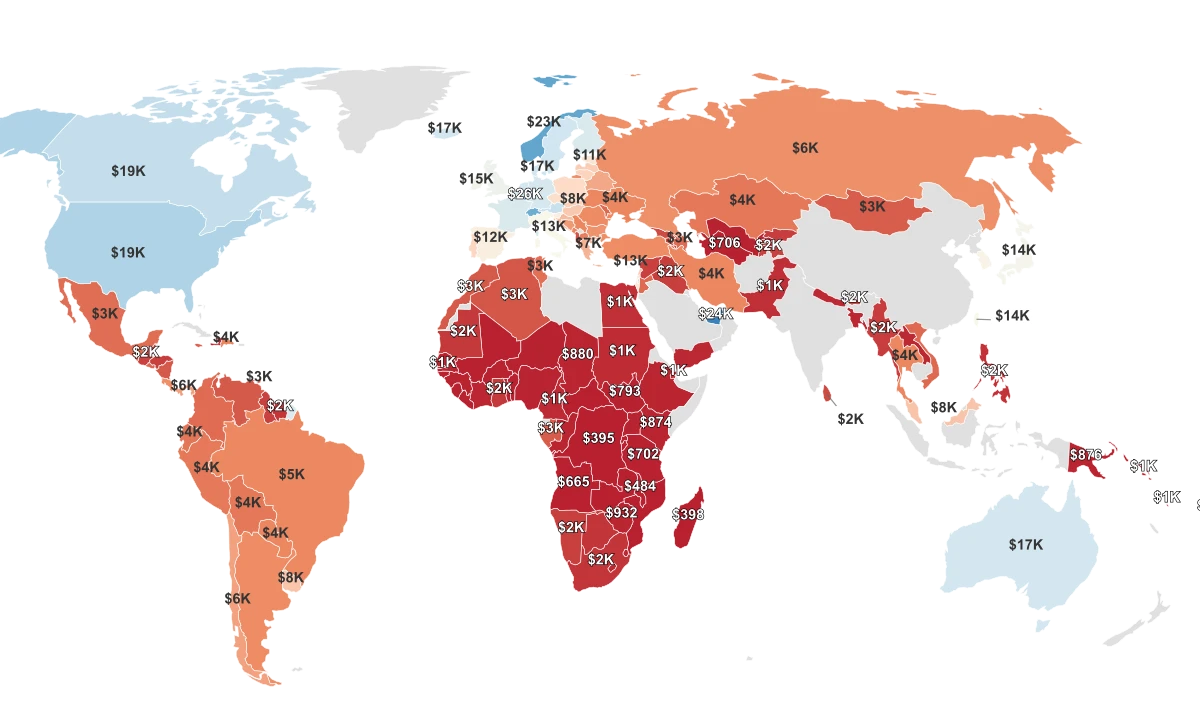
Most income figures you see are averages, and averages flatter. Median income does something different: it lines up every earner in a country from lowest to highest and reports the one standing exactly in the middle, the person with as many people above them as below. By that measure, the typical resident of Luxembourg takes home about $26,321 a year, the highest in the world, while the typical resident of the Democratic Republic of the Congo lives on roughly $395. A higher number here is simply more money in the median pocket, nothing more loaded than that.
The figures come from a global inequality compilation by Giving What We Can, drawn from World Bank household surveys and reported in 2021 in purchasing-power dollars so that a paycheck in one country can be compared fairly with a paycheck in another. Across the 160 countries measured, the spread is enormous: the middle earner at the top out-earns the middle earner at the bottom by roughly 60 to 1. A small group of wealthy nations sits far out ahead, while most of the world clusters well below them, a point the next section unpacks.
| Country | Median Income (2021, PPP) |
|---|---|
| Luxembourg | $26,321 |
| United Arab Emirates | $24,292 |
| Norway | $22,684 |
| Switzerland | $21,490 |
| United States | $19,306 |
| ... | ... |
| Burundi | $475 |
| Madagascar | $398 |
| DR Congo | $395 |
Why a Rich Country Can Still Have a Modest Middle
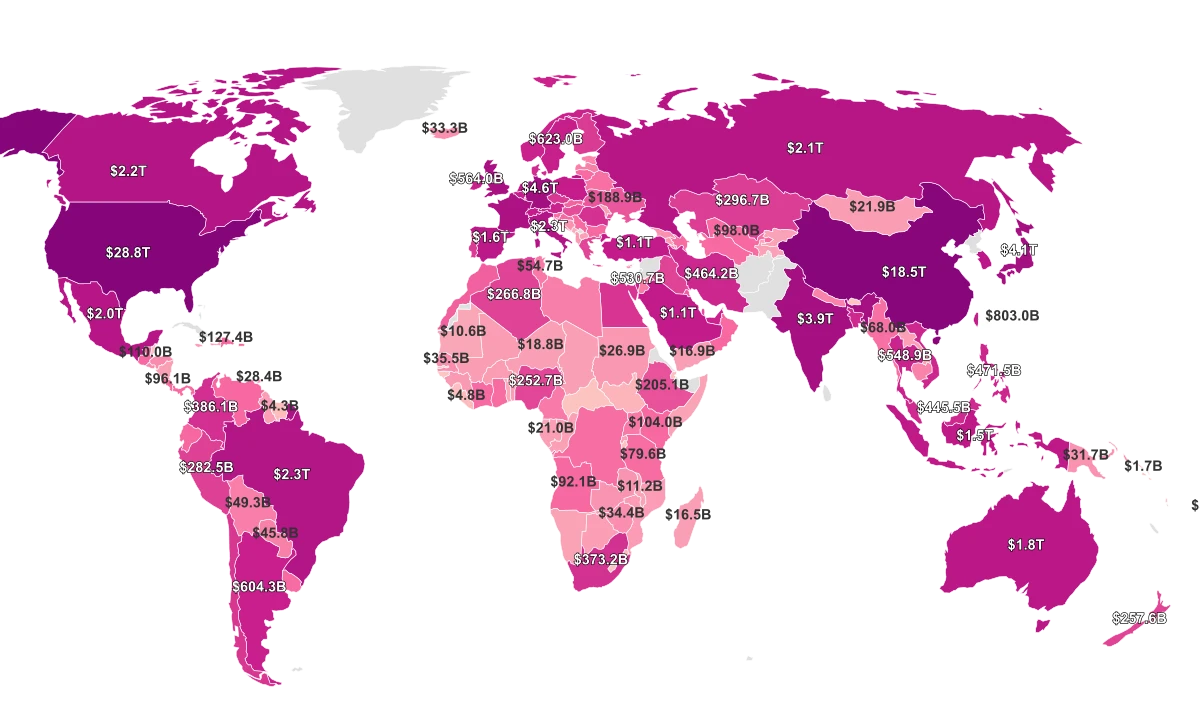
Ask which countries are rich and most people picture a GDP league table. But GDP per capita is an average, total economic output divided by everyone in the country, and an average can be pulled upward by a wealthy few or by money that never reaches households at all. Median income asks a stricter question: forget the total, what does the person in the middle actually get? Most of the time the two answers agree, and richer economies do tend to have richer typical earners. The interesting countries are the ones where the two answers part ways.
Ireland is the clearest example. It has one of the highest GDP-per-capita figures on the planet, near $124,901, yet its median income of about $14,520 sits below that of plainer economies like Germany and Australia. The reason is well documented: multinational companies route enormous profits and intellectual property through Ireland, inflating measured output without putting money in Irish pockets. Ireland's own statistics office built a separate measure, Modified Gross National Income, specifically to strip out these globalisation effects, after a single year's reported growth of 26 percent made the headline number an international punchline.
A Bigger Economy Usually Means a Richer Middle, Until It Doesn't
GDP per capita against median income across countries. Most sit on the trendline, but a few rich economies fall well below it.
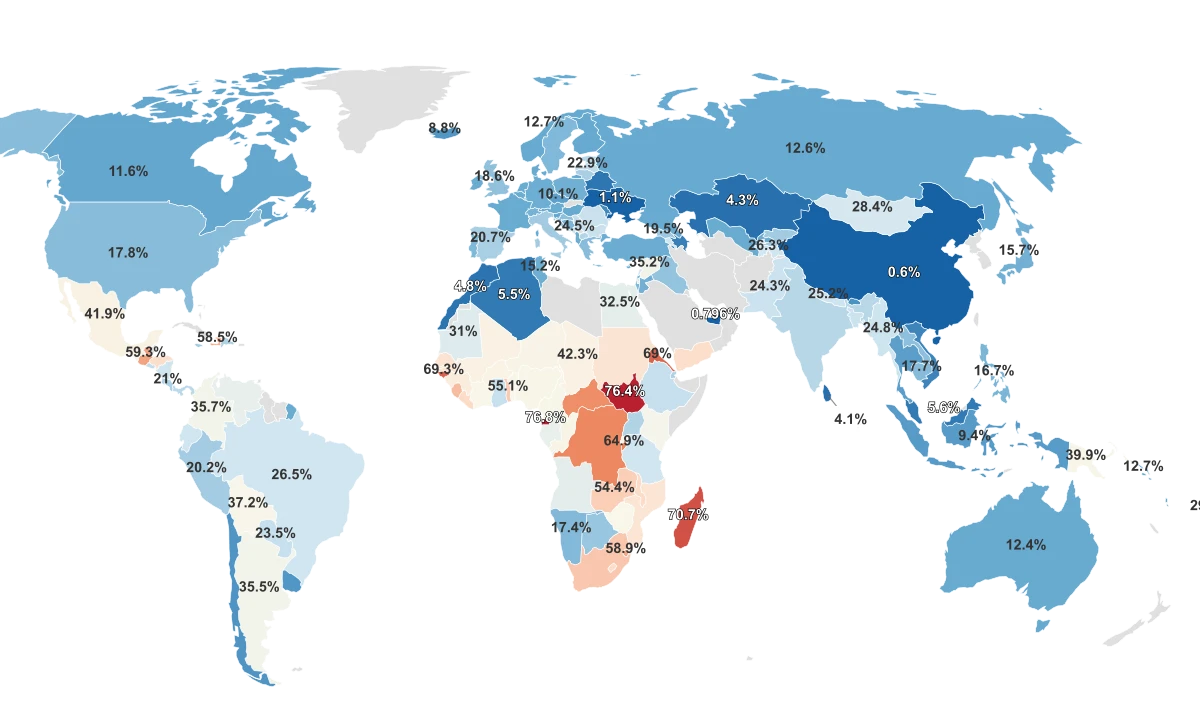
The United States shows the same gap for a different reason. Its typical earner does well, near $19,306, among the highest anywhere, but the country produces far more per head than that median suggests, and its income inequality is the steepest of any wealthy peer. Norway, by contrast, channels the proceeds of the world's largest sovereign wealth fund through one of the narrowest inequality gaps in the world, so its high average and its high median nearly coincide. The lesson of the whole table is that a tall average can hide a short middle, and only the median tells you which.
Does a Fatter Paycheck Just Buy a Pricier Life?
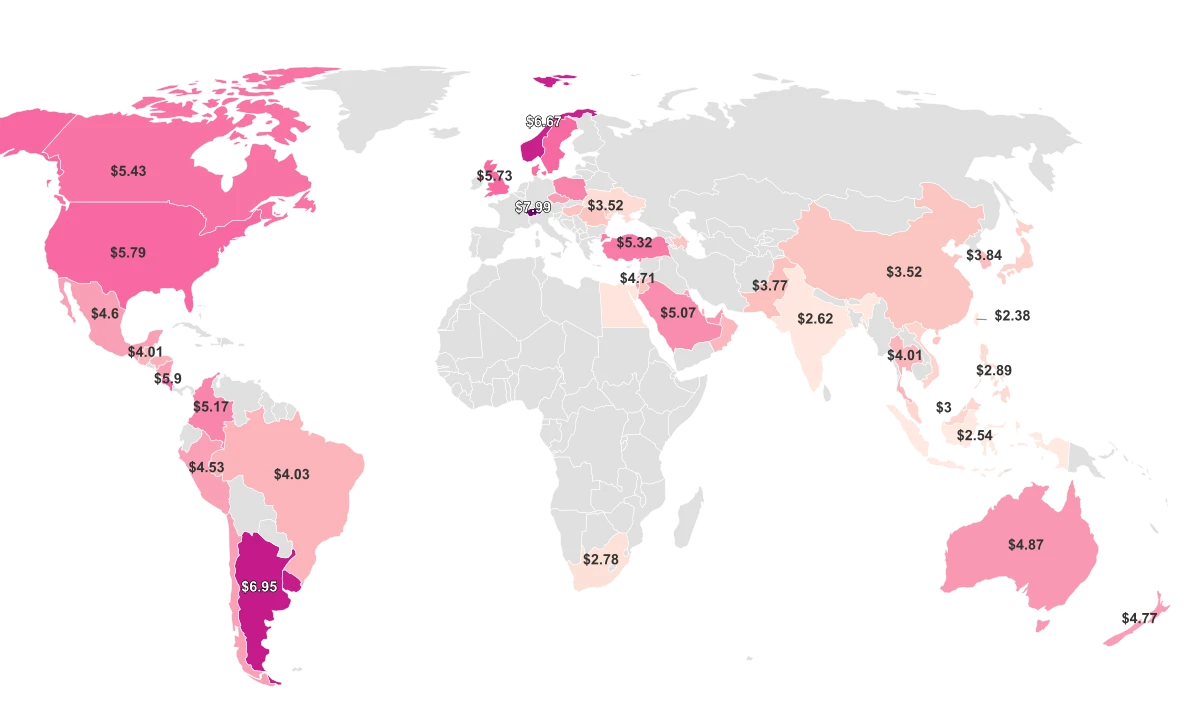
A reasonable suspicion about any income ranking is that the high numbers are a mirage: sure, people in rich countries earn more, but everything costs more too, so they are no better off. The data offers a partial check on that worry. Higher median income and a higher cost of living do rise together, and meaningfully so, but the link is loose enough that a bigger paycheck in a wealthy country is not simply eaten alive by bigger price tags.
Switzerland is where the tension is sharpest. Its typical earner makes about $21,490, near the very top, but it is also one of the most expensive places on Earth, with consumer prices running above New York City's on the crowdsourced index used here. That index, compiled by Numbeo from user-submitted prices rather than official statistics, is a rough gauge, not a precise one. Still, the broad pattern holds across the table: many lower-income countries are genuinely cheaper to live in, which softens the raw income gap, but it does not erase it, because incomes at the top stretch much further ahead than prices do.
How to Read These Numbers
The most useful way to read this ranking is in big tiers, not by single places. The median income figures are survey-derived estimates compiled for 2021 from household surveys run in different years and to different standards across countries, so a country sitting a notch above its neighbor is effectively tied with it; the gap that means something is the one between Luxembourg near $26,321 and the cluster of nations below $1,000. Read it as a map of the world's broad income bands, and it is solid; read it as a precise leaderboard, and it claims more than the surveys can support.
The supporting numbers reward the same caution. They were published in different years, GDP per capita in 2023, the cost-of-living index in 2026, and the World Bank's inequality figures in 2024, so they belong here as structural context rather than a synchronized snapshot taken on the same day. Treat them as the forces behind the ranking, not as a second decimal place on it, and the picture they paint of who earns what, and why, holds up.
Sources & Notes
Middle income value, dividing income distribution into two equal groups.
Economic output per person adjusted for cost of living differences.
estimates the relative price of consumer goods like groceries, restaurants, transportation, and utilities — but excludes rent.
Statistical measure of income distribution inequality.