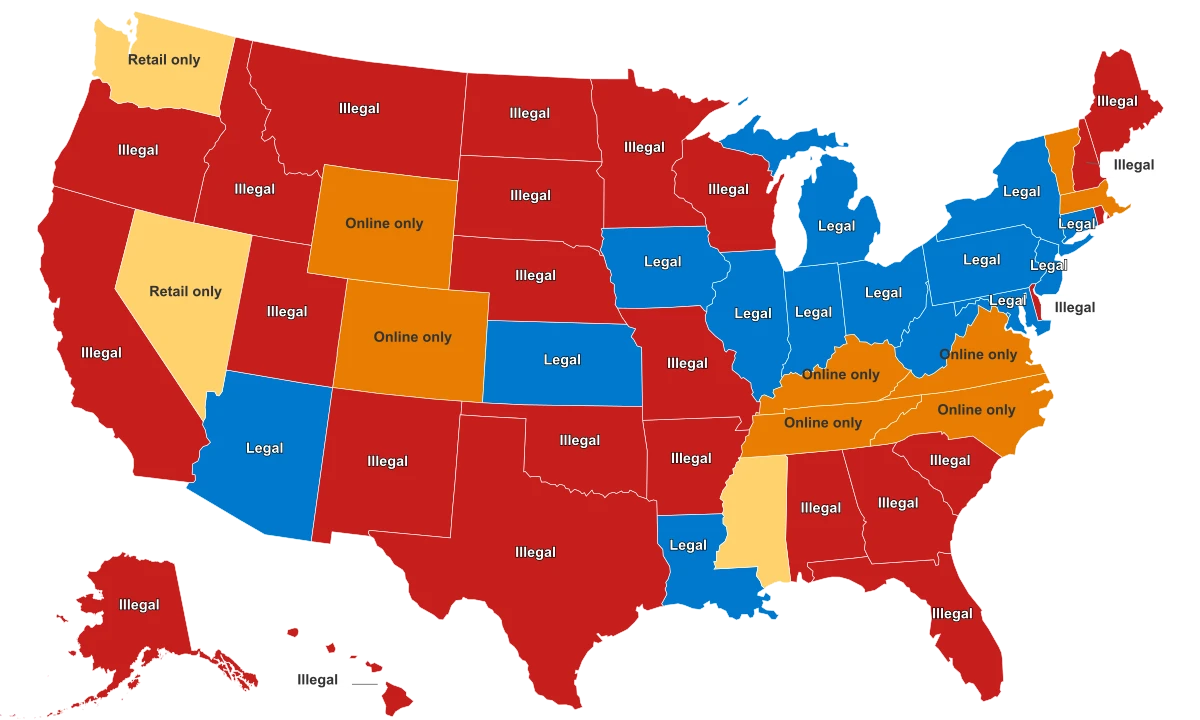
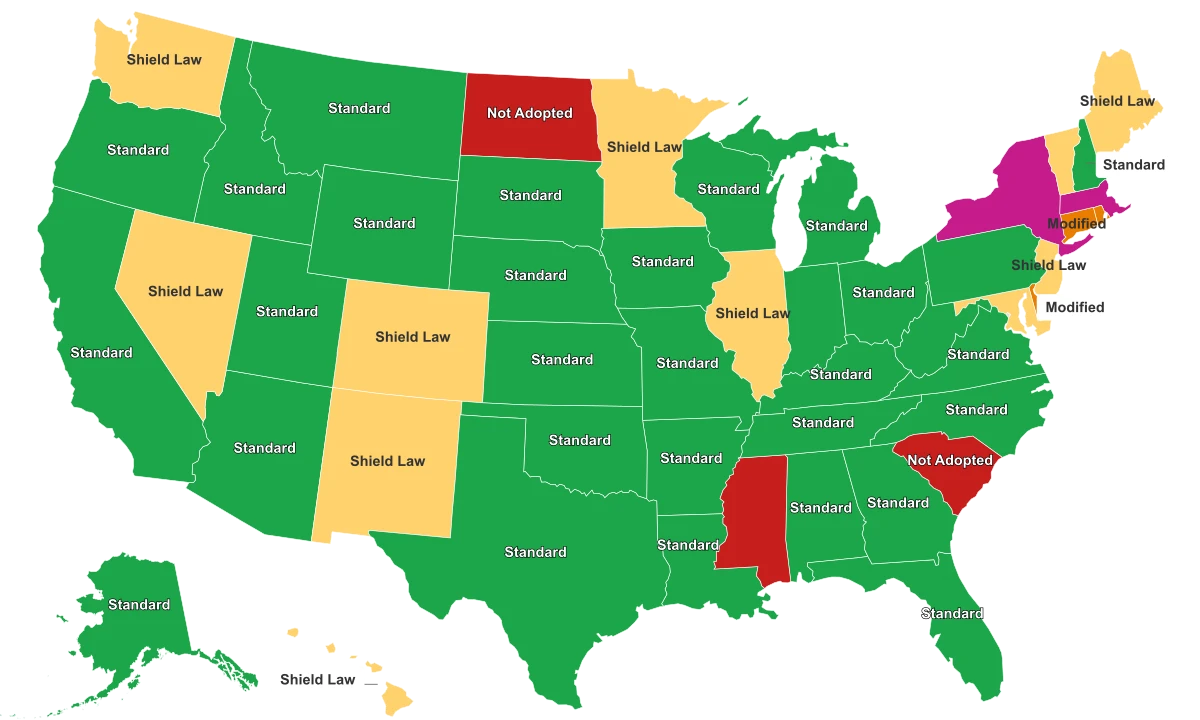
Vaping Laws by State

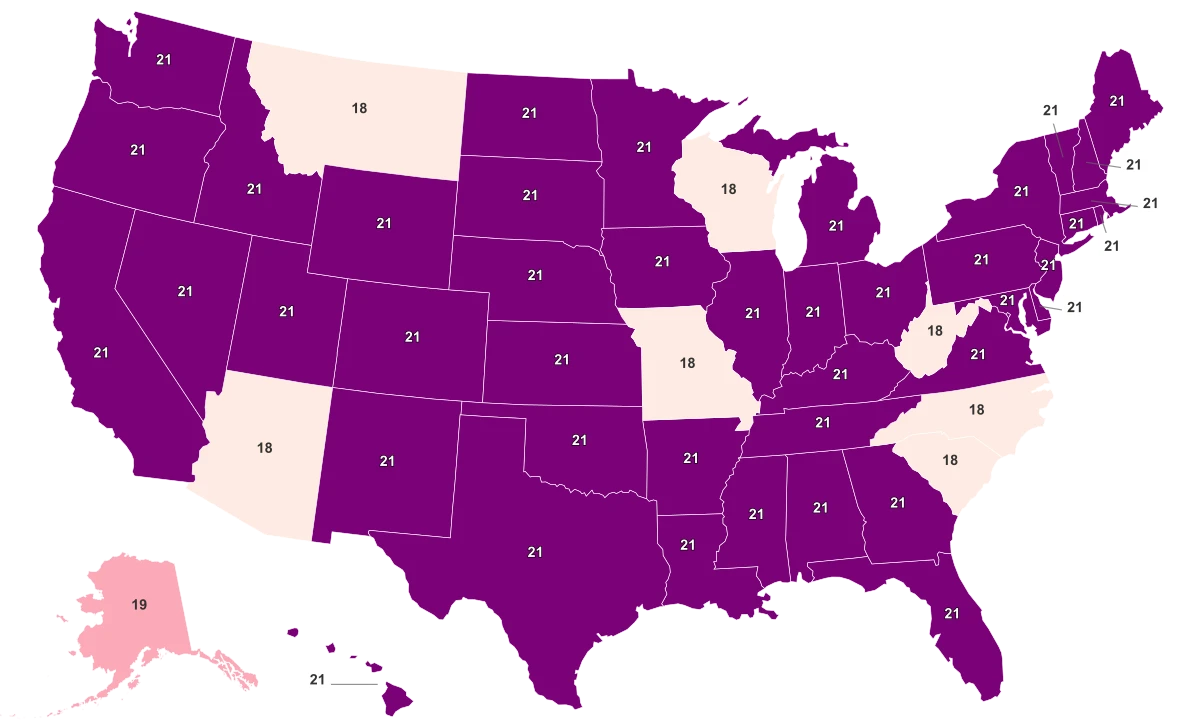
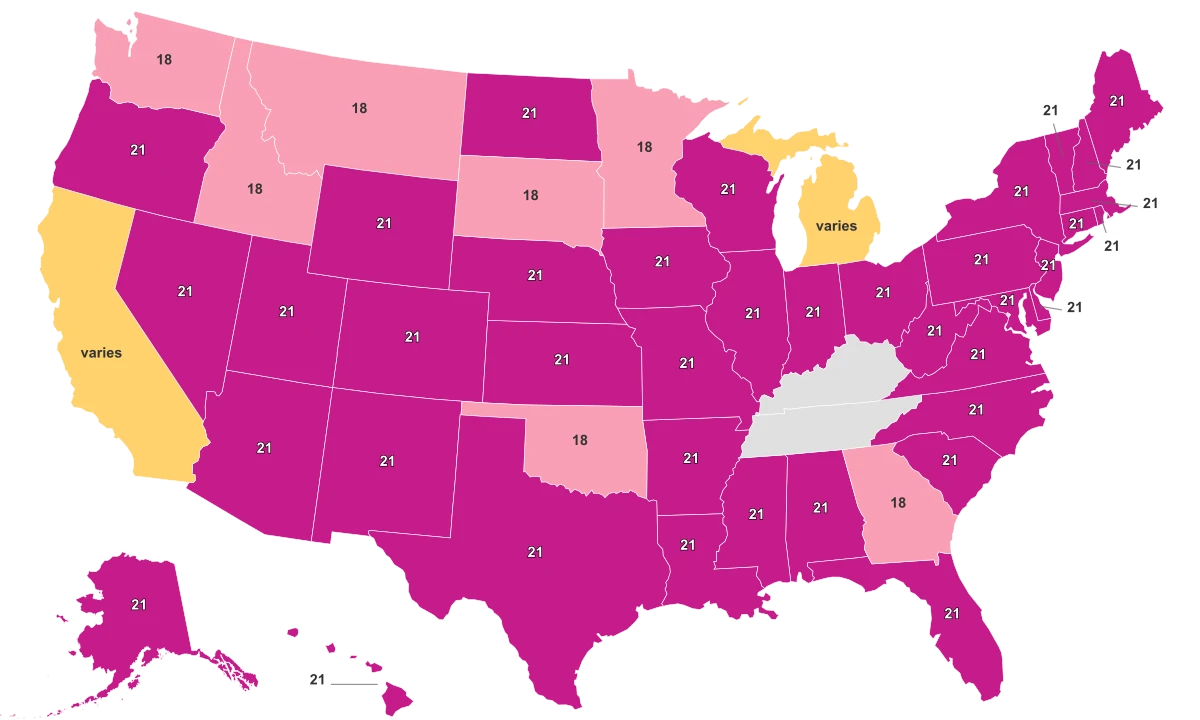
1 |  | Texas | 21years |
1 |  | Hawaii | 21years |
1 |  | Delaware | 21years |
1 |  | New York | 21years |
1 |  | New Jersey | 21years |
1 |  | Mississippi | 21years |
1 |  | Wyoming | 21years |
1 |  | Alabama | 21years |
1 |  | Oklahoma | 21years |
1 |  | Virginia | 21years |
1 |  | Washington | 21years |
1 |  | Nebraska | 21years |
1 |  | South Dakota | 21years |
1 |  | Utah | 21years |
1 |  | Nevada | 21years |
1 |  | Indiana | 21years |
1 |  | Maine | 21years |
1 |  | Maryland | 21years |
1 |  | Minnesota | 21years |
1 |  | Kansas | 21years |
1 |  | Pennsylvania | 21years |
1 |  | Tennessee | 21years |
1 |  | Florida | 21years |
1 |  | Colorado | 21years |
1 |  | Louisiana | 21years |
1 |  | Oregon | 21years |
1 |  | Massachusetts | 21years |
1 |  | District of Columbia | 21years |
1 |  | Iowa | 21years |
1 |  | Rhode Island | 21years |
1 |  | North Dakota | 21years |
1 |  | Kentucky | 21years |
1 |  | Vermont | 21years |
1 |  | Connecticut | 21years |
1 |  | Illinois | 21years |
1 |  | Ohio | 21years |
1 |  | Arkansas | 21years |
1 |  | Michigan | 21years |
1 |  | New Mexico | 21years |
1 |  | Georgia | 21years |
1 |  | New Hampshire | 21years |
1 |  | California | 21years |
1 |  | Idaho | 21years |
44 |  | Alaska | 19years |
45 |  | Missouri | 18years |
45 |  | South Carolina | 18years |
45 |  | Montana | 18years |
45 |  | North Carolina | 18years |
45 |  | Arizona | 18years |
45 |  | West Virginia | 18years |
45 |  | Wisconsin | 18years |
Last updated February 28, 2026
How U.S. States Regulates E-Cigarettes
E-cigarettes — commonly called vapes, vape pens, or ENDS (Electronic Nicotine Delivery Systems) — have transformed how nicotine products are regulated in the U.S. These battery-powered devices heat a liquid (often containing nicotine, flavorings, and other chemicals) to produce an aerosol that users inhale. Because vaping has grown rapidly among youth and young adults, states have adopted diverse statutes to control purchase age, taxation, indoor use, packaging, and classification of these products.
Across the United States, the regulation of e-cigarettes reflects an evolving alignment between health policy, youth protection, and state-level regulatory frameworks. The federal government raised the minimum legal sales age for all tobacco products (including e-cigarettes) to 21 in December 2019. Despite this baseline, states have considerable authority to shape additional measures—such as whether e-cigarettes are classified as “tobacco products,” how they are taxed, where they can be used, and how young people in particular are protected.
This page offers a comprehensive, state-by-state breakdown of two especially important legal dimensions: (1) the minimum legal age to purchase vaping devices and liquids, and (2) whether each state treats e-cigarettes as “tobacco products” under its laws.
All Metrics
What is a Vape?
Vaping products are battery-powered devices that heat a liquid (“vape juice,” or e-liquid) to create an inhalable aerosol. Most e-liquids contain:
- Nicotine
- Flavorings
- Humectants such as propylene glycol (PG) and vegetable glycerin (VG)
Some products are nicotine-free, while others use synthetic nicotine. Cannabis-derived vapes (THC, CBD) exist as well but are regulated under separate state frameworks.
Common Types of E-Cigarette Devices
| Category | Description | Examples |
|---|---|---|
| Cigalikes | Resemble cigarettes; pre-filled & disposable | Blu, Vuse (older models) |
| Vape Pens | Slim, pen-shaped; refillable or pre-filled pods | Juul, Vuse Alto |
| Pod Systems | Small devices with replaceable pods | Juul, Smok Nord, Vaporesso Xros |
| Mods / Box Mods | Larger devices with removable tanks & batteries | Vaporesso, GeekVape, Voopoo |
| Disposable Vapes | Single-use devices with built-in battery & liquid | Elf Bar, Puff Bar, Lost Mary |
Key Findings
- Most U.S. states set the minimum age for purchasing e-cigarettes at 21, aligning with the federal Tobacco 21 law — only a small group (e.g., Wisconsin, South Carolina, North Carolina, Missouri, West Virginia, Montana, Arizona) still show age limits below 21 in practice or outdated classifications.
- Alaska is the only state with a unique minimum vaping age of 19, sitting between pre-T21 states and the national standard.
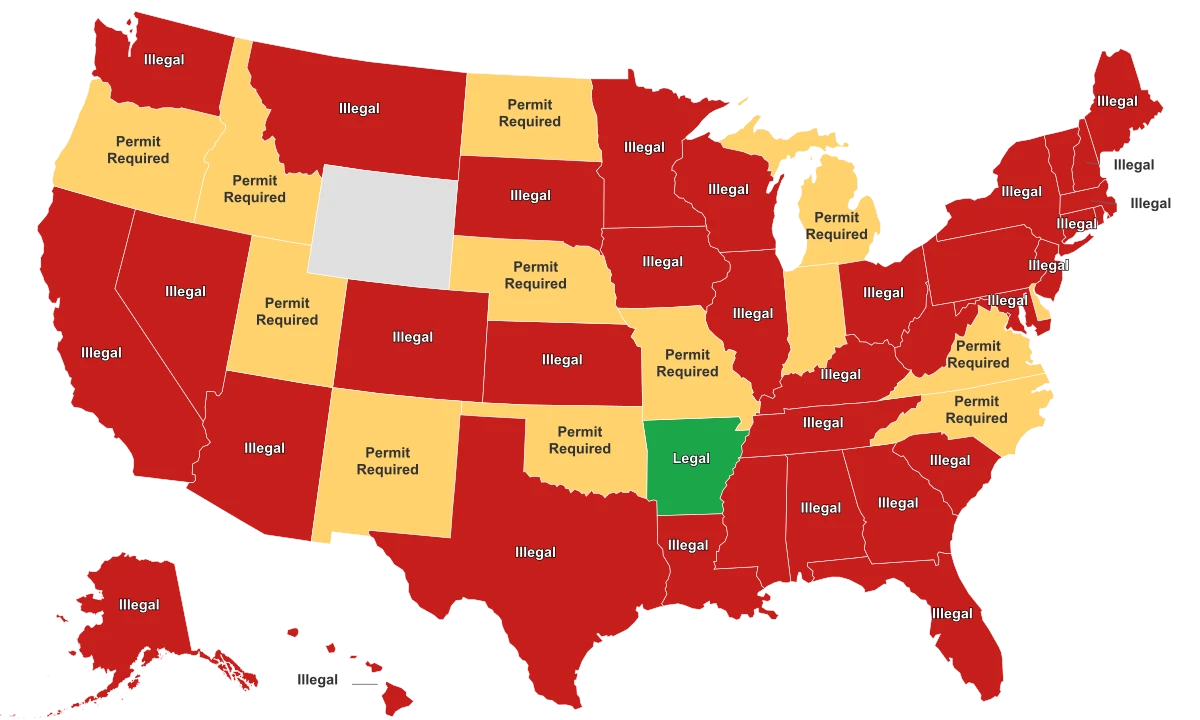
- The vast majority of states classify e-cigarettes as tobacco products, enabling stricter taxation, sales rules and marketing restrictions. A minority — including Virginia, Alaska, Michigan, Kansas, Alabama, Oklahoma, Louisiana, Iowa, North Dakota, Washington, Montana, Arizona, Mississippi, Texas, Georgia, Arkansas, Missouri, New York, Wisconsin, Kentucky and Florida — do not classify them as tobacco under state law.
- States with age limits below 21 are more likely not to classify vapes as tobacco, indicating slower regulatory adoption and potentially looser enforcement environments.
- Public-health-forward regions like the Northeast and West Coast (e.g., California, Massachusetts, Vermont, Oregon, New York) both set the purchase age at 21 and classify vapes as tobacco — positioning them among the most restrictive environments.
- Southern and some Midwestern states (e.g., Alabama, Georgia, Missouri, Kentucky, Wisconsin) are more likely to lack tobacco classification policies or maintain a lower age requirement, reflecting a historically more permissive regulatory stance.
Are vapes less harmful than cigarettes?
E-cigarettes, also known as vapes or ENDS, heat a liquid that typically contains nicotine, flavorings, and other chemicals into an inhalable aerosol. A review published through the National Institutes of Health observed that although e-cigarettes are likely less harmful than combustible cigarettes, they are not harmless, and the long-term health consequences remain uncertain. The aerosol can still include heavy metals, volatile organic compounds, and particulates. Recent research (e.g., at Johns Hopkins University) found that exclusive e-cigarette use was significantly associated with onset of chronic obstructive pulmonary disease (COPD) and possibly hypertension over a ~4-year follow-up.
For adult smokers who previously used combustible cigarettes and switch completely to e-cigarettes, the risk of certain harms may be reduced — although evidence remains limited and no e-cigarette device has been approved by the Food and Drug Administration (FDA) as a smoking-cessation aid.
The World Health Organization similarly warns that use of these devices increases the likelihood of smoking among non-smokers, especially youth. According to the U.S. Food & Drug Administration (FDA), current e-cigarette use among U.S. youth dropped from 7.7% in 2023 to 5.9% in 2024 — still over 1.6 million young users.
Sources & Notes
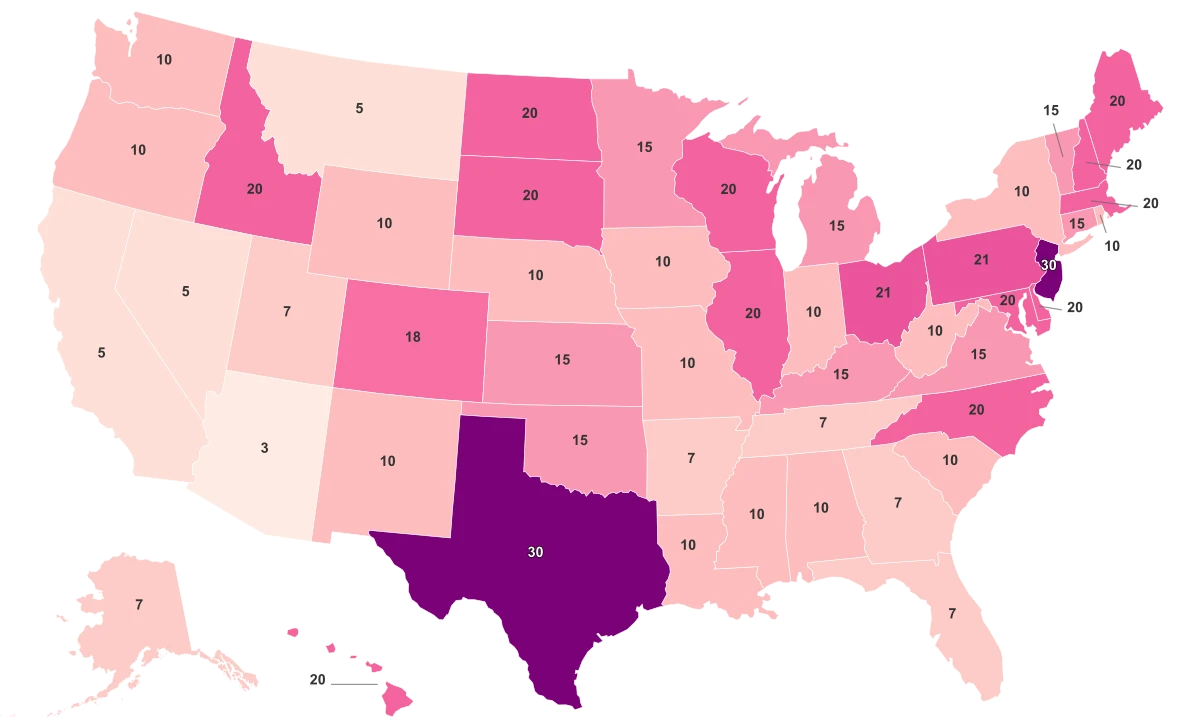
Average Retail Price Per Pack of Cigarettes with Exercise and State Taxes.