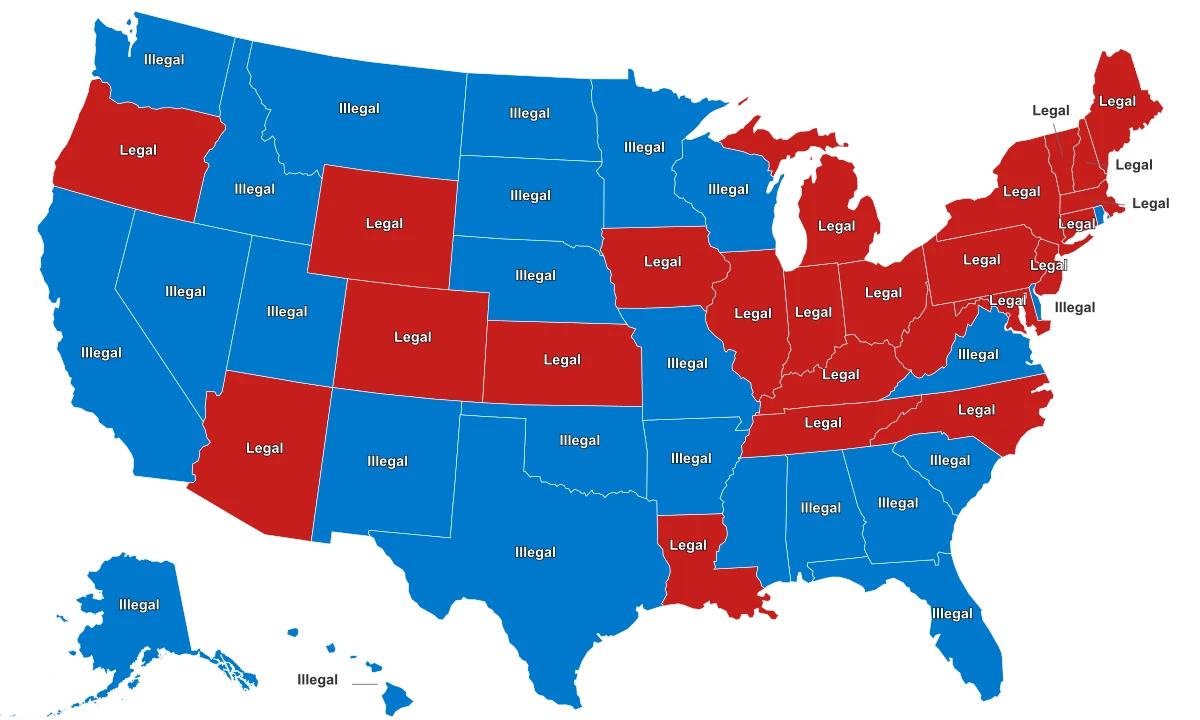
FanDuel Legal States

 | Alabama | Illegal | |
 | Alaska | Illegal | |
 | Arizona | Legal | |
 | Arkansas | Illegal | |
 | California | Illegal | |
 | Colorado | Online only | |
 | Connecticut | Legal | |
 | Delaware | Illegal | |
 | District of Columbia | Legal | |
 | Florida | Illegal | |
 | Georgia | Illegal | |
 | Hawaii | Illegal | |
 | Idaho | Illegal | |
 | Illinois | Legal | |
 | Indiana | Legal | |
 | Iowa | Legal | |
 | Kansas | Legal | |
 | Kentucky | Online only | |
 | Louisiana | Legal | |
 | Maine | Illegal | |
 | Maryland | Legal | |
 | Massachusetts | Online only | |
 | Michigan | Legal | |
 | Minnesota | Illegal | |
 | Mississippi | Retail only | |
 | Missouri | Illegal | |
 | Montana | Illegal | |
 | Nebraska | Illegal | |
 | Nevada | Retail only | |
 | New Hampshire | Illegal | |
 | New Jersey | Legal | |
 | New Mexico | Illegal | |
 | New York | Legal | |
 | North Carolina | Online only | |
 | North Dakota | Illegal | |
 | Ohio | Legal | |
 | Oklahoma | Illegal | |
 | Oregon | Illegal | |
 | Pennsylvania | Legal | |
 | Rhode Island | Illegal | |
 | South Carolina | Illegal | |
 | South Dakota | Illegal | |
 | Tennessee | Online only | |
 | Texas | Illegal | |
 | Utah | Illegal | |
 | Vermont | Online only | |
 | Virginia | Online only | |
 | Washington | Retail only | |
 | West Virginia | Legal | |
 | Wisconsin | Illegal | |
 | Wyoming | Online only |
Last updated February 28, 2026
FanDuel’s Legality in the U.S.
FanDuel is one of the leading online sports betting and fantasy sports platforms in the United States, operating across multiple states through licensed sportsbooks, daily fantasy contests, and online casinos. Founded in 2009 and headquartered in New York, the company is part of Flutter Entertainment, a global betting and gaming group that also owns Paddy Power and Betfair.
The platform allows users to place wagers on professional and collegiate sports, manage fantasy teams, and access casino-style games where permitted. Its legal status, however, depends on state-level authorization. Since the 2018 Supreme Court repeal of the Professional and Amateur Sports Protection Act (PASPA), which lifted the federal ban on sports betting, each U.S. state has gained authority to regulate its own sports wagering market.
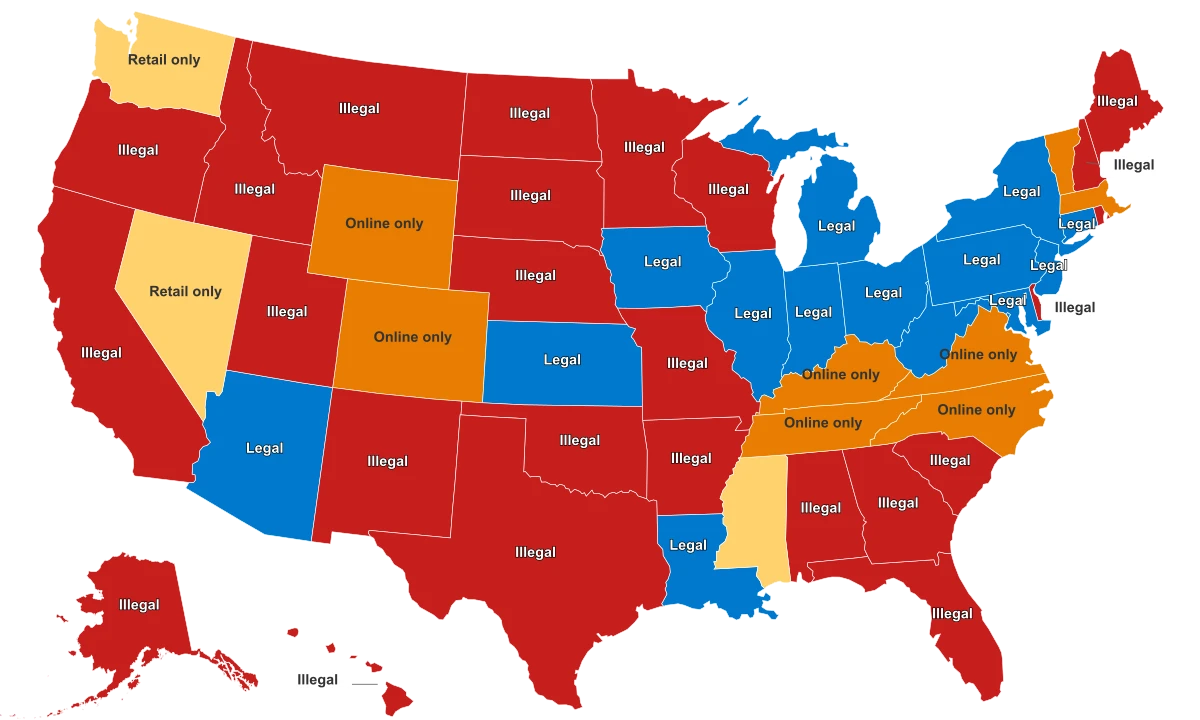
As of 2025, FanDuel’s legal status varies across four categories:
- Legal, where both online and in-person sportsbooks operate under license;
- Online only, where mobile betting is authorized but physical sportsbooks are restricted;
-
Retail only, where betting is allowed only through licensed venues; and
Illegal, where FanDuel and similar operators are not permitted to operate.
These differences highlight a fragmented but expanding regulatory landscape, where FanDuel’s operations depend on how each state balances economic opportunity, responsible gaming policy, and local control rather than on a unified federal standard.
All Metrics
| Region ↕ | FanDuel Legal Status↕ | DK Online Sports Legality↕ | PrizePicks Legality↕ | Casino Min. Age↕ |
|---|---|---|---|---|
| Texas | Illegal | |||
| Hawaii | Illegal | |||
| Missouri | Illegal | |||
| Delaware | Illegal | |||
| New York | Legal | |||
| New Jersey | Legal | |||
| Mississippi | Retail only | |||
| Wyoming | Online only | |||
| Alabama | Illegal | |||
| Oklahoma | Illegal | |||
| Virginia | Online only | |||
| Washington | Retail only | |||
| Nebraska | Illegal | |||
| South Dakota | Illegal | |||
| Utah | Illegal | |||
| Nevada | Retail only | |||
| Indiana | Legal | |||
| Maine | Illegal | |||
| Maryland | Legal | |||
| Minnesota | Illegal | |||
| Kansas | Legal | |||
| Alaska | Illegal | |||
| Pennsylvania | Legal | |||
| Tennessee | Online only | |||
| Florida | Illegal | |||
| South Carolina | Illegal | |||
| Colorado | Online only | |||
| Louisiana | Legal | |||
| Oregon | Illegal | |||
| Massachusetts | Online only | |||
| District of Columbia | Legal | |||
| Iowa | Legal | |||
| Montana | Illegal | |||
| Rhode Island | Illegal | |||
| North Dakota | Illegal | |||
| Kentucky | Online only | |||
| Vermont | Online only | |||
| North Carolina | Online only | |||
| Arizona | Legal | |||
| Connecticut | Legal | |||
| Illinois | Legal | |||
| Ohio | Legal | |||
| Arkansas | Illegal | |||
| Michigan | Legal | |||
| West Virginia | Legal | |||
| New Mexico | Illegal | |||
| Georgia | Illegal | |||
| New Hampshire | Illegal | |||
| Wisconsin | Illegal | |||
| California | Illegal | |||
| Idaho | Illegal |
Key Findings
- FanDuel is fully legal in 14 jurisdictions, including West Virginia, Illinois, Iowa, Connecticut, New Jersey, Indiana, Pennsylvania, Louisiana, Michigan, Ohio, Kansas, New York, Maryland, and Arizona, as well as the District of Columbia. These represent the country’s core regulated markets, where FanDuel operates with both retail and online licenses.
- Eight states allow online-only access — North Carolina, Kentucky, Massachusetts, Tennessee, Colorado, Virginia, Vermont, and Wyoming. These states have embraced mobile betting while restricting physical sportsbook locations, reflecting a preference for controlled digital markets.
- Three states permit retail-only betting — Mississippi, Washington, and Nevada — where wagers must be placed in person. These jurisdictions maintain tighter control through established casino or tribal networks.
- Twenty-five states classify FanDuel as illegal, including large population centers such as California, Texas, Florida, and Georgia. This group spans most of the South and Mountain West, with only limited exceptions. The persistence of these bans underscores both legislative inertia and strong opposition from tribal or religious groups in some regions.
- Regional analysis shows clear polarization: legalization dominates the Midwest and Northeast, partial access (online or retail) clusters along the Appalachian corridor and Mountain West, while prohibitions remain widespread across the Deep South and Pacific Coast.
Frequently Asked Questions
Sources & Notes
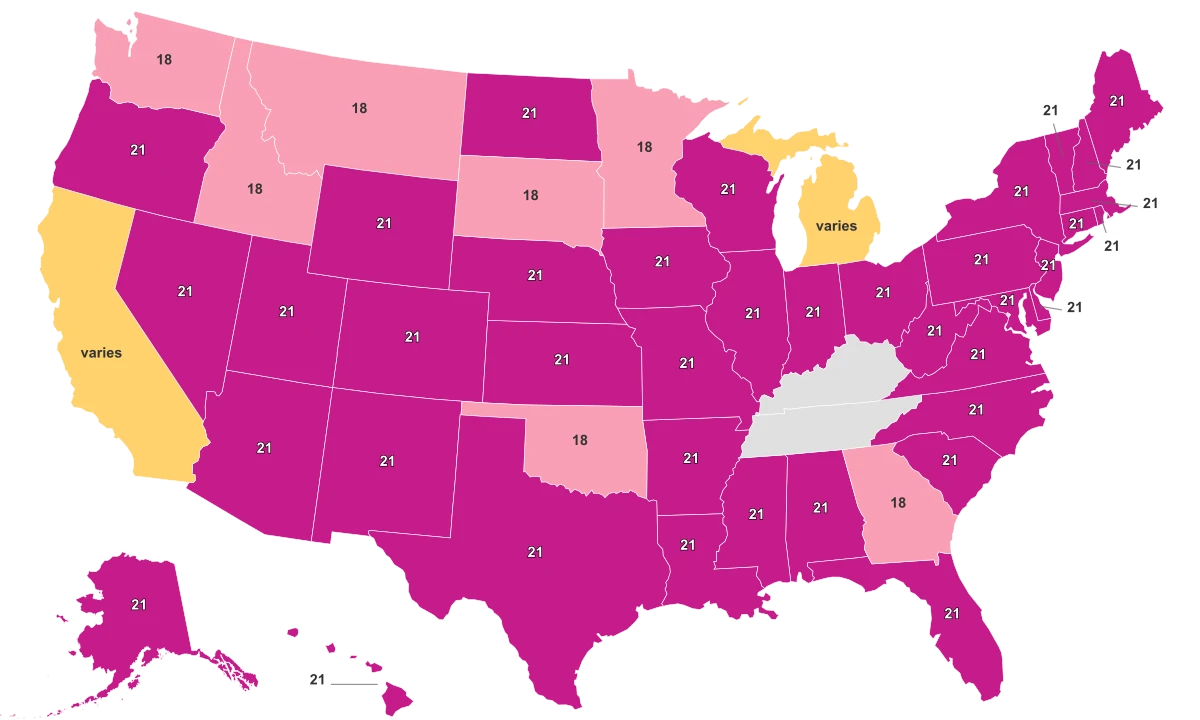
Minimum age required to enter and gamble in casinos.