Pet Raccoon Legal States

 | Alabama | Illegal | |
 | Alaska | Illegal | |
 | Arizona | Illegal | |
 | Arkansas | Legal | |
 | California | Illegal | |
 | Colorado | Illegal | |
 | Connecticut | Illegal | |
 | Delaware | Illegal | |
 | Florida | Legal | |
 | Georgia | Illegal | |
 | Hawaii | Illegal | |
 | Idaho | Illegal | |
 | Illinois | Legal | |
 | Indiana | Legal | |
 | Iowa | Illegal | |
 | Kansas | Illegal | |
 | Kentucky | Illegal | |
 | Louisiana | Illegal | |
 | Maine | Illegal | |
 | Maryland | Illegal | |
 | Massachusetts | Illegal | |
 | Michigan | Illegal | |
 | Minnesota | Illegal | |
 | Mississippi | Illegal | |
 | Missouri | Illegal | |
 | Montana | Illegal | |
 | Nebraska | Legal | |
 | Nevada | Illegal | |
 | New Hampshire | Illegal | |
 | New Jersey | Legal | |
 | New Mexico | Illegal | |
 | New York | Illegal | |
 | North Carolina | Illegal | |
 | North Dakota | Illegal | |
 | Ohio | Legal | |
 | Oklahoma | Legal | |
 | Oregon | Illegal | |
 | Pennsylvania | Illegal | |
 | Rhode Island | Illegal | |
 | South Carolina | Legal | |
 | South Dakota | Legal | |
 | Tennessee | Legal | |
 | Texas | Illegal | |
 | Utah | Illegal | |
 | Vermont | Illegal | |
 | Virginia | Illegal | |
 | Washington | Illegal | |
 | West Virginia | Illegal | |
 | Wisconsin | Legal | |
 | Wyoming | Legal |
Last updated April 2, 2026
Raccoon Ownership Is Legal in 13 States, but "Legal" Does Not Mean Simple
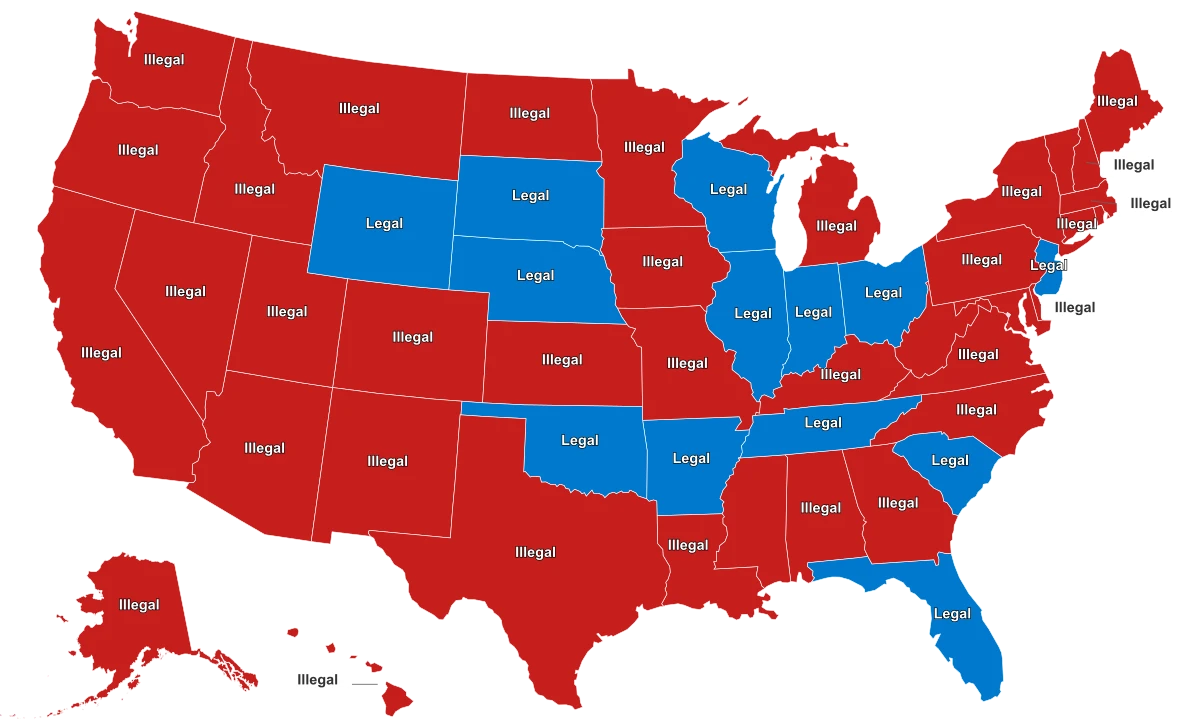
The first thing most people discover when they start researching raccoon ownership is that the answer changes depending on which state line you are standing on. There is no federal law banning pet raccoons. Instead, legality is determined state by state, and sometimes county by county, creating a patchwork that ranges from outright bans to permit requirements to no restrictions at all.
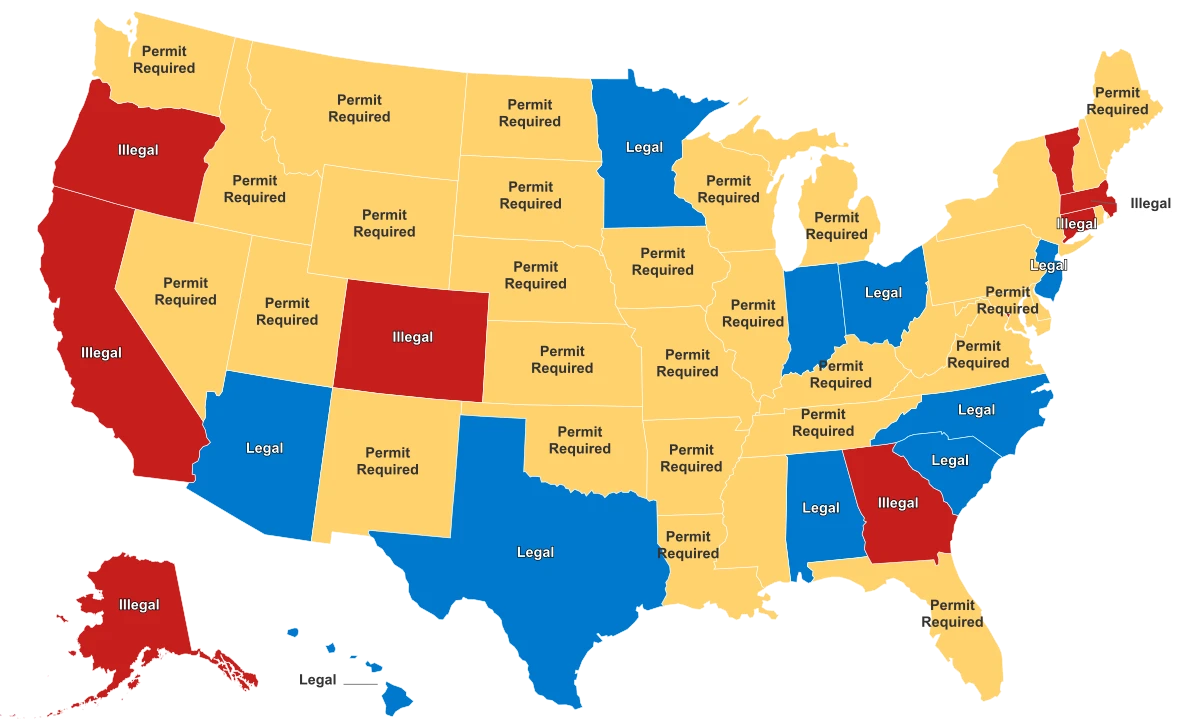
The 13 states where raccoon ownership is legal are Arkansas, Florida, Illinois, Indiana, Nebraska, New Jersey, Ohio, Oklahoma, South Carolina, South Dakota, Tennessee, Wisconsin, and Wyoming. The remaining 37 states either ban ownership outright or restrict it so heavily that it is functionally impossible for a private individual.
Even where raccoons are legal, practical hurdles are steep. Most states require a wildlife permit before you can acquire the animal, and the permit processes vary widely. Florida's Fish and Wildlife Conservation Commission issues a free Class III Wildlife Personal Pet permit, but requires a caging inspection before approval. Indiana's DNR requires a Class II Wild Animal Possession Permit with annual renewal at roughly $20. Ohio charges about $25 per year and limits owners to a maximum of four captive-bred raccoons.
In all permit states, the animal must come from a USDA-licensed breeder. Taking a raccoon from the wild is illegal in virtually every jurisdiction, even where ownership itself is permitted. Prices from licensed breeders generally range from $300 to $700 for a hand-raised kit. And even if your state allows ownership, your city, county, or HOA may impose its own ban.
All Metrics
| Region ↕ | Pet Raccoon Legality 2023↕ | Pet Fox Legality 2023↕ | Pet Monkey Legality↕ | Pet Otter Legality↕ |
|---|---|---|---|---|
| Texas | Illegal | |||
| Hawaii | Illegal | |||
| Missouri | Illegal | |||
| Delaware | Illegal | |||
| New York | Illegal | |||
| New Jersey | Legal | |||
| Mississippi | Illegal | |||
| Wyoming | Legal | |||
| Alabama | Illegal | |||
| Oklahoma | Legal | |||
| Virginia | Illegal | |||
| Washington | Illegal | |||
| Nebraska | Legal | |||
| South Dakota | Legal | |||
| Utah | Illegal | |||
| Nevada | Illegal | |||
| Indiana | Legal | |||
| Maine | Illegal | |||
| Maryland | Illegal | |||
| Minnesota | Illegal | |||
| Kansas | Illegal | |||
| Alaska | Illegal | |||
| Pennsylvania | Illegal | |||
| Tennessee | Legal | |||
| Florida | Legal | |||
| South Carolina | Legal | |||
| Colorado | Illegal | |||
| Louisiana | Illegal | |||
| Oregon | Illegal | |||
| Massachusetts | Illegal | |||
| Iowa | Illegal | |||
| Montana | Illegal | |||
| Rhode Island | Illegal | |||
| North Dakota | Illegal | |||
| Kentucky | Illegal | |||
| Vermont | Illegal | |||
| North Carolina | Illegal | |||
| Arizona | Illegal | |||
| Connecticut | Illegal | |||
| Illinois | Legal | |||
| Ohio | Legal | |||
| Arkansas | Legal | |||
| Michigan | Illegal | |||
| West Virginia | Illegal | |||
| New Mexico | Illegal | |||
| Georgia | Illegal | |||
| New Hampshire | Illegal | |||
| Wisconsin | Legal | |||
| California | Illegal | |||
| Idaho | Illegal |
The Rabies Problem Is Why Most States Say No
Raccoons are one of four mammals classified as primary rabies vector species by the Centers for Disease Control and Prevention, alongside bats, skunks, and foxes. That classification is the single biggest reason 37 states ban or restrict ownership. According to CDC surveillance data, raccoons account for roughly 30% of all confirmed rabid animals in the United States, consistently ranking as the most commonly reported rabid wildlife species.
The concern is not just that raccoons can carry rabies. It is that no FDA-approved rabies vaccine exists for captive raccoons. Some owners work around this by finding veterinarians willing to administer a canine vaccine off-label, but that vaccine carries no legal weight. If a pet raccoon bites or scratches someone, the standard protocol in most jurisdictions is euthanasia and brain tissue testing, because there is no reliable live test for rabies.
Rabies is not the only health risk. Raccoons are common carriers of Baylisascaris procyonis, a parasitic roundworm whose eggs are shed in feces and can persist in the environment for years. If a human accidentally ingests or inhales these microscopic eggs, the larvae can migrate through the body and cause severe, potentially fatal neurological damage. The CDC considers Baylisascaris a serious zoonotic threat, and it is present in a significant share of wild raccoon populations across the eastern United States.
This is the core tension in the legality debate. Raccoon owners point out that captive-bred animals raised indoors have virtually zero exposure risk. State wildlife agencies counter that the liability framework has not caught up with the exotic pet market, and that banning ownership is simpler than building a regulatory infrastructure for an animal that most people are not equipped to care for.
What It Actually Takes to Keep a Raccoon
Legality is only the first hurdle. Raccoons are intelligent, destructive, and nocturnal. They require significantly more space and enrichment than a typical house pet. Most exotic animal veterinarians recommend an outdoor enclosure of at least 10 by 10 feet with climbing structures, water features, and rotating enrichment objects.
Raccoons cannot be litter-trained with the same reliability as cats. They will open cabinets, turn on faucets, and disassemble anything held together by latches or screws. Their dexterity is roughly comparable to a toddler's, but unlike toddlers, they do not outgrow the destructive phase. Aggression often increases sharply around six months, when raccoons reach sexual maturity, and many owners who found the animal charming as a kit are overwhelmed by its adult behavior.
Finding veterinary care is one of the most underestimated challenges. Most veterinarians will not treat raccoons because they are classified as a rabies vector species and are not domesticated. Owners in raccoon-legal states may need to travel hours to reach an exotic animal practice willing to see the animal at all. That gap means routine health issues that would be trivial for a dog or cat can become emergencies.
Florida's permit requires applicants to submit a written disaster plan and pass a caging inspection with minimum enclosure dimensions and nest boxes. Indiana's demands annual renewal with proof of veterinary care and documentation that the raccoon came from a USDA-licensed breeder. Ohio requires detailed enclosure plans, limits ownership to four animals, and mandates a veterinary health certificate for any raccoon imported from another state. None of this makes raccoon ownership impossible. But it does mean that the gap between "is it legal?" and "should I actually do this?" is wider for raccoons than for almost any other animal people search for as pets.
The States That Ban Every Exotic Pet on This List
This dataset tracks legality for four exotic animals: raccoons, foxes, monkeys, and otters. Cross-referencing all four reveals a clear divide between permissive and restrictive states.
19 states ban all four. Texas, Hawaii, Alabama, Washington, Maine, Maryland, Minnesota, Alaska, Colorado, Louisiana, Massachusetts, Iowa, Montana, Rhode Island, Kentucky, Vermont, Arizona, Georgia, and New Hampshire prohibit private ownership of raccoons, foxes, monkeys, and otters without exception. These states have generally concluded that the public health and animal welfare risks of exotic ownership outweigh any private interest.
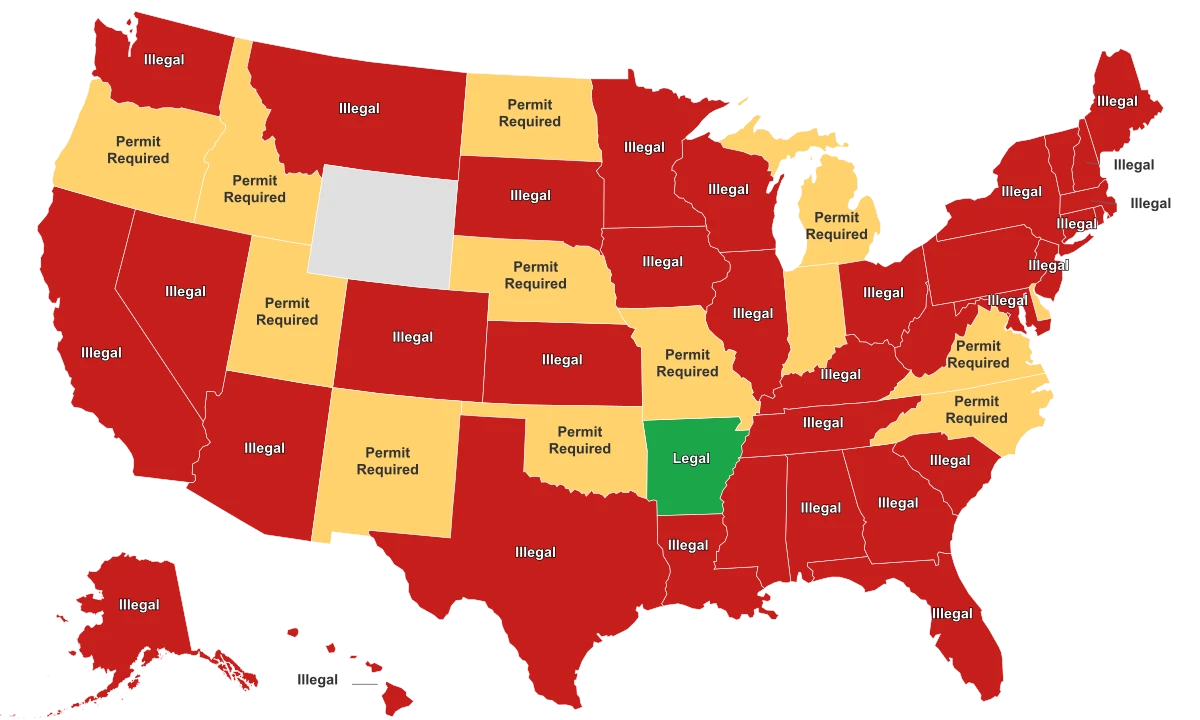
At the other end of the spectrum, a handful of states are consistently permissive across species. Arkansas is the most open: it is the only state in the country where pet foxes are fully legal without a permit, and it also allows raccoons. Tennessee allows raccoons, monkeys, and otters. Indiana allows raccoons and requires permits for foxes, monkeys, and otters, making it one of the few states where all four animals are at least theoretically accessible.
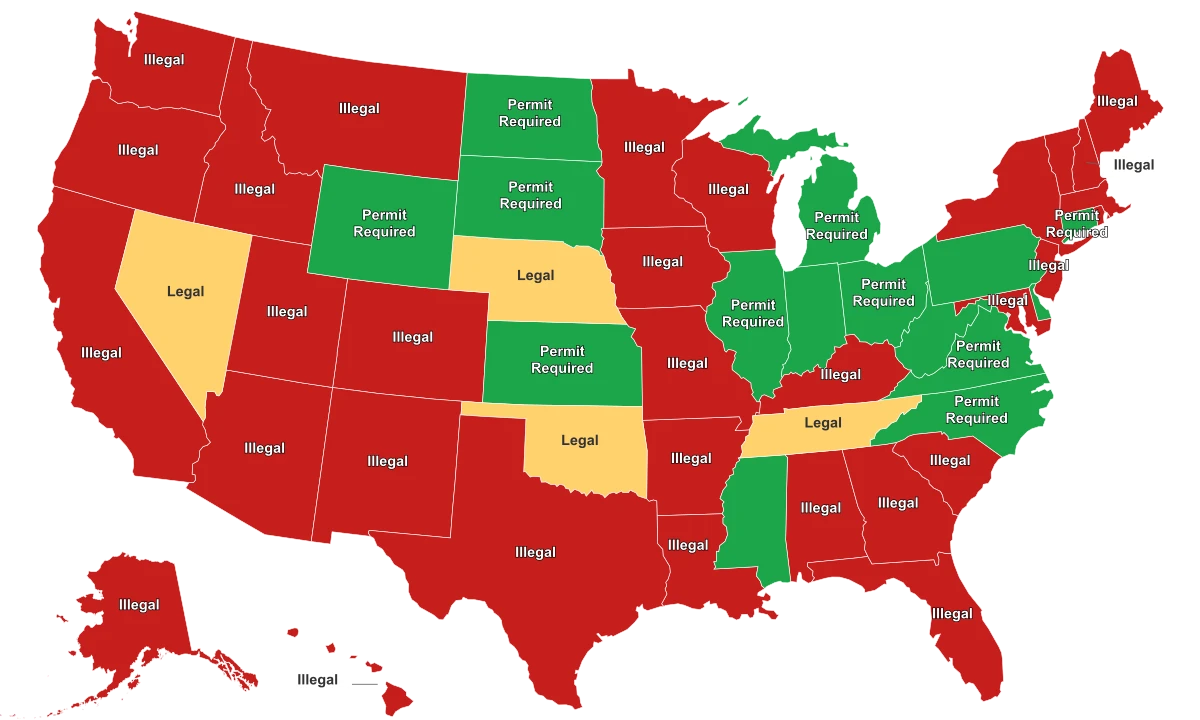
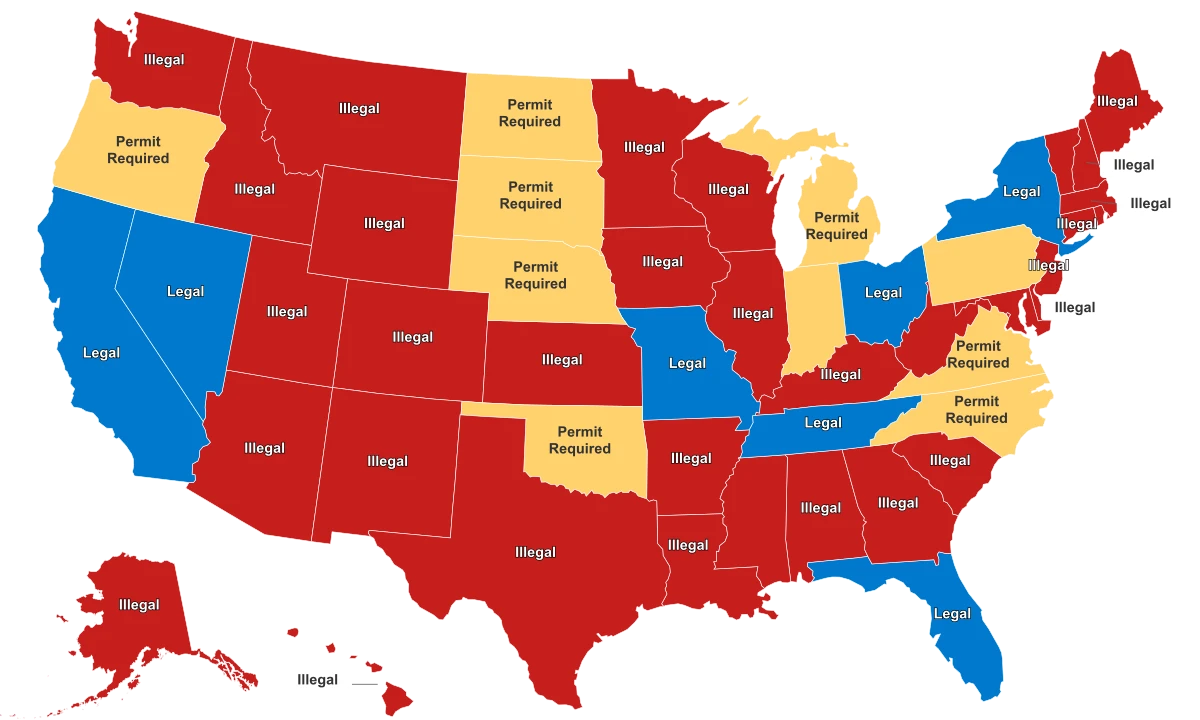
The fox data is the most restrictive overall. Only one state (Arkansas) allows pet foxes outright. Thirteen states require permits. The remaining 36 ban them entirely. Monkeys follow a slightly more permissive pattern: four states allow them outright (Nebraska, Nevada, Oklahoma, Tennessee), 15 require permits, and 31 ban them. Otters sit in between: seven states allow them, 10 require permits, and 34 ban them.
The pattern that emerges is not a neat ideological divide between "freedom" states and "regulation" states. It is a species-by-species patchwork driven by specific wildlife management priorities, historical precedent, and the lobbying influence of exotic animal trade groups. A state that bans raccoons may allow monkeys with a permit. A state that allows otters may ban foxes entirely. The only consistent rule is that there is no consistent rule.
Sources & Notes
Legal status of owning raccoons as pets.
Legal status of owning foxes as pets.
Legal status of owning monkeys as pets.
Legal status of owning otters as pets.