Countries Where Porn Is Illegal

 | Afghanistan | Illegal | |
 | Albania | Legal | |
 | Algeria | Illegal | |
 | Andorra | Legal | |
 | Angola | No data | |
 | Antigua and Barbuda | No data | |
 | Argentina | Legal | |
 | Armenia | Illegal | |
 | Australia | Restricted | |
 | Austria | Legal | |
 | Azerbaijan | Illegal | |
 | Bahamas | Illegal | |
 | Bahrain | Illegal | |
 | Bangladesh | Illegal | |
 | Barbados | No data | |
 | Belarus | Illegal | |
 | Belgium | Legal | |
 | Belize | Sale: Illegal, Possession: Legal, Production: Illegal | |
 | Benin | Illegal | |
 | Bhutan | Illegal | |
 | Bolivia | No data | |
 | Bosnia and Herzegovina | Legal | |
 | Botswana | Illegal | |
 | Brazil | Legal | |
 | Brunei | Illegal | |
 | Bulgaria | Sale: Illegal, Possession: Legal, Production: Illegal | |
 | Burkina Faso | Illegal | |
 | Burundi | Illegal | |
 | Cameroon | Illegal | |
 | Canada | Legal | |
 | Cape Verde | No data | |
 | Central African Republic | Illegal | |
 | Chad | Illegal | |
 | Chile | Legal | |
 | China | Illegal | |
 | Colombia | Legal | |
 | Comoros | Illegal | |
 | Costa Rica | No data | |
 | Croatia | Legal | |
 | Cuba | Illegal | |
 | Cyprus | No data | |
 | Czech Republic | Legal | |
 | Denmark | Legal | |
 | Djibouti | Illegal | |
 | Dominica | No data | |
 | Dominican Republic | No data | |
 | DR Congo | Illegal | |
 | Ecuador | Legal | |
 | Egypt | Illegal | |
 | El Salvador | No data | |
 | Equatorial Guinea | Illegal | |
 | Eritrea | Illegal | |
 | Estonia | Legal | |
 | Eswatini | No data | |
 | Ethiopia | Illegal | |
 | Fiji | No data | |
 | Finland | Legal | |
 | France | Legal | |
 | Gabon | Illegal | |
 | Gambia | Illegal | |
 | Georgia | Illegal | |
 | Germany | Legal | |
 | Ghana | Illegal | |
 | Greece | Legal | |
 | Grenada | No data | |
 | Guatemala | No data | |
 | Guinea | Illegal | |
 | Guinea Bissau | Illegal | |
 | Guyana | Illegal | |
 | Haiti | No data | |
 | Honduras | No data | |
 | Hong Kong | Illegal | |
 | Hungary | Legal | |
 | Iceland | Illegal | |
 | India | Illegal | |
 | Indonesia | Illegal | |
 | Iran | Illegal | |
 | Iraq | Illegal | |
 | Ireland | Legal | |
 | Israel | Legal | |
 | Italy | Legal | |
 | Ivory Coast | Illegal | |
 | Jamaica | Legal | |
 | Japan | Legal | |
 | Jordan | Illegal | |
 | Kenya | Illegal | |
 | Kiribati | Illegal | |
 | Kuwait | Illegal | |
 | Kyrgyzstan | No data | |
 | Laos | Illegal | |
 | Latvia | Legal | |
 | Lebanon | Illegal | |
 | Lesotho | Illegal | |
 | Liberia | Illegal | |
 | Libya | Illegal | |
 | Liechtenstein | Legal | |
 | Lithuania | Illegal | |
 | Luxembourg | Legal | |
 | Macau | Restricted | |
 | Madagascar | Illegal | |
 | Malawi | No data | |
 | Malaysia | Illegal | |
 | Maldives | Illegal | |
 | Mali | Illegal | |
 | Malta | Legal | |
 | Marshall Islands | No data | |
 | Mauritania | Illegal | |
 | Mauritius | No data | |
 | Mexico | Legal | |
 | Micronesia | No data | |
 | Moldova | Legal | |
 | Monaco | Legal | |
 | Mongolia | Illegal | |
 | Montenegro | Legal | |
 | Morocco | Illegal | |
 | Mozambique | Illegal | |
 | Myanmar | Illegal | |
 | Namibia | Illegal | |
 | Nauru | No data | |
 | Nepal | Illegal | |
 | Netherlands | Legal | |
 | New Zealand | Restricted | |
 | Nicaragua | No data | |
 | Niger | Illegal | |
 | Nigeria | Illegal | |
 | North Korea | Illegal | |
 | North Macedonia | Legal | |
 | Norway | Legal | |
 | Oman | Illegal | |
 | Pakistan | Illegal | |
 | Palau | No data | |
 | Panama | No data | |
 | Papua New Guinea | Illegal | |
 | Paraguay | No data | |
 | Peru | No data | |
 | Philippines | Illegal | |
 | Poland | Legal | |
 | Portugal | Legal | |
 | Qatar | Illegal | |
 | Republic of the Congo | Illegal | |
 | Romania | Legal | |
 | Russia | Sale: Restricted, Possession: Legal, Production: Restricted | |
 | Rwanda | Illegal | |
 | Saint Kitts and Nevis | No data | |
 | Saint Lucia | No data | |
 | Samoa | No data | |
 | San Marino | Legal | |
 | Sao Tome and Principe | Illegal | |
 | Saudi Arabia | Illegal | |
 | Senegal | Illegal | |
 | Serbia | Legal | |
 | Seychelles | No data | |
 | Sierra Leone | Illegal | |
 | Singapore | Illegal | |
 | Slovakia | Legal | |
 | Slovenia | Legal | |
 | Solomon Islands | Illegal | |
 | Somalia | Illegal | |
 | South Africa | Restricted | |
 | South Korea | Illegal | |
 | South Sudan | Illegal | |
 | Spain | Legal | |
 | Sri Lanka | Illegal | |
 | Sudan | Illegal | |
 | Suriname | No data | |
 | Sweden | Legal | |
 | Switzerland | Legal | |
 | Syria | Illegal | |
 | Taiwan | Restricted | |
 | Tajikistan | No data | |
 | Tanzania | Illegal | |
 | Thailand | Illegal | |
 | Timor Leste | No data | |
 | Togo | Illegal | |
 | Tonga | No data | |
 | Trinidad and Tobago | No data | |
 | Tunisia | Illegal | |
 | Turkey | Restricted | |
 | Turkmenistan | Illegal | |
 | Tuvalu | No data | |
 | Uganda | Illegal | |
 | Ukraine | Illegal | |
 | United Arab Emirates | Illegal | |
 | United Kingdom | Sale: Restricted, Possession: Restricted, Production: Legal | |
 | United States | Legal | |
 | Uzbekistan | Illegal | |
 | Vanuatu | No data | |
 | Vatican City | Illegal | |
 | Venezuela | Legal | |
 | Vietnam | Illegal | |
 | Western Sahara | Illegal | |
 | Yemen | Illegal | |
 | Zambia | Illegal | |
 | Zimbabwe | Illegal |
Last updated April 1, 2026
More Than 90 Countries Restrict Pornography, but "Illegal" Means Very Different Things
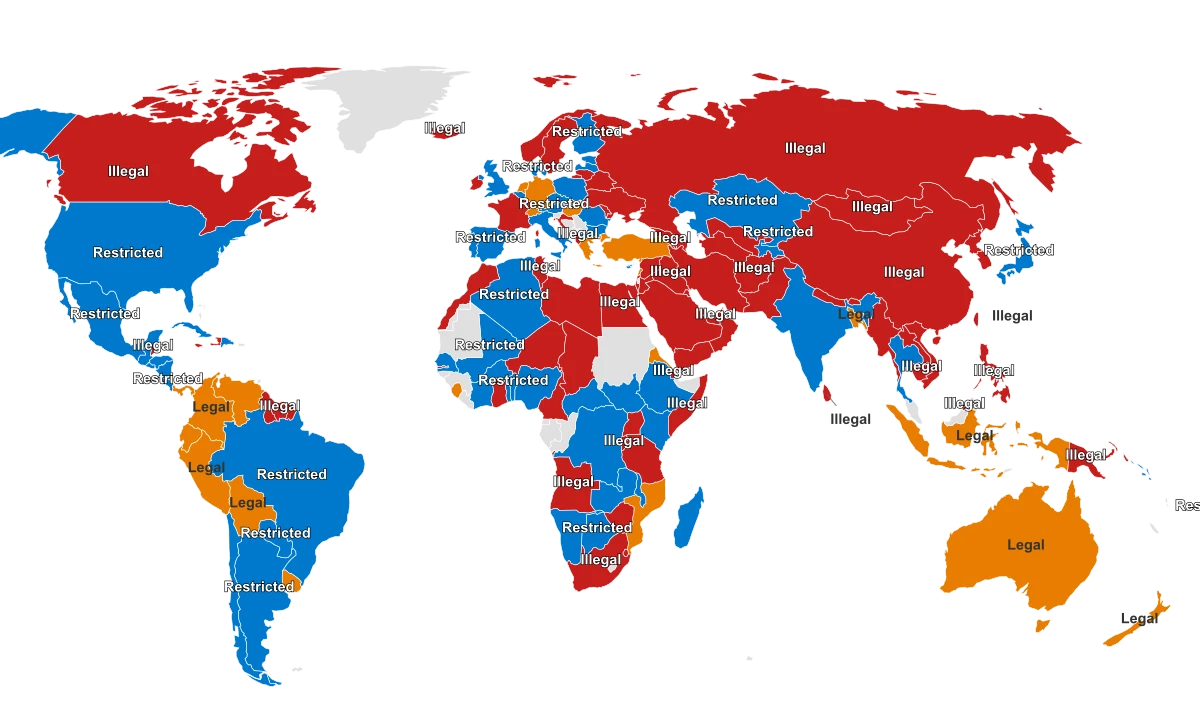
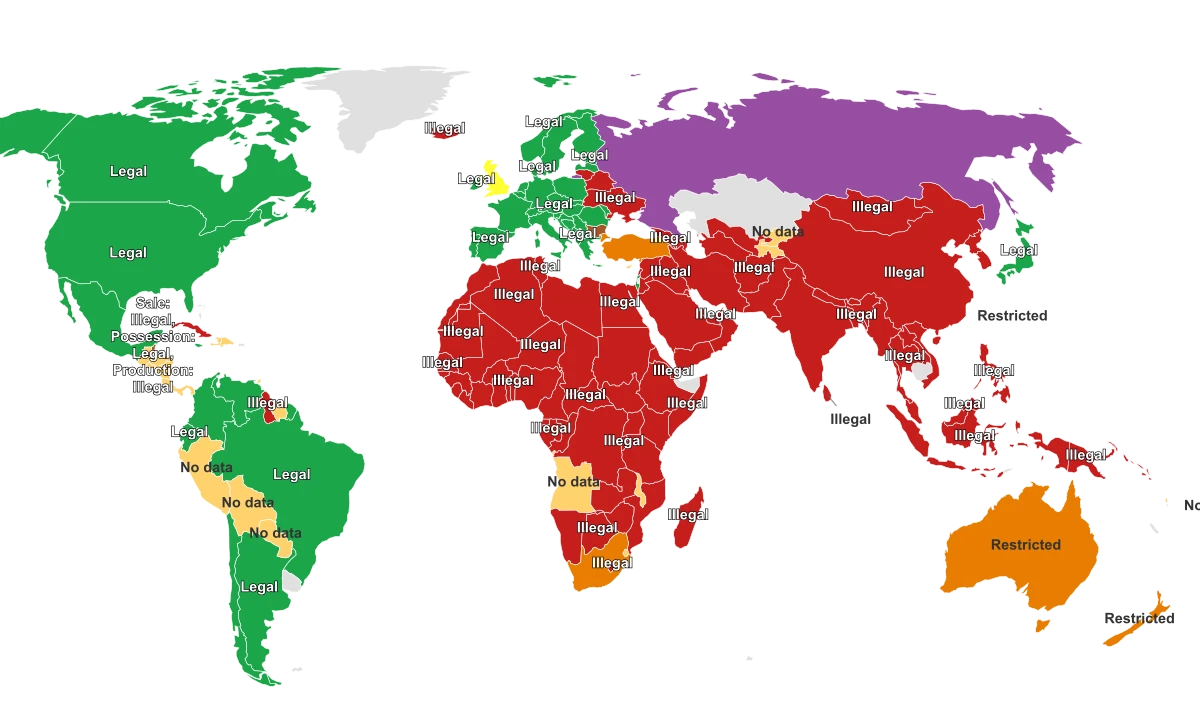
The word "illegal" does a lot of heavy lifting in this dataset. Across 194 countries with available data, more than 90 classify pornography as either illegal or restricted in some form. That includes every country in the Middle East, most of Sub-Saharan Africa, and large portions of Southeast Asia. Europe, by contrast, is overwhelmingly permissive: nearly every EU member state classifies pornography as legal.
But the same classification label covers wildly different realities. Iceland has banned pornography since 1869 under Article 210 of its General Penal Code. The law has never been meaningfully enforced. Pornographic material has been openly available in Icelandic bookstores and sex shops for decades, and the country scores 94 out of 100 on Freedom House's Internet Freedom index, the highest in the world. China, which also classifies pornography as illegal, scores 9 out of 100 on the same index and deploys one of the most sophisticated censorship systems ever built to enforce the ban.
Both countries appear as "Illegal" on the map. What that means for a person living in Reykjavik versus someone living in Beijing could not be more different. The data captures what the law says. It does not capture what the law does.
Most of the countries where pornography is legal cluster in Western and Central Europe, the Americas, and parts of East Asia. Denmark was the first country to legalize pornography, in 1969. Today, nations like Germany, France, Japan, Brazil, and the United States all permit adult pornography, subject to restrictions on content involving minors and, increasingly, age-verification requirements for online access.
All Metrics
Religious Law Drives Most Bans, but Authoritarianism Drives the Enforcement
The countries that ban pornography split into two broad groups with fundamentally different motivations, and the Internet Freedom data exposes the gap between them.
The first group is driven by religious law. Every country in the Middle East and North Africa classifies pornography as illegal: Saudi Arabia, Iran, United Arab Emirates, Qatar, Kuwait, Oman, Bahrain, Yemen, Iraq, Jordan, Egypt, Libya, Algeria, Tunisia, Morocco, and Sudan. The legal basis is typically a penal code influenced by Islamic jurisprudence, which criminalizes "obscene" or "indecent" material. Enforcement ranges from active ISP-level blocking to sporadic prosecution. Freedom House classifies all but three of these countries as "Not Free."
The second group bans pornography as part of broader political censorship. China and Myanmar are both statistical outliers in this dataset, scoring just 9 on the Internet Freedom index, more than two standard deviations below the mean. They are joined by North Korea, Vietnam (22), Cuba (20), Belarus (22), Turkmenistan, and Uzbekistan (27). In these states, the pornography ban is one layer of a much thicker censorship infrastructure. China's Great Firewall uses Deep Packet Inspection to block content across categories: political dissent, foreign news, social media, and pornography are all filtered through the same system.
The practical distinction matters. In a religious-law state like Saudi Arabia, the ban reflects a specific moral framework applied to sexual content. In an authoritarian-control state like China, pornography censorship is inseparable from the state's broader project of controlling all online information. The same legal classification masks two entirely different relationships between the government and its citizens' internet access.
Sub-Saharan Africa falls somewhere between the two. Countries like Nigeria, Kenya, Uganda, Tanzania, Ghana, Cameroon, and Ethiopia classify pornography as illegal, often under colonial-era penal codes or post-independence morality statutes. Enforcement is inconsistent. Nigeria scores 59 on Internet Freedom and is classified as "Partly Free." Ghana scores 65 and is classified as "Free." For most of these countries, the ban exists on the books but technical enforcement infrastructure is limited.
South Korea and Iceland Banned Pornography. Neither Enforces It the Way You'd Expect.
The most counterintuitive entries on this map are the democracies. Several countries classified as "Free" by Freedom House also ban pornography: South Korea, Iceland, Bhutan, Mongolia, the Bahamas, and Guyana among them. Their presence on the ban list challenges the assumption that pornography restrictions are a marker of authoritarianism.
South Korea is the most striking case. It is the world's 13th-largest economy, a vibrant democracy, and home to one of the fastest internet networks on Earth. It also actively blocks pornographic websites. The Korea Communications Standards Commission (KCSC) orders ISPs to redirect users who attempt to access adult sites to a government warning page. In 2019, the government extended blocking to HTTPS traffic using Server Name Indication (SNI) filtering, a move that drew significant public backlash and a petition with over 250,000 signatures opposing it.
But the enforcement has clear limits. VPN usage is legal in South Korea, and circumventing the blocks is widespread. No one is prosecuted for viewing pornography in private. The ban targets distribution and access at the network level, not individual consumption. South Korea's Internet Freedom score of 66 reflects a country with genuine democratic internet governance that has carved out a specific exception for sexual content.
Iceland tells an even stranger story. Its pornography ban dates to 1869. It has never been seriously enforced. In 2013, Interior Minister Ögmundur Jónasson proposed updating the law to block online pornography, framing it explicitly as a feminist and child-protection measure rather than a morality campaign. Iceland had already criminalized the purchase of sex in 2009 under the Nordic Model and banned commercial stripping in 2010. The pornography proposal drew intense international attention, but it lost momentum when the government changed after that year's elections. Nothing was enacted, and Iceland's score of 94 on Internet Freedom reflects a country where the ban is effectively a legal artifact.
What "Restricted" Actually Looks Like
Between the countries that ban pornography outright and those that permit it freely sits a growing middle category. The dataset classifies several countries as "Restricted" or with complex, split statuses, and this gray zone is where most of the active policy movement is happening.
The United Kingdom is classified as "Sale: Restricted, Possession: Restricted, Production: Legal." That reflects a layered regulatory approach. The UK's 2023 Online Safety Act requires platforms hosting pornography to implement "robust" age verification, and the regulator Ofcom has been developing enforcement standards. Extreme pornography depicting certain acts has been illegal to possess since 2009. But mainstream adult content is legal to produce and, for adults, legal to view.
Australia and New Zealand both classify pornography as "Restricted." Australia uses a national classification scheme administered by the Classification Board: material rated X18+ is legal to possess in some territories but cannot be sold in most states. New Zealand's Office of Film and Literature Classification can ban specific publications outright. Both countries permit adults to access mainstream pornography online, but the regulatory frameworks give the government tools to restrict specific content.
Russia occupies a different kind of gray zone: "Sale: Restricted, Possession: Legal, Production: Restricted." In practice, Russia's internet censorship agency, Roskomnadzor, has blocked major pornography sites since 2016. Russia's Internet Freedom score plummeted from 23 in 2022 to 20 in 2024, reflecting a broader crackdown on online freedom that extends well beyond sexual content.
Turkey (Restricted, Internet Freedom score of 31) blocked access to major pornography websites in 2011, and the blocks remain in place. Taiwan (Restricted, Internet Freedom score of 79) criminalizes distribution to minors and has content regulations, but does not block adult access at the network level. The same "Restricted" label covers approaches that range from light-touch classification to active ISP blocking.
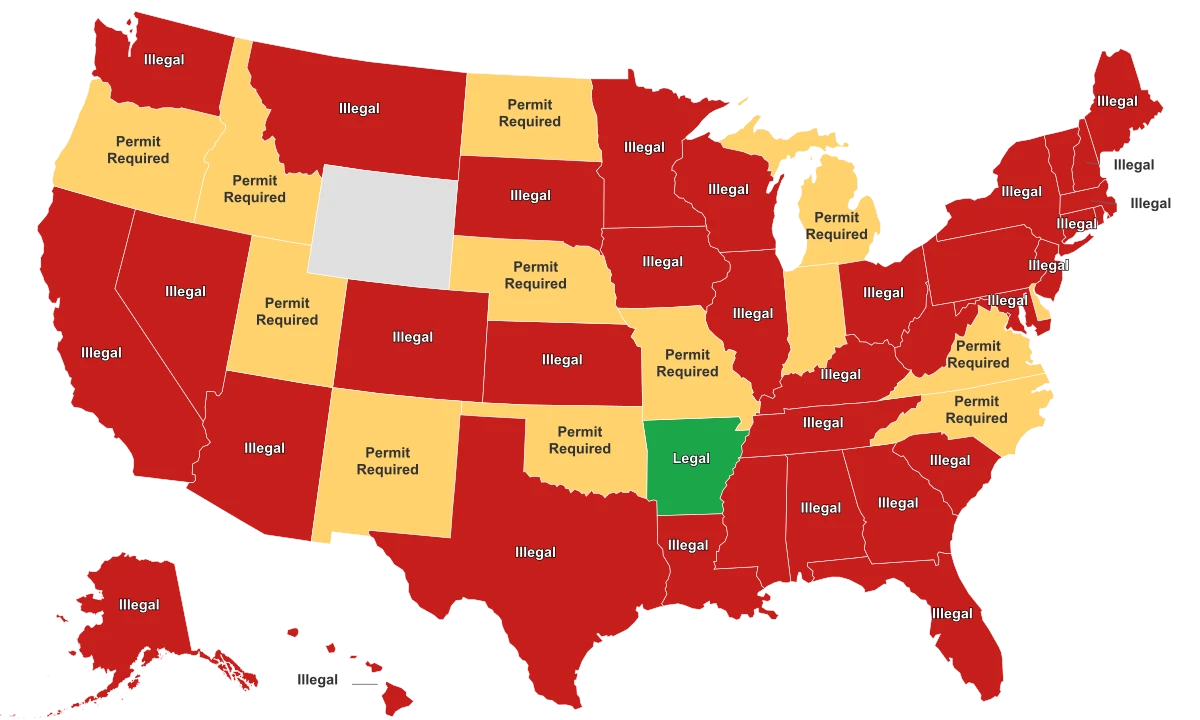
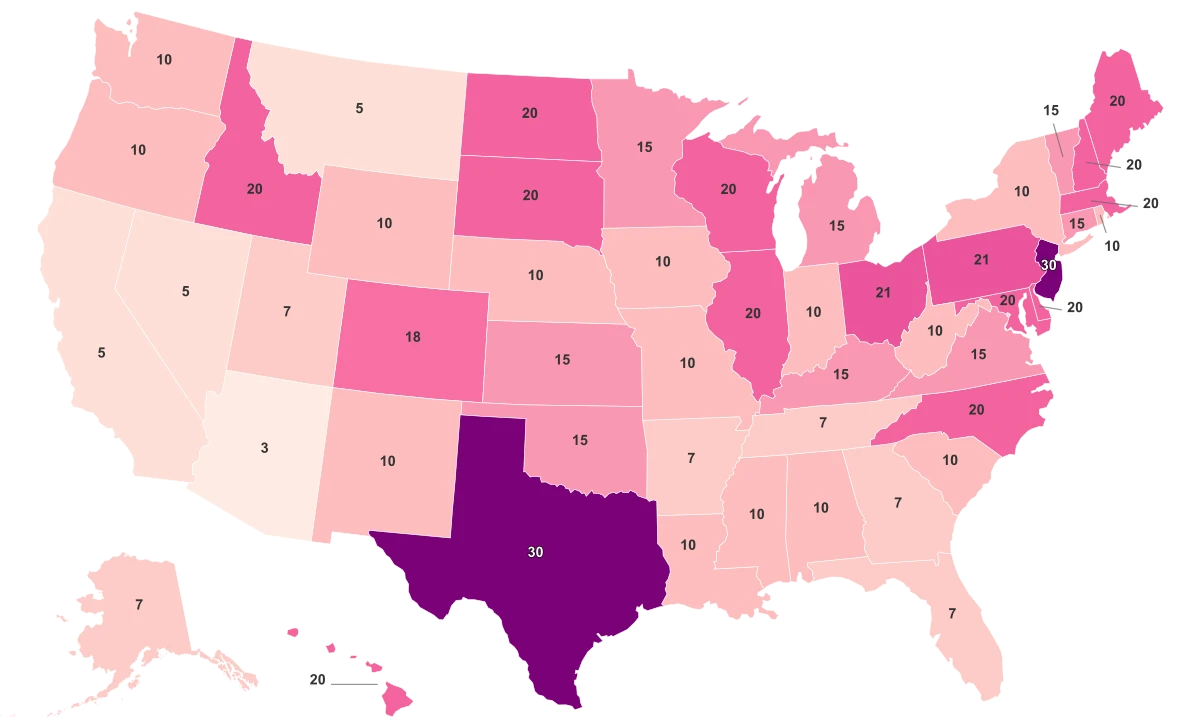
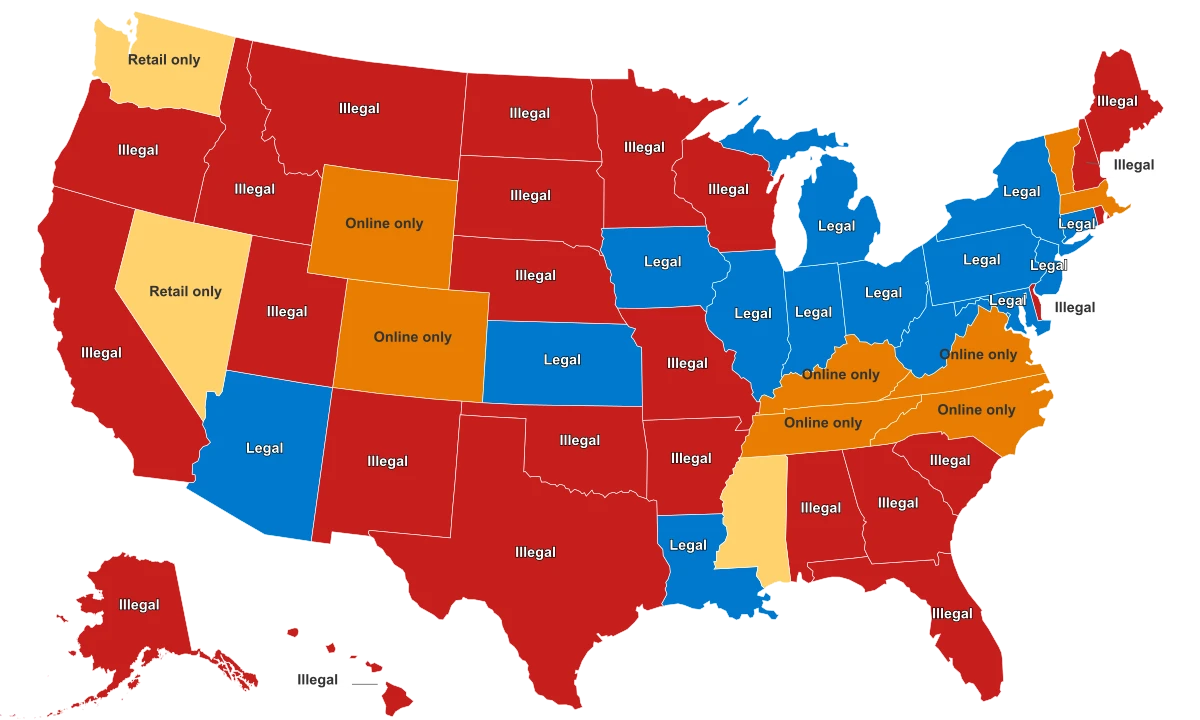
The newest frontier is age verification. France passed a law in 2024 requiring platforms to verify users' ages before granting access, and several U.S. states have enacted similar legislation. Some major platforms have responded by blocking access in those jurisdictions entirely rather than implementing verification systems. These are not bans. But for users in those states or countries, the practical effect can look similar.
Sources & Notes
Legal status of pornography.