Transgender Population By State

1 |  | California | 150,100 |
2 |  | Florida | 94,900 |
3 |  | Texas | 92,900 |
4 |  | New York | 81,800 |
5 |  | North Carolina | 71,300 |
6 |  | Pennsylvania | 56,000 |
7 |  | Georgia | 48,700 |
8 |  | Ohio | 46,500 |
9 |  | Illinois | 43,400 |
10 |  | New Jersey | 43,100 |
11 |  | Arizona | 41,200 |
12 |  | Massachusetts | 37,100 |
13 |  | Washington | 33,300 |
14 |  | Michigan | 33,000 |
15 |  | Virginia | 31,400 |
16 |  | Tennessee | 27,700 |
17 |  | Colorado | 27,000 |
18 |  | Minnesota | 26,000 |
19 |  | Indiana | 25,800 |
20 |  | Maryland | 24,000 |
21 |  | Oregon | 19,900 |
22 |  | South Carolina | 19,000 |
23 |  | Oklahoma | 18,900 |
24 |  | Alabama | 18,400 |
25 |  | Kentucky | 17,700 |
26 |  | Arkansas | 16,200 |
27 |  | Louisiana | 15,700 |
28 |  | Wisconsin | 15,500 |
29 |  | Connecticut | 15,300 |
30 |  | Utah | 13,700 |
31 |  | Kansas | 12,400 |
32 |  | New Mexico | 10,900 |
33 |  | Mississippi | 9,600 |
34 |  | Missouri | 9,500 |
35 |  | Nevada | 8,100 |
36 |  | Hawaii | 7,800 |
37 |  | Iowa | 7,100 |
38 |  | Idaho | 7,000 |
39 |  | Nebraska | 6,600 |
40 |  | Delaware | 6,300 |
40 |  | New Hampshire | 6,300 |
42 |  | Maine | 5,900 |
43 |  | Rhode Island | 5,700 |
43 |  | West Virginia | 5,700 |
45 |  | Alaska | 3,900 |
46 |  | Montana | 3,400 |
47 |  | South Dakota | 2,900 |
48 |  | Vermont | 2,700 |
49 |  | North Dakota | 2,500 |
50 |  | Wyoming | 2,100 |
Last updated February 28, 2026
The Transgender Community Across America
The transgender community in the United States is vibrant, diverse, and spread across every state in the nation, contributing significantly to the rich cultural tapestry. This population, defined by people whose gender identity does not align with the sex assigned to them at birth, is part of the larger LGBTQ+ community. As society progresses towards acceptance and understanding of varying gender identities, it is crucial to understand the distribution and patterns of the transgender population across different states.
Key findings from the data include:
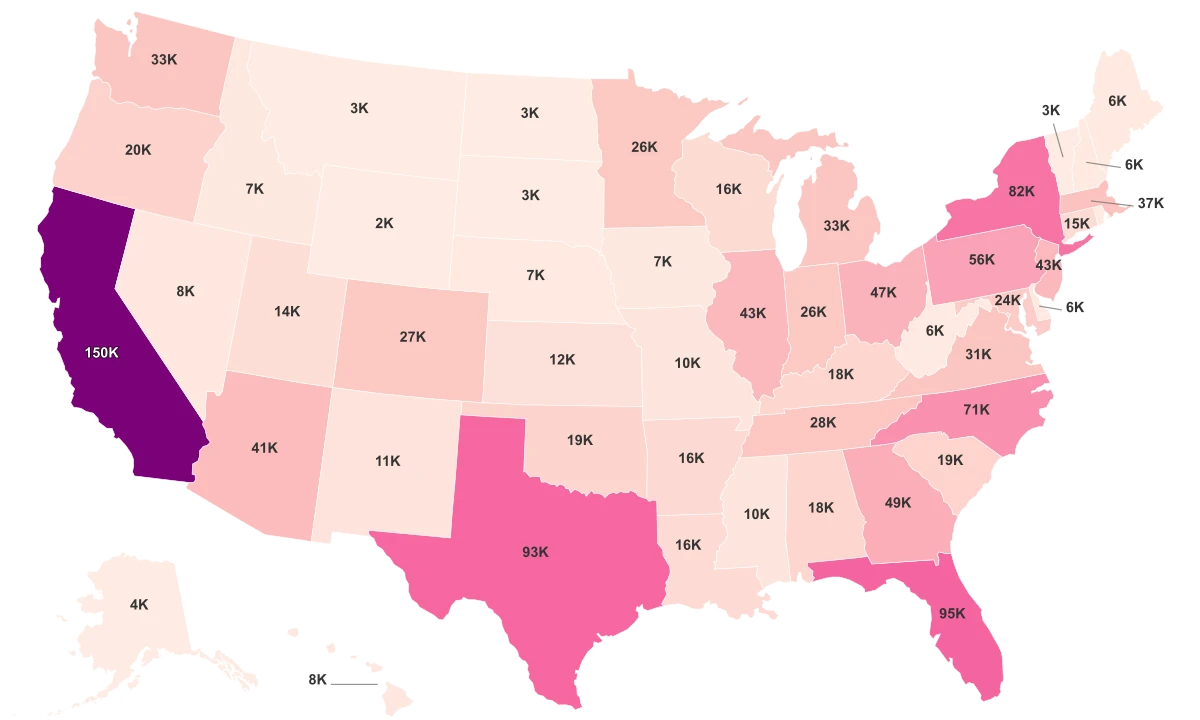
- California leads the way with the highest count of the transgender population estimated at 150,100 individuals. This may be due to the state’s progressive policies and overall welcoming social climate.
- Florida and Texas follow next, with 94,900 and 92,900 transgender individuals, respectively. New York with 81,800 and North Carolina with 71,300 individuals also show significant transgender populations.
- A broad trend suggests that states with higher overall populations tend to have higher numbers of transgender residents. However, notable exceptions exist. Michigan, for instance, despite having a relatively high overall population, ranks 14th with an estimated transgender population of 33,000.
All Metrics
| Region ↕ | Transgender Population 2022↕ | LGBTQ Population 2017↕ |
|---|---|---|
| California | 150,100 | |
| Florida | 94,900 | |
| Texas | 92,900 | |
| New York | 81,800 | |
| North Carolina | 71,300 | |
| Pennsylvania | 56,000 | |
| Georgia | 48,700 | |
| Ohio | 46,500 | |
| Illinois | 43,400 | |
| New Jersey | 43,100 | |
| Arizona | 41,200 | |
| Massachusetts | 37,100 | |
| Washington | 33,300 | |
| Michigan | 33,000 | |
| Virginia | 31,400 | |
| Tennessee | 27,700 | |
| Colorado | 27,000 | |
| Minnesota | 26,000 | |
| Indiana | 25,800 | |
| Maryland | 24,000 | |
| Oregon | 19,900 | |
| South Carolina | 19,000 | |
| Oklahoma | 18,900 | |
| Alabama | 18,400 | |
| Kentucky | 17,700 | |
| Arkansas | 16,200 | |
| Louisiana | 15,700 | |
| Wisconsin | 15,500 | |
| Connecticut | 15,300 | |
| Utah | 13,700 | |
| Kansas | 12,400 | |
| New Mexico | 10,900 | |
| Mississippi | 9,600 | |
| Missouri | 9,500 | |
| Nevada | 8,100 | |
| Hawaii | 7,800 | |
| Iowa | 7,100 | |
| Idaho | 7,000 | |
| Nebraska | 6,600 | |
| Delaware | 6,300 | |
| New Hampshire | 6,300 | |
| Maine | 5,900 | |
| Rhode Island | 5,700 | |
| West Virginia | 5,700 | |
| Alaska | 3,900 | |
| Montana | 3,400 | |
| South Dakota | 2,900 | |
| Vermont | 2,700 | |
| North Dakota | 2,500 | |
| Wyoming | 2,100 |
States with the Most Transgender Population
The state of California tops the list with a transgender population of 150,100. This comes as no surprise given the state's population size and longstanding reputation for political liberalism and progressive societal attitudes.
Next is the sunshine state of Florida, with 94,900 people identifying as transgender, followed closely by Texas, with 92,900.
New York, coming fourth, houses a vital transgender community of 81,800, and North Carolina, famous for its southern charm, is home to 71,300 transgender people.
The list continues with Pennsylvania accommodating 56,000 transgender individuals. While in Georgia, a state steeped in both the legacy of the civil rights movement and southern tradition, 48,700 individuals identify as transgender.
Ohio and Illinois are the eighth and ninth spots on our list, with 46,500 and 43,400 transgender individuals, respectively. The Garden State, New Jersey, rounds out the top ten list with a transgender population of 43,100.
States with the Most Transgender Population:
- California - 150,100
- Florida - 94,900
- Texas - 92,900
- New York - 81,800
- North Carolina - 71,300
- Pennsylvania - 56,000
- Georgia - 48,700
- Ohio - 46,500
- Illinois - 43,400
- New Jersey - 43,100
Sources & Notes
Total number of people who identify as transgender.
Total number of people who identify as LGBT+ (lesbian, gay, bisexual, transgender, and other sexual or gender minorities).