Mutual Combat States

 | Alabama | Illegal | |
 | Alaska | Illegal | |
 | Arizona | Illegal | |
 | Arkansas | Illegal | |
 | California | Illegal | |
 | Colorado | Illegal | |
 | Connecticut | Illegal | |
 | Delaware | Illegal | |
 | Florida | Illegal | |
 | Georgia | Illegal | |
 | Hawaii | Illegal | |
 | Idaho | Illegal | |
 | Illinois | Illegal | |
 | Indiana | Illegal | |
 | Iowa | Illegal | |
 | Kansas | Illegal | |
 | Kentucky | Illegal | |
 | Louisiana | Illegal | |
 | Maine | Illegal | |
 | Maryland | Illegal | |
 | Massachusetts | Illegal | |
 | Michigan | Illegal | |
 | Minnesota | Illegal | |
 | Mississippi | Illegal | |
 | Missouri | Illegal | |
 | Montana | Illegal | |
 | Nebraska | Illegal | |
 | Nevada | Illegal | |
 | New Hampshire | Illegal | |
 | New Jersey | Illegal | |
 | New Mexico | Illegal | |
 | New York | Illegal | |
 | North Carolina | Illegal | |
 | North Dakota | Illegal | |
 | Ohio | Illegal | |
 | Oklahoma | Illegal | |
 | Oregon | Illegal | |
 | Pennsylvania | Illegal | |
 | Rhode Island | Illegal | |
 | South Carolina | Illegal | |
 | South Dakota | Illegal | |
 | Tennessee | Illegal | |
 | Texas | Legal | |
 | Utah | Illegal | |
 | Vermont | Illegal | |
 | Virginia | Illegal | |
 | Washington | Legal | |
 | West Virginia | Illegal | |
 | Wisconsin | Illegal | |
 | Wyoming | Illegal |
Last updated April 2, 2026
Two States Allow It on Paper. Neither Allows It the Way You Think.
Mutual combat is the legal term for a consensual fight between two willing participants. It is distinct from self-defense, which involves one person responding to a threat they did not seek out. The question most people arrive at this page with is straightforward: can two adults agree to fight each other without breaking the law?
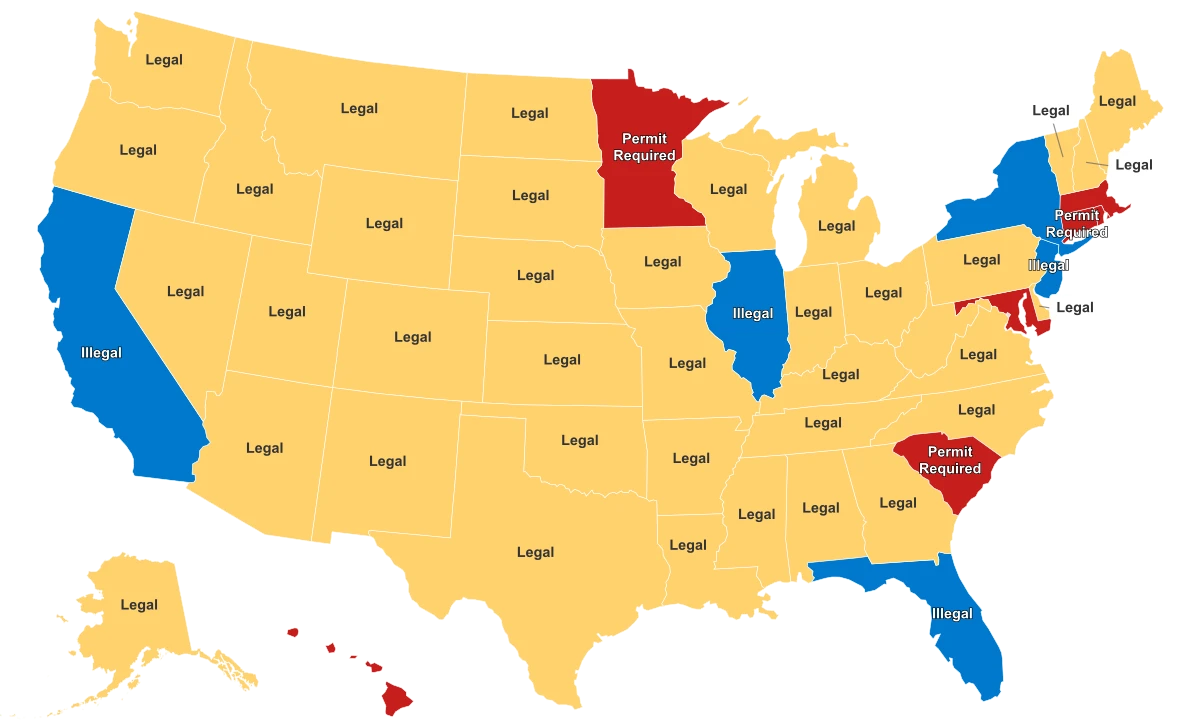
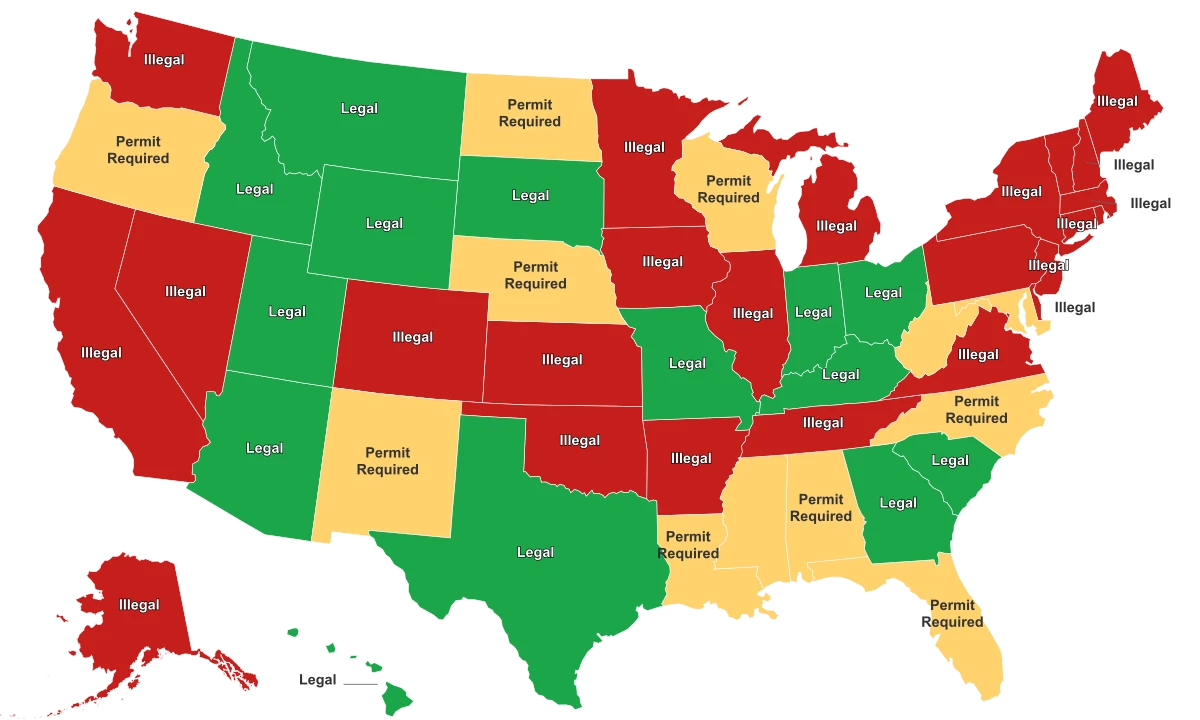
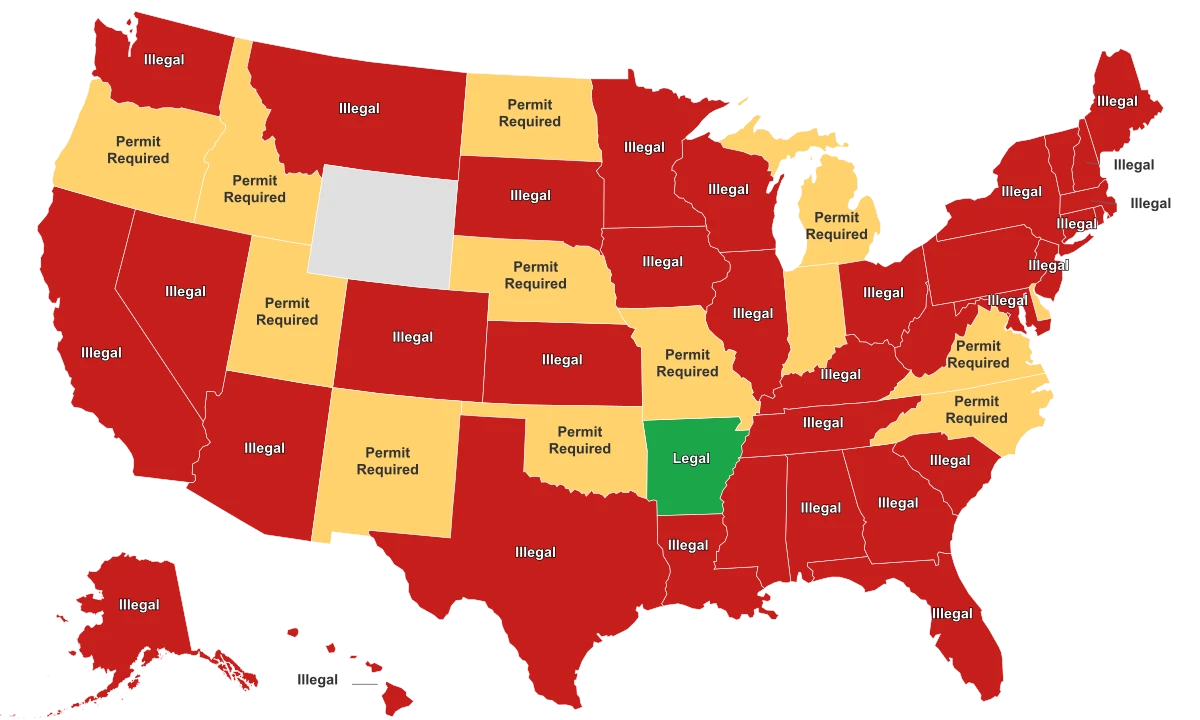
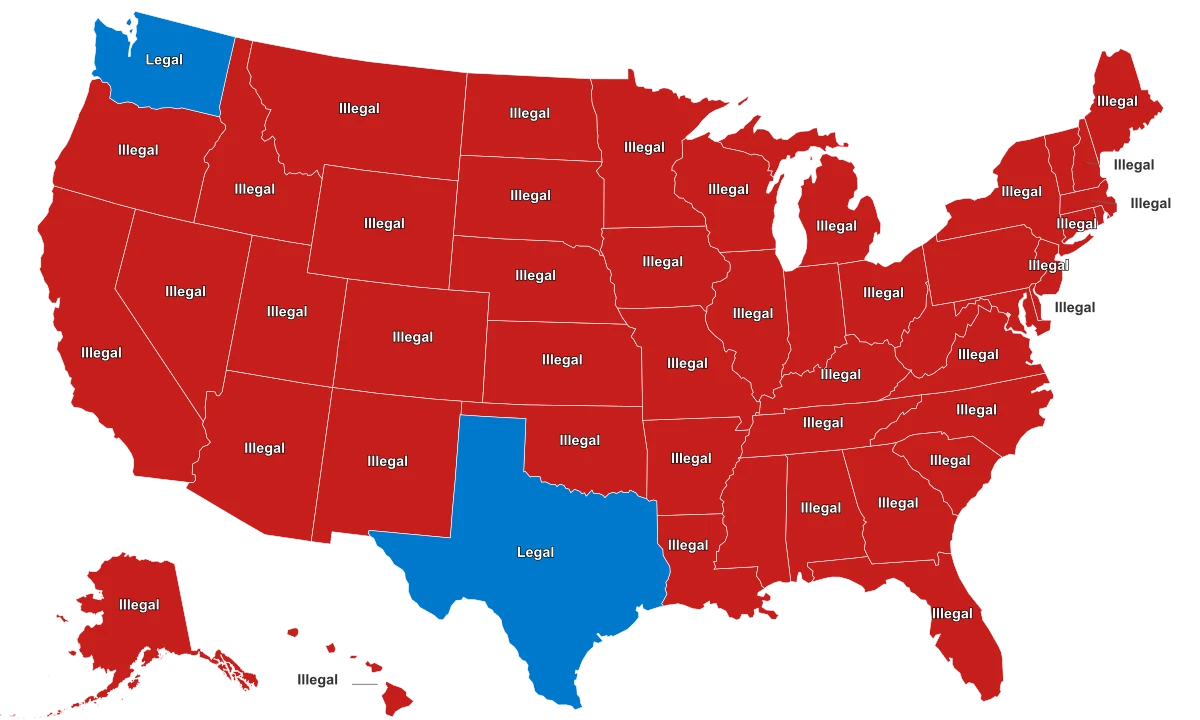
In 48 of 50 states, the answer is no. Mutual combat is classified as illegal, and a consensual agreement to fight does not serve as a defense against criminal assault charges. The two states classified as "legal" are Texas and Washington, but that classification requires significant context.
Neither state grants a blanket right to engage in consensual violence. Texas provides a narrow affirmative defense that a defendant can raise after being charged with assault. Washington's classification stems from a single viral incident, not from state statute. In both cases, participants can still be arrested, charged, and convicted. The word "legal" overstates what either state actually allows.
All Metrics
| Region ↕ | Mutual Combat Legality↕ | Self Defense Law 2025↕ |
|---|---|---|
| Texas | Legal | |
| Hawaii | Illegal | |
| Missouri | Illegal | |
| Delaware | Illegal | |
| New York | Illegal | |
| New Jersey | Illegal | |
| Mississippi | Illegal | |
| Wyoming | Illegal | |
| Alabama | Illegal | |
| Oklahoma | Illegal | |
| Virginia | Illegal | |
| Washington | Legal | |
| Nebraska | Illegal | |
| South Dakota | Illegal | |
| Utah | Illegal | |
| Nevada | Illegal | |
| Indiana | Illegal | |
| Maine | Illegal | |
| Maryland | Illegal | |
| Minnesota | Illegal | |
| Kansas | Illegal | |
| Alaska | Illegal | |
| Pennsylvania | Illegal | |
| Tennessee | Illegal | |
| Florida | Illegal | |
| South Carolina | Illegal | |
| Colorado | Illegal | |
| Louisiana | Illegal | |
| Oregon | Illegal | |
| Massachusetts | Illegal | |
| Iowa | Illegal | |
| Montana | Illegal | |
| Rhode Island | Illegal | |
| North Dakota | Illegal | |
| Kentucky | Illegal | |
| Vermont | Illegal | |
| North Carolina | Illegal | |
| Arizona | Illegal | |
| Connecticut | Illegal | |
| Illinois | Illegal | |
| Ohio | Illegal | |
| Arkansas | Illegal | |
| Michigan | Illegal | |
| West Virginia | Illegal | |
| New Mexico | Illegal | |
| Georgia | Illegal | |
| New Hampshire | Illegal | |
| Wisconsin | Illegal | |
| California | Illegal | |
| Idaho | Illegal |
Texas Has the Only Statute That Mentions Consent. It Is Not What You Expect.
Texas Penal Code § 22.06 is the only statute in the country that explicitly recognizes consent as a defense to assaultive conduct. It allows a defendant to argue that the alleged victim consented to the physical contact or to the risk of it. That sounds like a permission slip. It is not.
The defense has three hard limits. First, the conduct must not have threatened or inflicted serious bodily injury, a legal term that includes injuries creating a substantial risk of death, permanent disfigurement, or impairment. If a consensual fight results in a broken jaw, a concussion, or a laceration requiring stitches, the defense likely fails. Second, the consent must have been voluntary and given by someone legally capable of consenting. Third, the fight cannot be connected to criminal street gang activity.
Even when all three conditions are met, § 22.06 is an affirmative defense, not an exemption from the law. That distinction matters. An exemption would prevent arrest; an affirmative defense is raised in court after a person has already been arrested and charged. The defendant bears the burden of proving that the conditions were met. A jury decides after the fact whether the defense applies, which means anyone who engages in a fight in Texas still faces the full risk of arrest, booking, and prosecution before the affirmative defense is even considered.
Washington's Legal Status Comes From a Man in a Superhero Costume
Washington has no state statute that legalizes mutual combat. The classification of Washington as a "legal" state traces almost entirely to a single incident in Seattle in 2012.
A man named Benjamin Fodor, who patrolled Seattle streets as a costumed vigilante called Phoenix Jones, got into a fistfight with another person on a public sidewalk. Police officers were present, watched the fight, and declined to intervene. When asked why, a spokesperson cited Seattle Municipal Code SMC 12A.06.025, an ordinance that prohibits fighting in public only when it creates a substantial risk of injury to nonparticipants or damage to property. Because the fight was consensual, involved no weapons, and did not endanger bystanders, officers used their discretion not to make an arrest.
The video went viral. The interpretation that followed was that Washington state permits consensual fighting. It does not. The Seattle ordinance defines circumstances under which public fighting is explicitly prohibited. It does not create a right to fight. Washington courts have consistently held that consent is only a valid defense in the context of sanctioned athletic events, such as licensed boxing or MMA bouts overseen by a state commission. A street fight between two willing participants is still chargeable as assault under Washington criminal law, regardless of whether anyone complains.
Oregon Is the Only State That Explicitly Bans It by Statute
While 48 states treat mutual combat as illegal through general assault and battery statutes, Oregon takes the additional step of explicitly banning it by name. ORS 161.215(1)(c) states that a person is not justified in using physical force if the force is "the product of a combat by agreement not specifically authorized by law."
That phrase, "not specifically authorized by law," carves out the one context where consensual fighting is permitted everywhere: regulated, sanctioned sporting events. A licensed boxing match overseen by a state athletic commission is combat by agreement authorized by law. Two people fighting in a parking lot after agreeing to settle a dispute with their fists is combat by agreement that is not authorized by law. Oregon's statute draws that line in explicit statutory language rather than leaving it to prosecutorial discretion.
Most other states reach the same result through a different path. They simply do not recognize consent as a defense to assault under their criminal codes. The practical outcome is identical: in 49 of 50 states, you cannot avoid criminal liability for a fight simply because the other person agreed to it. The only state that provides even a conditional exception is Texas. Oregon is notable not because its outcome is different, but because it is one of the few states that bothered to say so directly.
Stand Your Ground Is Not Mutual Combat, Even Though People Confuse Them
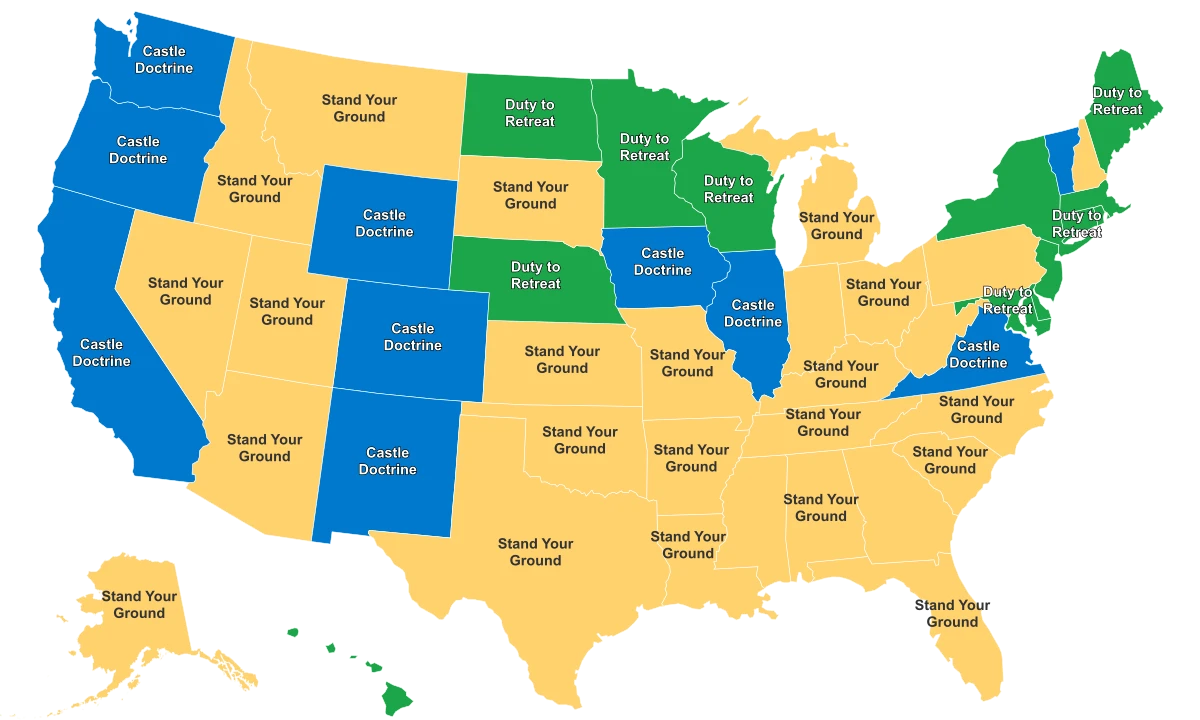
The dataset also tracks each state's self-defense framework, which falls into one of three categories. Stand Your Ground laws, adopted by 27 states, remove the duty to retreat before using force in any location where a person has a legal right to be. Castle Doctrine, followed by 10 states, removes that duty only within one's home, vehicle, or workplace. Duty to Retreat, followed by 13 states, requires a person to attempt to safely disengage before using force.
These categories describe how far a person must go to avoid a confrontation before force becomes legally justified. They are about one-sided aggression: someone is being attacked, and the law determines how much obligation they have to flee before fighting back.
Mutual combat is the opposite scenario. Both parties are willing participants. No one is trying to retreat because no one is trying to escape. The legal frameworks are conceptually unrelated, but the public frequently conflates them. A "Stand Your Ground" state is not more likely to permit mutual combat, and a "Duty to Retreat" state does not automatically treat consensual fighting more harshly than any other state does.
Texas is the clearest illustration. It has both a Stand Your Ground self-defense law and the only statutory mutual combat defense in the country. Washington has a Castle Doctrine framework and a viral reputation for permitting mutual combat, but no actual statute supporting it. Oregon has a Castle Doctrine framework and the most explicit statutory ban on mutual combat in the country. The self-defense category a state falls into tells you almost nothing about whether it permits consensual fighting.
Sources & Notes
Legal status and regulations governing the right to use force for self-protection.