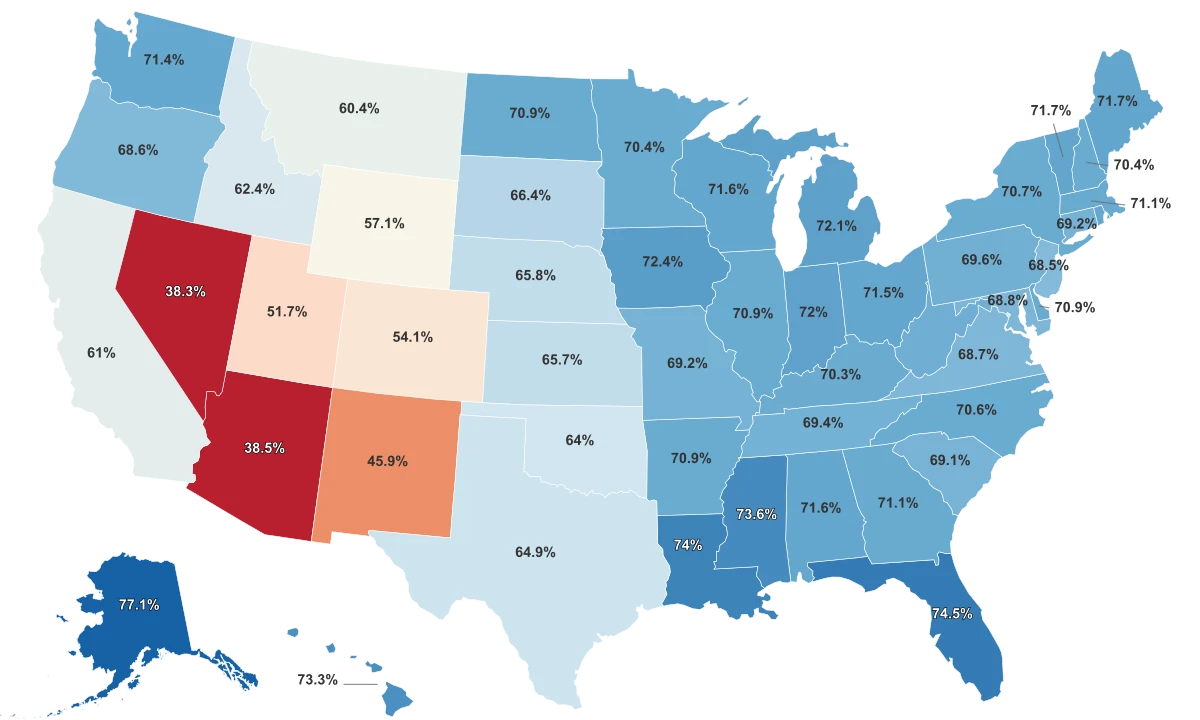
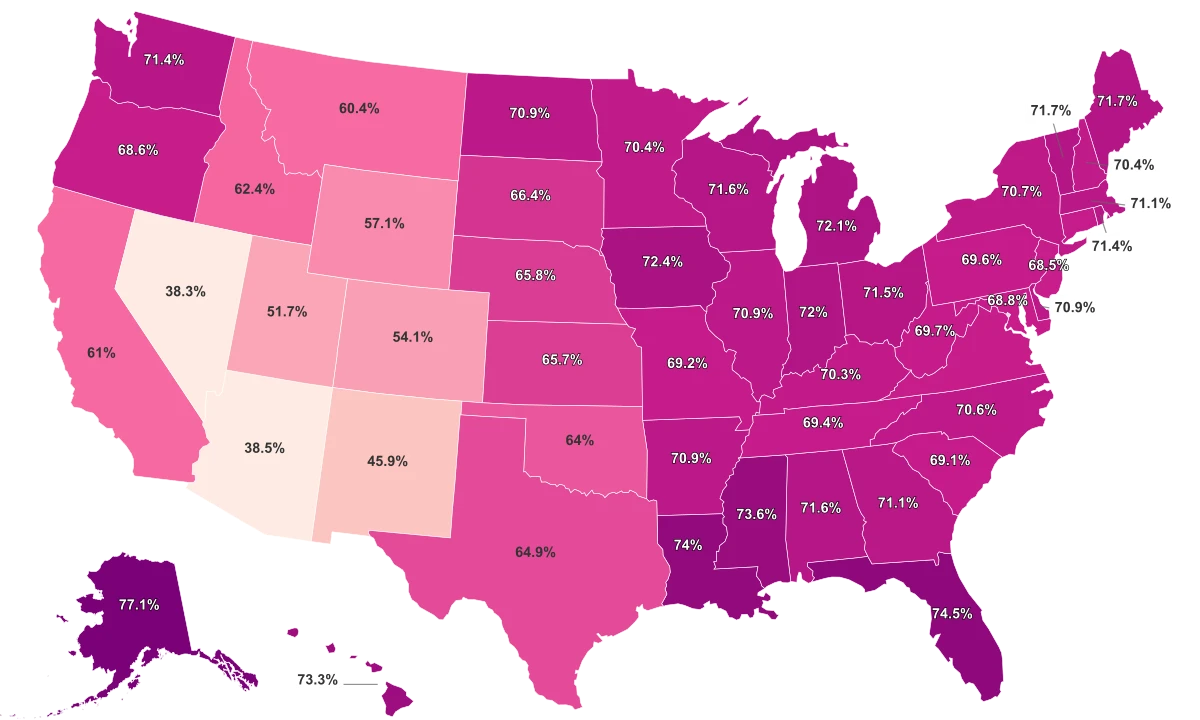
Most Humid States

1 |  | Alaska | 77.1% |
2 |  | Florida | 74.5% |
3 |  | Louisiana | 74% |
4 |  | Mississippi | 73.6% |
5 |  | Hawaii | 73.3% |
6 |  | Iowa | 72.4% |
7 |  | Michigan | 72.1% |
8 |  | Indiana | 72% |
9 |  | Maine | 71.7% |
9 |  | Vermont | 71.7% |
11 |  | Alabama | 71.6% |
11 |  | Wisconsin | 71.6% |
13 |  | Ohio | 71.5% |
14 |  | Washington | 71.4% |
14 |  | Rhode Island | 71.4% |
16 |  | Massachusetts | 71.1% |
16 |  | Georgia | 71.1% |
18 |  | Delaware | 70.9% |
18 |  | North Dakota | 70.9% |
18 |  | Illinois | 70.9% |
18 |  | Arkansas | 70.9% |
22 |  | New York | 70.7% |
23 |  | North Carolina | 70.6% |
24 |  | Minnesota | 70.4% |
24 |  | New Hampshire | 70.4% |
26 |  | Kentucky | 70.3% |
27 |  | West Virginia | 69.7% |
28 |  | Pennsylvania | 69.6% |
29 |  | Tennessee | 69.4% |
30 |  | Missouri | 69.2% |
30 |  | Connecticut | 69.2% |
32 |  | South Carolina | 69.1% |
33 |  | Maryland | 68.8% |
34 |  | Virginia | 68.7% |
35 |  | Oregon | 68.6% |
36 |  | New Jersey | 68.5% |
37 |  | South Dakota | 66.4% |
38 |  | Nebraska | 65.8% |
39 |  | Kansas | 65.7% |
40 |  | Texas | 64.9% |
41 |  | Oklahoma | 64% |
42 |  | Idaho | 62.4% |
43 |  | California | 61% |
44 |  | Montana | 60.4% |
45 |  | Wyoming | 57.1% |
46 |  | Colorado | 54.1% |
47 |  | Utah | 51.7% |
48 |  | New Mexico | 45.9% |
49 |  | Arizona | 38.5% |
50 |  | Nevada | 38.3% |
Last updated June 25, 2026
Key Takeaways
- Alaska is the most humid state in the country by relative humidity, at 77.1%, ahead of Florida at 74.5%.
- Nevada is the least humid, at 38.3%, just below Arizona at 38.5%.
- The spread from the most to the least humid state is roughly 39 percentage points, with Nevada's air sitting at about half of Alaska's reading.
- Relative humidity tracks cloud cover, not heat: it has almost no relationship with a state's temperature.
All Metrics
| Region ↕ | Average Relative Humidity 2018↕ | Average Temperature 2024↕ | # of Sunny Days↕ |
|---|---|---|---|
| Alaska | 77.1% | ||
| Florida | 74.5% | ||
| Louisiana | 74.0% | ||
| Mississippi | 73.6% | ||
| Hawaii | 73.3% | ||
| Iowa | 72.4% | ||
| Michigan | 72.1% | ||
| Indiana | 72.0% | ||
| Maine | 71.7% | ||
| Vermont | 71.7% | ||
| Alabama | 71.6% | ||
| Wisconsin | 71.6% | ||
| Ohio | 71.5% | ||
| Washington | 71.4% | ||
| Rhode Island | 71.4% | ||
| Massachusetts | 71.1% | ||
| Georgia | 71.1% | ||
| Delaware | 70.9% | ||
| North Dakota | 70.9% | ||
| Illinois | 70.9% | ||
| Arkansas | 70.9% | ||
| New York | 70.7% | ||
| North Carolina | 70.6% | ||
| Minnesota | 70.4% | ||
| New Hampshire | 70.4% | ||
| Kentucky | 70.3% | ||
| West Virginia | 69.7% | ||
| Pennsylvania | 69.6% | ||
| Tennessee | 69.4% | ||
| Missouri | 69.2% | ||
| Connecticut | 69.2% | ||
| South Carolina | 69.1% | ||
| Maryland | 68.8% | ||
| Virginia | 68.7% | ||
| Oregon | 68.6% | ||
| New Jersey | 68.5% | ||
| South Dakota | 66.4% | ||
| Nebraska | 65.8% | ||
| Kansas | 65.7% | ||
| Texas | 64.9% | ||
| Oklahoma | 64.0% | ||
| Idaho | 62.4% | ||
| California | 61.0% | ||
| Montana | 60.4% | ||
| Wyoming | 57.1% | ||
| Colorado | 54.1% | ||
| Utah | 51.7% | ||
| New Mexico | 45.9% | ||
| Arizona | 38.5% | ||
| Nevada | 38.3% |
Alaska Tops America's Humidity Ranking, and Here Is What That Measures
Ask most people which state is the most humid and they will say Florida or Louisiana. The data says otherwise. By average relative humidity, the most humid state in America is Alaska, at 77.1%, with Nevada the driest at 38.3%. The figures come from a 2018 analysis by climatologist Brian Brettschneider, published in Forbes and built from NOAA's hourly surface weather observations.
The number being ranked is relative humidity: the share of moisture in the air compared with the maximum the air can hold at its current temperature, written as a percentage. As NOAA explains it, that "maximum" changes with temperature, which is the whole reason this ranking surprises people. A higher percentage here means air that is closer to saturated, not necessarily air that feels wetter or stickier to walk through.
Below Alaska, the top of the list does include the usual suspects. Florida leads the Gulf Coast contingent at 74.5%, trailed closely by Louisiana, Mississippi, and Hawaii, all bunched within a single point of one another. The surprise is not that the Gulf Coast is humid. It is that a state most people picture as frozen sits above all of them.
Why a Frozen State Out-Humidifies the Gulf Coast
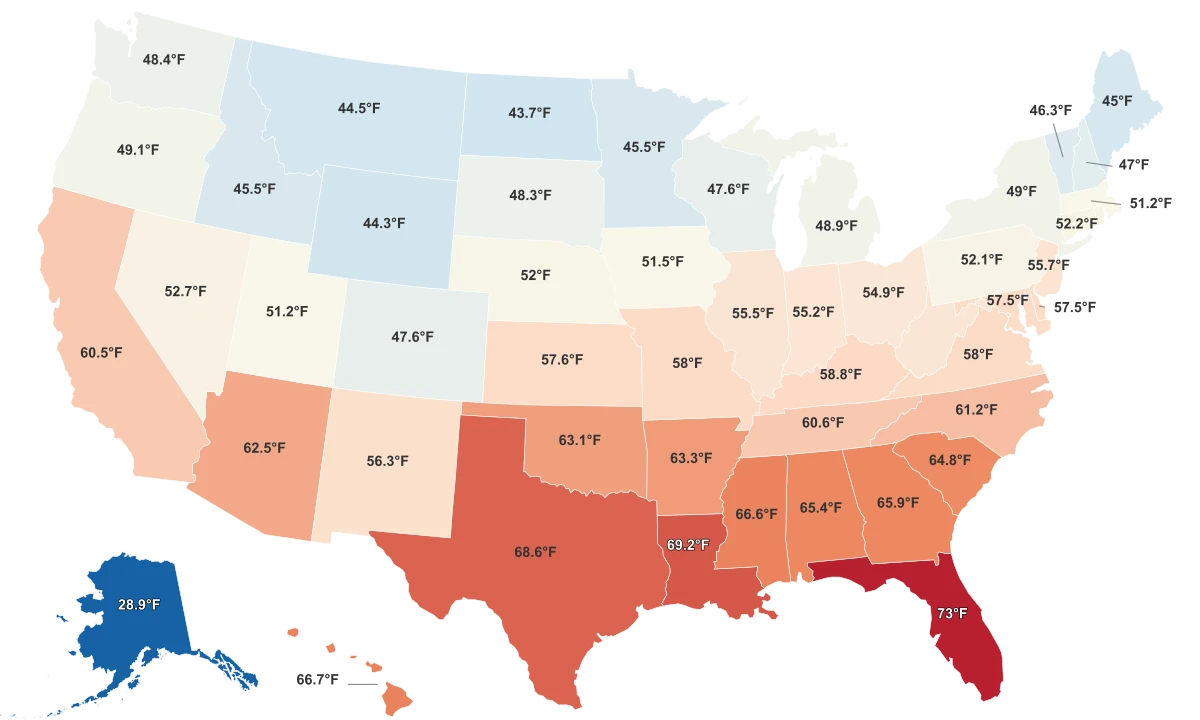
The explanation is temperature, working in the opposite direction from what intuition suggests. Warm air can hold a great deal of moisture; cold air can hold very little. So a frigid airmass does not need much actual water to be nearly full. Alaska averages just 28.9°F, the coldest of any state by a wide margin, and that chill is exactly why its air reads as saturated. NOAA puts it plainly: with the same amount of moisture present, cold air will show a higher relative humidity than warm air.
This is where the ranking needs an honest caveat. Relative humidity is not the same as how humid a place feels, and the muggy, sticky sensation people associate with the word is better captured by the dew point. The National Weather Service is direct about it: "if you want a real judge of just how dry or humid it will feel outside, look at the dew point instead." By that measure, Alaska's average dew point is the lowest of all fifty states, and Brettschneider himself calls relative humidity "a terrible metric for surface moisture."
So both things are true at once. Alaska genuinely posts the highest relative humidity in the country, and the Gulf Coast genuinely feels far muggier. The data even hints at the disconnect on its own terms: across all fifty states, temperature and relative humidity show essentially no relationship at all. Knowing how hot a state is tells you almost nothing about where it lands on this list.
Sunshine, Not Heat, Is the Real Tell
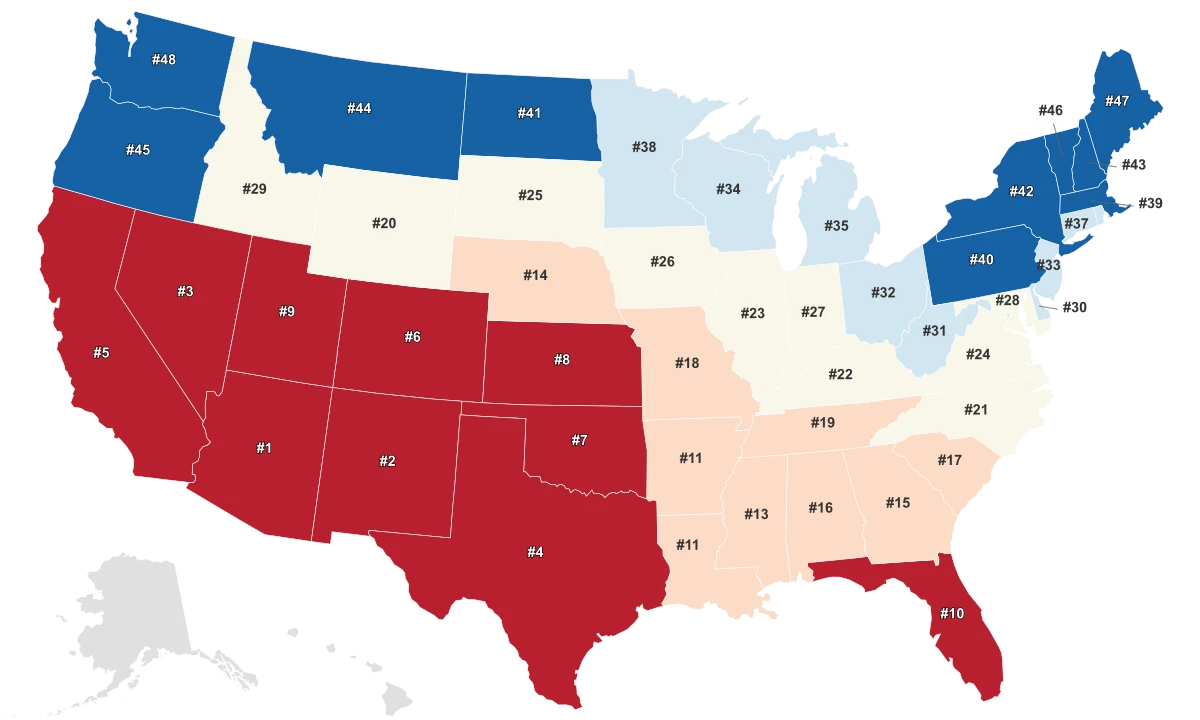
If heat does not predict a state's humidity, something else does. The strongest pattern in the data is between relative humidity and sunshine, and the two move in opposite directions: the more clear-sky days a state gets, the drier its air tends to be. The count of sunny days alone accounts for roughly 57% of the variation in relative humidity from state to state, a strong and statistically reliable link.
The logic is straightforward once the temperature myth is set aside. Persistent cloud cover and the weather systems that bring it go hand in hand with moist air, while relentless sunshine is the signature of dry, settled, high-pressure conditions. That is why the perpetually overcast Pacific Northwest and the cloudy Upper Midwest post high humidity readings, while the sun-drenched Southwest sits at the bottom.
Sunnier States Run Drier, Not Wetter
Across all 50 states, relative humidity falls as the number of clear-sky days rises, the strongest pattern in the data.
The sunny-days figures here are illustrative rather than an official tally, so the takeaway is the direction and strength of the relationship, not any single state's exact day count. The shape of the cloud is what matters: humidity follows the gray skies.
The Desert Floor
The bottom of the ranking is the one stretch that matches intuition. Nevada anchors the list at 38.3%, with Arizona a hair above it and New Mexico the next driest. These three sit far below the rest of the country, dry enough that Nevada's air holds proportionally about half as much moisture as Alaska's. The gap from the most to the least humid state runs to nearly 39 percentage points, the desert Southwest behaving exactly as the map of arid, high-pressure continental air would predict.
That divide shows up at the regional level too. The West averages 58.45% relative humidity, a full step below the rest of the map. The Northeast, South, and Midwest, by contrast, all land near 70%, clustering within about half a point of one another. The story of this ranking, in the end, is not a north-south split or a hot-cold split. It is a dry-West-versus-everywhere-else split, with one frozen state sitting on top to remind everyone what the word "relative" is doing.
Sources & Notes
% of moisture present in the air.
Average annual temperature.