Average Age To Lose Virginity By Country

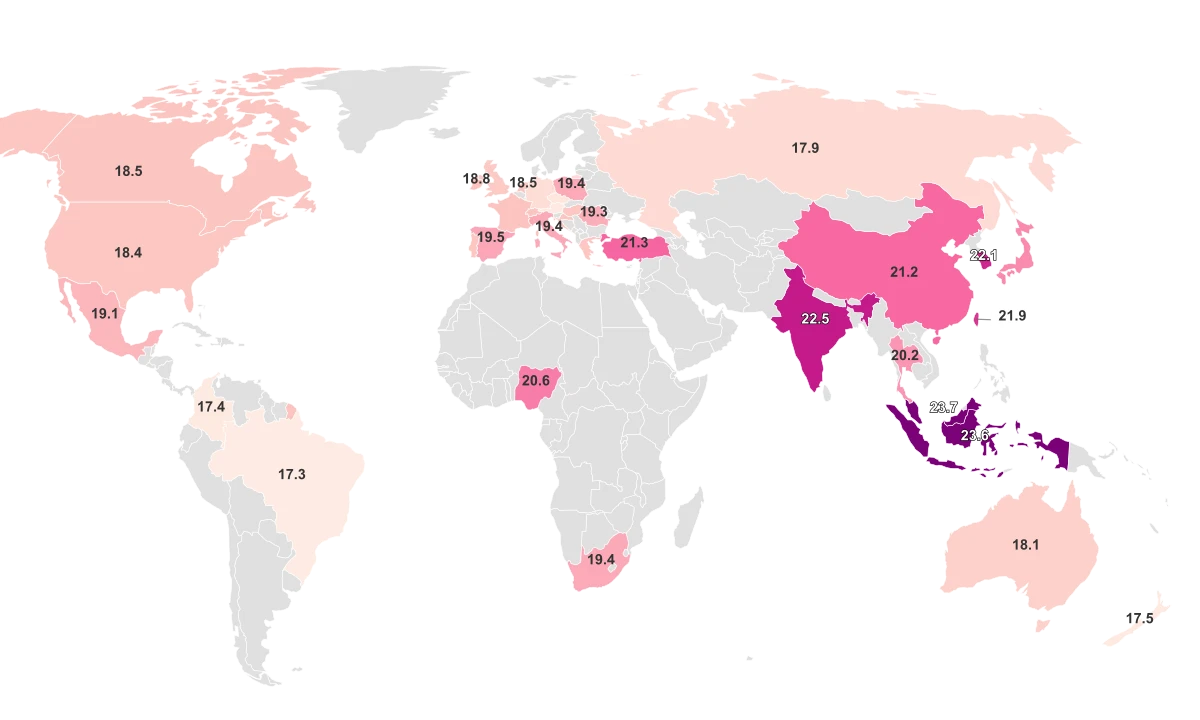
1 |  | Malaysia | 23.7years |
2 |  | Indonesia | 23.6years |
3 |  | India | 22.5years |
4 |  | South Korea | 22.1years |
5 |  | Singapore | 22years |
6 |  | Taiwan | 21.9years |
7 |  | Turkey | 21.3years |
8 |  | China | 21.2years |
9 |  | Hong Kong | 20.8years |
10 |  | Nigeria | 20.6years |
11 |  | Japan | 20.4years |
12 |  | Thailand | 20.2years |
13 |  | Spain | 19.5years |
14 |  | Italy | 19.4years |
14 |  | South Africa | 19.4years |
14 |  | Poland | 19.4years |
17 |  | Romania | 19.3years |
18 |  | Mexico | 19.1years |
19 |  | Ireland | 18.8years |
20 |  | France | 18.7years |
21 |  | Switzerland | 18.6years |
22 |  | Canada | 18.5years |
22 |  | Croatia | 18.5years |
22 |  | Netherlands | 18.5years |
25 |  | Greece | 18.4years |
25 |  | Portugal | 18.4years |
25 |  | United States | 18.4years |
25 |  | Hungary | 18.4years |
29 |  | United Kingdom | 18.3years |
30 |  | Australia | 18.1years |
31 |  | Russia | 17.9years |
32 |  | Germany | 17.8years |
33 |  | Czech Republic | 17.6years |
34 |  | New Zealand | 17.5years |
34 |  | Austria | 17.5years |
36 |  | Colombia | 17.4years |
37 |  | Brazil | 17.3years |
Last updated June 23, 2026
Key Takeaways
- Malaysia reports the latest average first sex at 23.7 years, with Indonesia close behind at 23.6.
- Brazil reports the earliest at 17.3 years, just under Colombia at 17.4.
- That leaves a span of 6.4 years between the top and bottom of the 37 surveyed countries, though most sit close to the middle, near 19.
- The intuitive idea that earlier first sex means more sexually transmitted infections does not show up in the data: STD rate tracks neither first-sex age nor partner count.
All Metrics
| Region ↕ | Average Age to Lose Virginity 2012↕ | # of Sexual Partners 2021↕ | STD Rate 2021↕ |
|---|---|---|---|
| Malaysia | |||
| Indonesia | |||
| India | |||
| South Korea | |||
| Singapore | 22.0 | ||
| Taiwan | |||
| Turkey | |||
| China | |||
| Hong Kong | |||
| Nigeria | |||
| Japan | |||
| Thailand | |||
| Spain | |||
| Italy | |||
| South Africa | |||
| Poland | |||
| Romania | |||
| Mexico | |||
| Ireland | |||
| France | |||
| Switzerland | |||
| Canada | |||
| Croatia | |||
| Netherlands | |||
| Greece | |||
| Portugal | |||
| United States | |||
| Hungary | |||
| United Kingdom | |||
| Australia | |||
| Russia | |||
| Germany | |||
| Czech Republic | |||
| New Zealand | |||
| Austria | |||
| Colombia | |||
| Brazil |
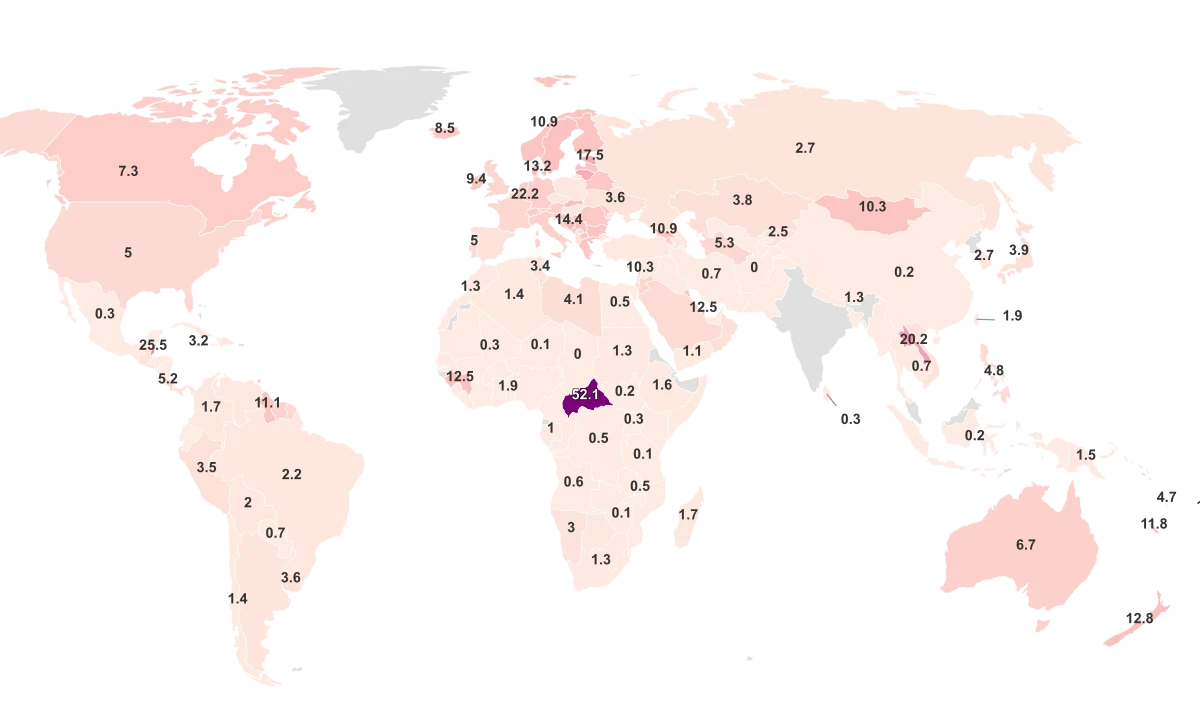
Most Countries Report First Sex Right Around 19
Among the 37 countries surveyed, Malaysia reports the latest average age at first sexual intercourse, at 23.7 years, while Brazil reports the earliest, at 17.3 years, narrowly below Colombia at 17.4. The figures come from the 2012 "Face of Global Sex" report by Reckitt Benckiser, the consumer-goods company behind Durex, which asked adults aged 18 to 64 to recall their first experience, in some cases from decades earlier. Because the number is self-reported and retrospective, it reflects what people say they remember and are willing to share, not an observed or registry figure.
A higher age here simply means a later reported first experience; it carries no judgment about whether earlier or later is better. The typical country sits at 18.8 years, and most of the surveyed world clusters within a couple of years of that center. The real shape of the ranking is a tight middle with a short reach upward: a handful of Asian countries break well above the pack while everyone else stays packed close together.
Why Malaysia and Indonesia Sit Years Above the Rest
The two countries at the top do not just edge ahead, they stand apart. Malaysia at 23.7 years and Indonesia at 23.6 sit more than six years above the lowest-ranked countries and further from the rest of the field than any other nation, a separation no European or Latin American country comes close to matching. The question is what a gap that large is actually measuring.
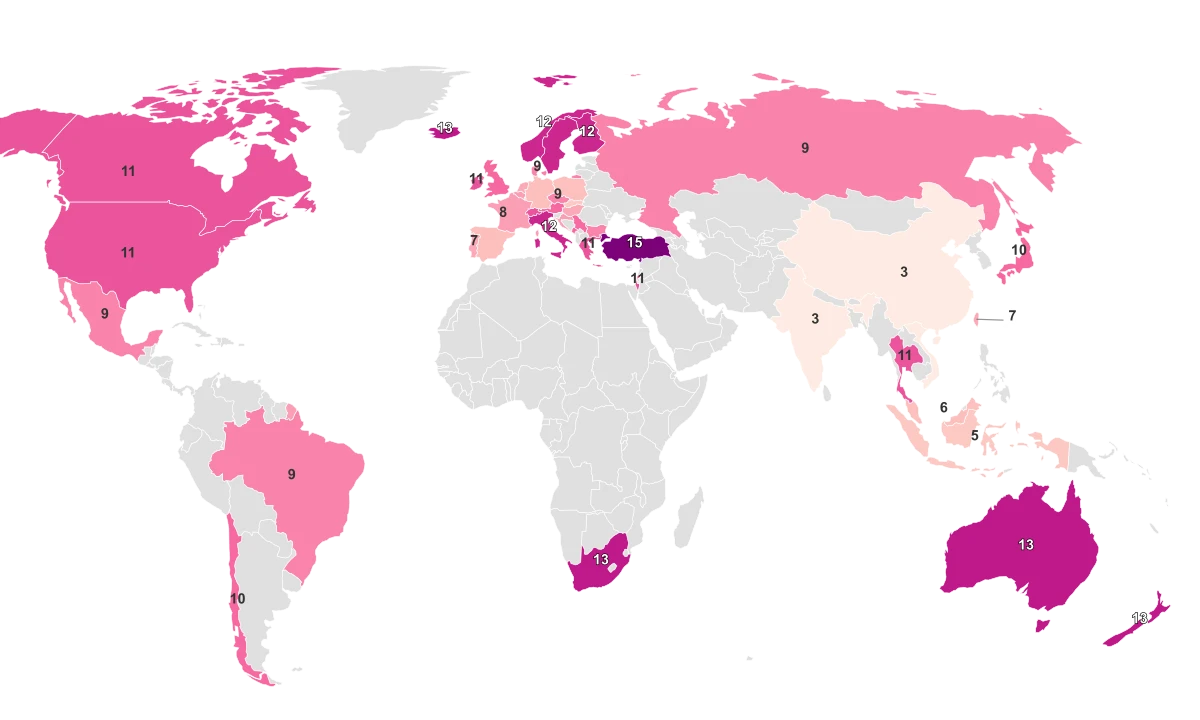
Part of the answer is how the same countries answer a related question. In the partner-count data, Indonesia reports just 5 lifetime partners and Malaysia 6, while India, China and Vietnam sit at the very bottom at 3, against a high of 15 in Turkey. The countries that report the latest first sex also report among the fewest partners, and both are the kinds of figures a peer-reviewed review of sexual-behavior surveys finds are most distorted by social desirability, with people under-reporting behavior they sense is frowned upon. In more conservative survey environments, a later reported age may reflect what respondents feel able to disclose as much as when they actually started.
An Earlier Start Tracks With More Partners
If the timing of first sex connects to anything else in this data, the obvious place to look is how many partners people go on to report. There the two behaviors do line up: across the 33 countries with both figures, the ones reporting an earlier first sex tend to report more lifetime partners, and the ones reporting a later start report fewer. It is the clearest cross-metric link on the page, and unlike the disease question below, it holds up statistically.
Still, it is a tendency, not a rule. Partner count accounts for only about a fifth of the variation in reported first-sex age, which means the slope is genuine but loose, with plenty of countries sitting off the line. Read it as a direction the data leans, not a lever that sets the number.
Countries That Start Earlier Report More Partners
Across 33 surveyed countries a later reported first sex tracks with fewer lifetime partners, though the relationship is loose enough that many countries sit off the line.
The STD Link Everyone Expects Is Missing
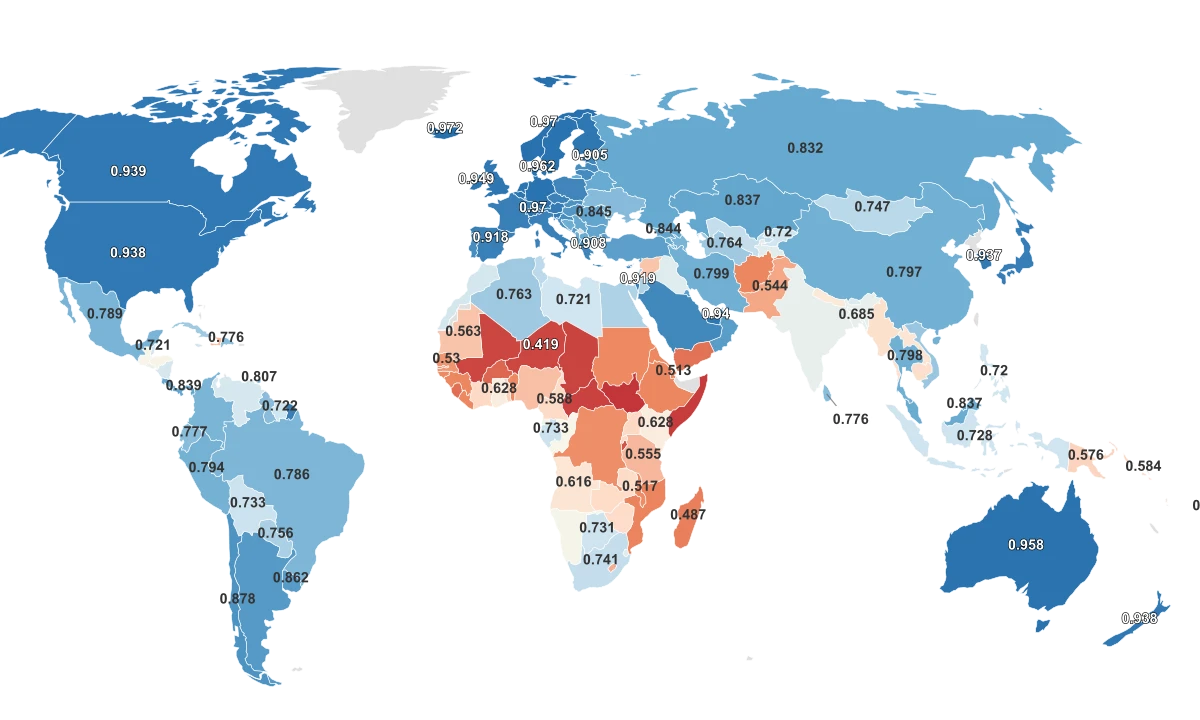
The intuition is almost automatic: start younger, see more partners, carry a heavier disease burden. The data does not bear it out. Across the overlapping countries, reported first-sex age shows essentially no relationship with the STD rate (measured per 100,000 people), and neither does partner count; both fall well short of statistical significance. Where people start has no visible bearing on where the disease burden lands.
That is because the two maps are drawn by different forces. The heaviest sexually transmitted infection burden in the GBD data is a regional cluster led by South Africa and its southern-African neighbors, shaped by epidemiological history rather than the timing of first sex. A separate analysis across four countries finds that infection rates rise and fall with the structure of sexual networks, the pace of partner change and how often partnerships overlap, not with the average age at which people begin. A country can report late first sex and still sit high or low on disease for reasons this ranking never touches.
Sources & Notes
Average age at first sexual intercourse.
Editorial Note: Originates from a 2012 Reckitt Benckiser online opt-in survey, not a randomized population study. Online surveys structurally oversample urban, educated, and internet-connected populations — a limitation that likely skews results younger in developing nations where rural populations (who tend to debut later) are underrepresented.
Average number of sexual partners for individuals.
Number of reported sexually transmitted disease cases per 100,000 people.