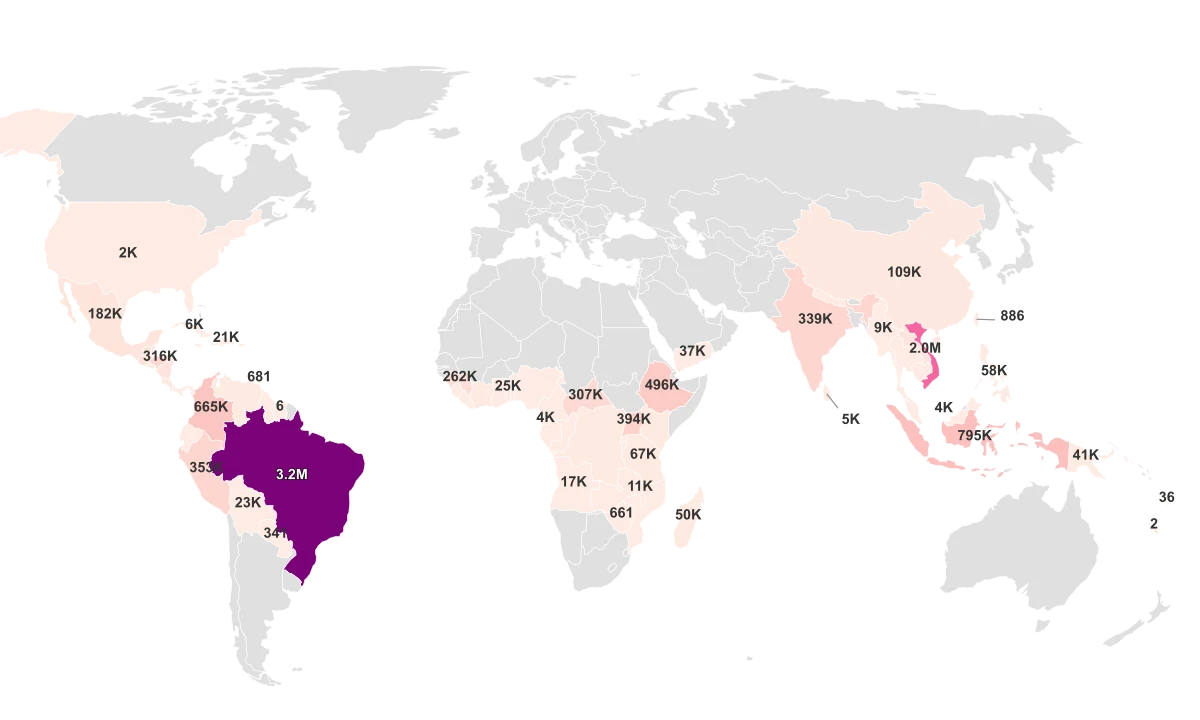
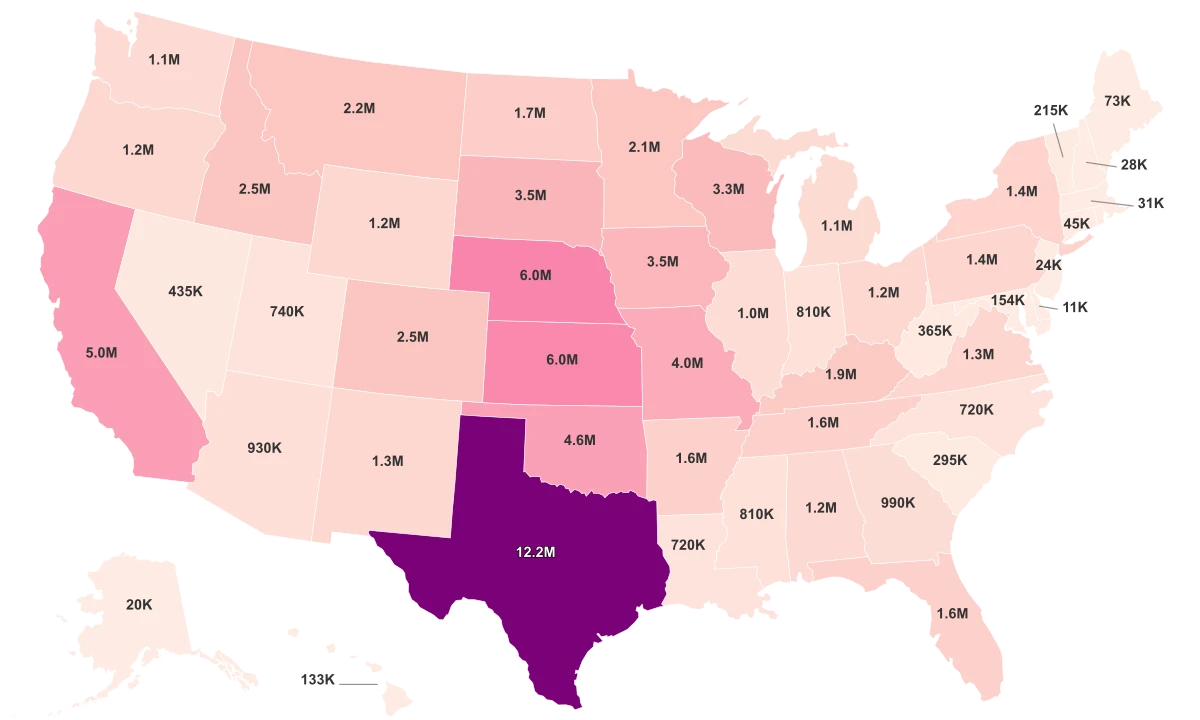
Cotton Production by Country

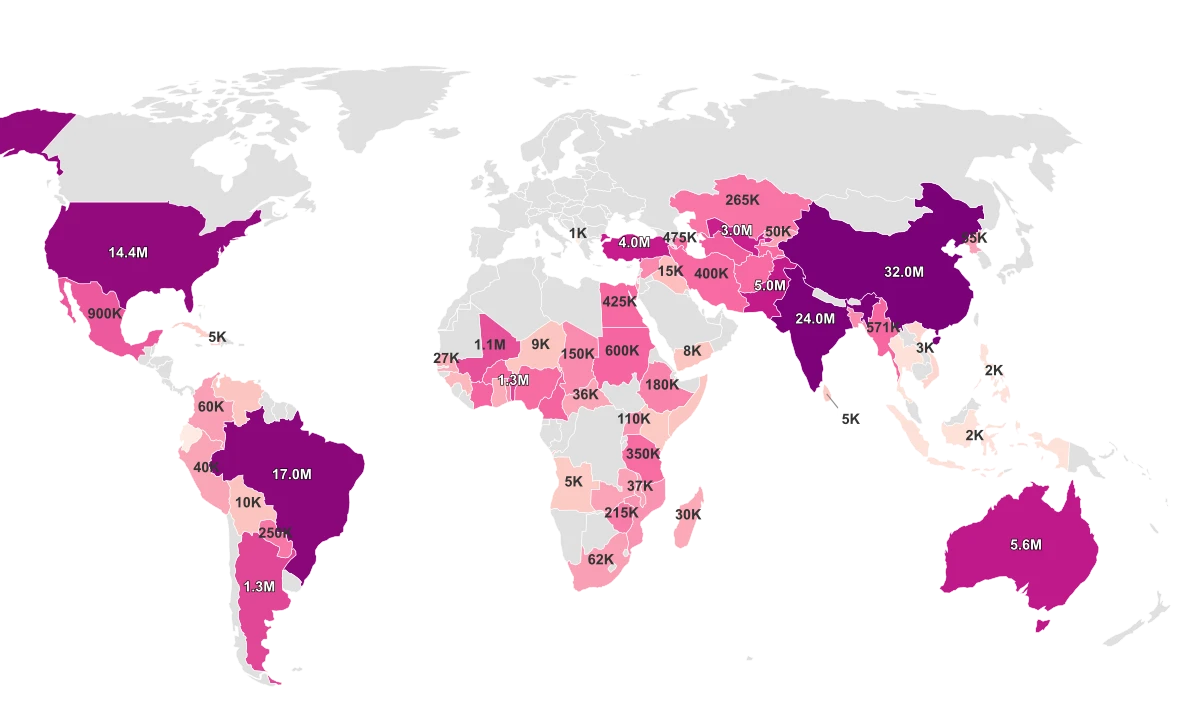
1▲1 |  | China | 32,000,000tons+25.8M (+418%) |
2▼1 |  | India | 24,000,000tons+17.8M (+288%) |
3▲2 |  | Brazil | 17,000,000tons+15.6M (+1104%) |
4▼1 |  | United States | 14,400,000tons+10.8M (+301%) |
5▲2 |  | Australia | 5,600,000tons+4.7M (+533%) |
6▼2 |  | Pakistan | 5,000,000tons+2.6M (+111%) |
7▲1 |  | Turkey | 4,000,000tons+3.2M (+373%) |
8▼2 |  | Uzbekistan | 3,000,000tons+1.9M (+171%) |
9— |  | Argentina | 1,300,000tons+973K (+298%) |
9▲11 |  | Benin | 1,300,000tons+1.2M (+1167%) |
11▲2 |  | Mali | 1,100,000tons+867.3K (+373%) |
12▼1 |  | Mexico | 900,000tons+598K (+198%) |
13▲1 |  | Turkmenistan | 800,000tons+605K (+310%) |
14▲9 |  | Cameroon | 680,000tons+599K (+740%) |
15▲1 |  | Ivory Coast | 660,000tons+528K (+400%) |
16▲5 |  | Sudan | 600,000tons+505K (+532%) |
16▼4 |  | Burkina Faso | 600,000tons+334.5K (+126%) |
18▼3 |  | Myanmar | 571,000tons+403K (+240%) |
19▼2 |  | Tajikistan | 500,000tons+377K (+307%) |
20▲24 |  | Azerbaijan | 475,000tons+461.5K (+3413%) |
21▼3 |  | Egypt | 425,000tons+312K (+276%) |
22— |  | Afghanistan | 400,000tons |
22▲5 |  | Iran | 400,000tons+335K (+515%) |
24▼1 |  | Tanzania | 350,000tons+269K (+332%) |
24▼5 |  | Nigeria | 350,000tons+245K (+233%) |
26▼4 |  | Kazakhstan | 265,000tons+172.5K (+186%) |
27▲27 |  | Paraguay | 250,000tons+244.9K (+4802%) |
28▲15 |  | Zimbabwe | 215,000tons+201K (+1436%) |
29▲3 |  | Ethiopia | 180,000tons+142K (+374%) |
30▼2 |  | Syria | 160,000tons+104.2K (+187%) |
31▲9 |  | Bangladesh | 153,000tons+134.4K (+723%) |
32▼2 |  | Chad | 150,000tons+102K (+213%) |
33— |  | Togo | 120,000tons+83K (+224%) |
34— |  | Mozambique | 115,000tons+82K (+248%) |
35▲3 |  | Uganda | 110,000tons+83.4K (+314%) |
36▲14 |  | South Africa | 62,000tons+53.3K (+609%) |
37— |  | Colombia | 60,000tons+31.6K (+111%) |
38▲7 |  | North Korea | 55,000tons+41.8K (+317%) |
39— |  | Kyrgyzstan | 50,000tons+27.2K (+120%) |
40▼9 |  | Zambia | 45,000tons+5,300 (+13%) |
41▼6 |  | Peru | 40,000tons+8,000 (+25%) |
41▲6 |  | Israel | 40,000tons+27K (+208%) |
43▼14 |  | Malawi | 37,000tons-16.8K (-31%) |
44▲7 |  | Central African Republic | 36,000tons+28K (+350%) |
45▲10 |  | Madagascar | 30,000tons+25K (+500%) |
46▲7 |  | Ghana | 28,000tons+22.4K (+400%) |
47▲1 |  | Senegal | 27,000tons+16K (+145%) |
48▼6 |  | Guinea | 18,000tons+3,000 (+20%) |
49▼4 |  | Iraq | 15,000tons+1,800 (+14%) |
50▼14 |  | Bolivia | 10,000tons-21.6K (-68%) |
51▲6 |  | Niger | 9,000tons+5,670 (+170%) |
52▲7 |  | Venezuela | 8,000tons+5,740 (+254%) |
52— |  | Yemen | 8,000tons+2,300 (+40%) |
54▲6 |  | Somalia | 7,000tons+5,000 (+250%) |
55▲12 |  | Angola | 5,000tons+4,000 (+400%) |
55▲18 |  | Haiti | 5,000tons+4,670 (+1415%) |
55▲1 |  | Kenya | 5,000tons+550 (+12%) |
55— |  | Sri Lanka | 5,000tons |
59— |  | Cuba | 4,000tons |
60▲5 |  | Vietnam | 3,000tons+1,900 (+173%) |
61▼3 |  | Thailand | 2,000tons-500 (-20%) |
61▲7 |  | Indonesia | 2,000tons+1,013 (+103%) |
61▲27 |  | Philippines | 2,000tons+1,996 (+49900%) |
64▲12 |  | Albania | 1,000tons+770 (+335%) |
64▼1 |  | Ecuador | 1,000tons-470 (-32%) |
Last updated May 23, 2025
Global Cotton Production
As a cornerstone of the agricultural industry, cotton is an essential commodity that fuels global economic activity. It is fundamental to textile production and, subsequently, the fashion industry, and the ripple effects of its cultivation impact multinational trade and rural development.
Key Findings:
- India and China act as vanguards in cotton production, both tallying a massive 6.2 million tons, nearly double the yield of the United States.
- The U.S., though falling behind India and China, plays a formidable role in the global cotton landscapes, producing 3.6 million tons.
- The cotton industry extends its roots way beyond these major players, with countries like Pakistan and Brazil contributing significantly to the global output, with production volumes of 2.4 and 1.4 million tons, respectively.
- Other noteworthy contributors include Uzbekistan, Australia, and Turkey, whose production ranges between 885,100 and 1.1 million tons.
- Cotton's global reach is evident as it spans across continents, from South America's Argentina through Africa's Burkina Faso to Asia's Myanmar, with cotton production figures upwards of 100,000 tons.
All Metrics
| Region ↕ | Cotton Production 2024↕ | Cotton Production per Person↕ |
|---|---|---|
| China | 32.0M | |
| India | 24.0M | |
| Brazil | 17.0M | |
| United States | 14.4M | |
| Australia | 5.6M | |
| Pakistan | 5.0M | |
| Turkey | 4.0M | |
| Uzbekistan | 3.0M | |
| Argentina | 1.3M | |
| Benin | 1.3M | |
| Mali | 1.1M | |
| Mexico | 900.0K | |
| Turkmenistan | 800.0K | |
| Cameroon | 680.0K | |
| Ivory Coast | 660.0K | |
| Sudan | 600.0K | |
| Burkina Faso | 600.0K | |
| Myanmar | 571.0K | |
| Tajikistan | 500.0K | |
| Azerbaijan | 475.0K | |
| Egypt | 425.0K | |
| Afghanistan | 400.0K | |
| Iran | 400.0K | |
| Tanzania | 350.0K | |
| Nigeria | 350.0K | |
| Kazakhstan | 265.0K | |
| Paraguay | 250.0K | |
| Zimbabwe | 215.0K | |
| Ethiopia | 180.0K | |
| Syria | 160.0K | |
| Bangladesh | 153.0K | |
| Chad | 150.0K | |
| Togo | 120.0K | |
| Mozambique | 115.0K | |
| Uganda | 110.0K | |
| South Africa | 62.0K | |
| Colombia | 60.0K | |
| North Korea | 55.0K | |
| Kyrgyzstan | 50.0K | |
| Zambia | 45.0K | |
| Peru | 40.0K | |
| Israel | 40.0K | |
| Malawi | 37.0K | |
| Central African Republic | 36.0K | |
| Madagascar | 30.0K | |
| Ghana | 28.0K | |
| Senegal | 27.0K | |
| Guinea | 18.0K | |
| Iraq | 15.0K | |
| Bolivia | 10.0K | |
| Niger | 9.0K | |
| Venezuela | 8.0K | |
| Yemen | 8.0K | |
| Somalia | 7.0K | |
| Angola | 5.0K | |
| Haiti | 5.0K | |
| Kenya | 5.0K | |
| Sri Lanka | 5.0K | |
| Cuba | 4.0K | |
| Vietnam | 3.0K | |
| Thailand | 2.0K | |
| Indonesia | 2.0K | |
| Philippines | 2.0K | |
| Albania | 1.0K | |
| Ecuador | 1.0K |
Largest Cotton Producers
The ten countries that count for the highest levels of cotton production worldwide are India, China, the United States, Pakistan, Brazil, Uzbekistan, Australia, Turkey, Argentina, and Greece. Leading the list, both India and China produced 6.2 million tons of cotton each. Coming up next is the United States with an output of 3.6 million tons of cotton. Pakistan remains as the fourth highest cotton-producing country worldwide with a production value of 2.4 million tons. Meanwhile, Brazil has a significant cotton production level of 1.4 million tons, placing it fifth on this list. Following Brazil, Uzbekistan managed to yield 1.1 million tons of cotton. Australia is not far behind with its cotton production amounting to 885.1 thousand tons. Turkey's cotton production numbers stand at 846.0 thousand tons. Argentina and Greece follow Turkey with cotton production volumes of 327.0 thousand tons and 308.0 thousand tons respectively. Top 10 Countries for Cotton Production: 1. India - 6.2M tons 2. China - 6.2M tons 3. United States - 3.6M tons 4. Pakistan - 2.4M tons 5. Brazil - 1.4M tons 6. Uzbekistan - 1.1M tons 7. Australia - 885.1K tons 8. Turkey - 846.0K tons 9. Argentina - 327.0K tons 10. Greece - 308.0K tons
Sources & Notes
Total annual global cotton production in bales.