Cigarette Prices By State

1— |  | New York | $14.55+0.46 (+3.3%) |
2— |  | Maryland | $14.17+0.8 (+6.0%) |
3— |  | District of Columbia | $13.94+0.71 (+5.4%) |
4— |  | Rhode Island | $13.43+0.46 (+3.5%) |
5▲1 |  | Connecticut | $13.24+0.84 (+6.8%) |
6▼1 |  | Massachusetts | $12.54-0.04 (-0.3%) |
7▲3 |  | Alaska | $12.37+1 (+8.8%) |
8— |  | Hawaii | $12.13+0.65 (+5.7%) |
8▲4 |  | Washington | $12.13+0.92 (+8.2%) |
10▼3 |  | Minnesota | $12.1+0.06 (+0.5%) |
11▼2 |  | Illinois | $11.99+0.55 (+4.8%) |
12▼1 |  | Vermont | $11.91+0.6 (+5.3%) |
13— |  | Pennsylvania | $11.86+0.84 (+7.6%) |
14— |  | California | $11.71+0.71 (+6.5%) |
15▲1 |  | New Jersey | $11.41+0.67 (+6.2%) |
16▼1 |  | Oregon | $11.16+0.18 (+1.6%) |
17▲3 |  | Colorado | $10.85+1.13 (+12%) |
18▼1 |  | Wisconsin | $10.73+0.5 (+4.9%) |
19▲2 |  | Arizona | $10.69+1.08 (+11%) |
20▼1 |  | Maine | $10.52+0.73 (+7.5%) |
21▼3 |  | New Mexico | $10.42+0.49 (+4.9%) |
22▲2 |  | Utah | $10.16+0.9 (+9.7%) |
23▼1 |  | Michigan | $10.03+0.53 (+5.6%) |
24▼1 |  | Nevada | $9.88+0.45 (+4.8%) |
25▲1 |  | Delaware | $9.61+0.57 (+6.3%) |
26▲2 |  | Ohio | $9.59+0.75 (+8.5%) |
27▲7 |  | South Dakota | $9.57+1.07 (+13%) |
28▲5 |  | Arkansas | $9.48+0.97 (+11%) |
29▲7 |  | Texas | $9.46+0.97 (+11%) |
30▼3 |  | Kansas | $9.37+0.52 (+5.9%) |
31▼2 |  | New Hampshire | $9.34+0.58 (+6.6%) |
32▼7 |  | Oklahoma | $9.26+0.07 (+0.8%) |
33▼3 |  | Montana | $9.22+0.49 (+5.6%) |
34— |  | Virginia | $9.11+0.61 (+7.2%) |
35▼3 |  | Florida | $9.07+0.37 (+4.3%) |
36▲1 |  | Louisiana | $8.87+0.56 (+6.7%) |
37▼6 |  | Iowa | $8.78+0.07 (+0.8%) |
38▲2 |  | West Virginia | $8.75+0.58 (+7.1%) |
39▼1 |  | Indiana | $8.69+0.45 (+5.5%) |
40▲2 |  | Idaho | $8.65+0.56 (+6.9%) |
41▼2 |  | Kentucky | $8.63+0.45 (+5.5%) |
42▲7 |  | Wyoming | $8.57+0.96 (+13%) |
43— |  | Nebraska | $8.56+0.5 (+6.2%) |
44▲7 |  | South Carolina | $8.5+1.01 (+13%) |
45▲3 |  | Alabama | $8.48+0.83 (+11%) |
46▼1 |  | Georgia | $8.47+0.63 (+8.0%) |
47▼6 |  | Tennessee | $8.44+0.34 (+4.2%) |
48▼4 |  | Mississippi | $8.33+0.32 (+4.0%) |
49▼3 |  | North Dakota | $8.24+0.41 (+5.2%) |
50— |  | Missouri | $8.03+0.5 (+6.6%) |
51▼4 |  | North Carolina | $7.95+0.13 (+1.7%) |
Last updated March 30, 2026
A Pack of Cigarettes Now Costs Almost Twice as Much in New York as in North Carolina
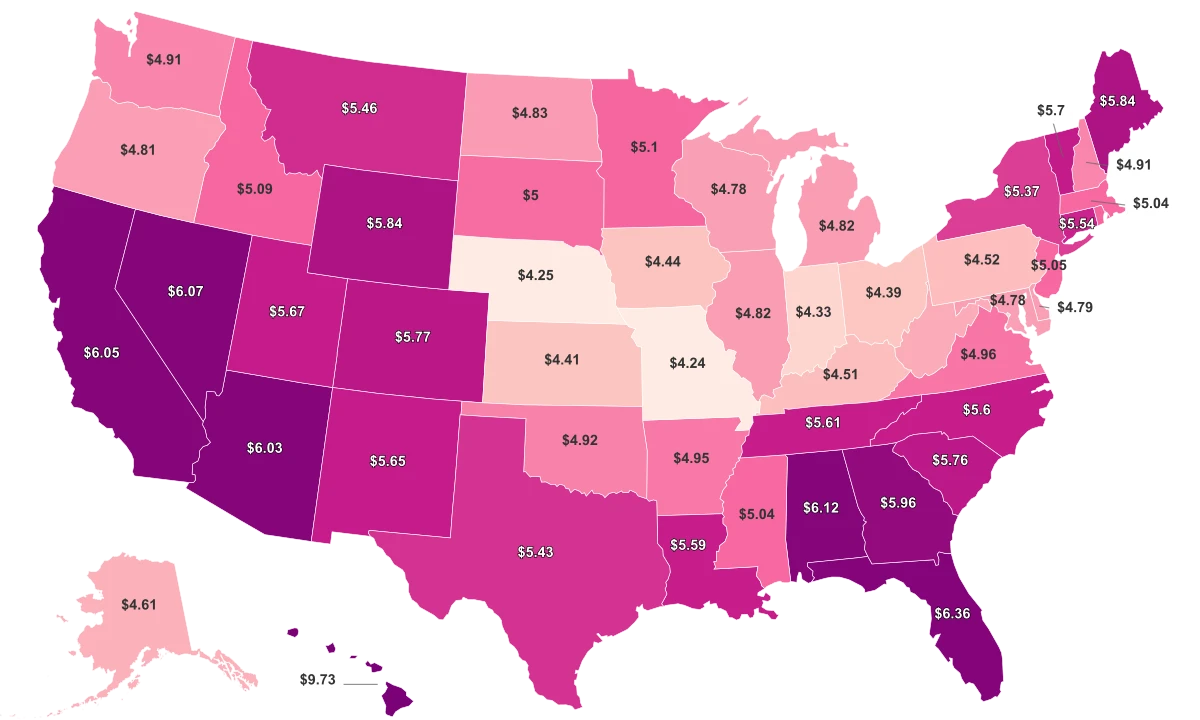
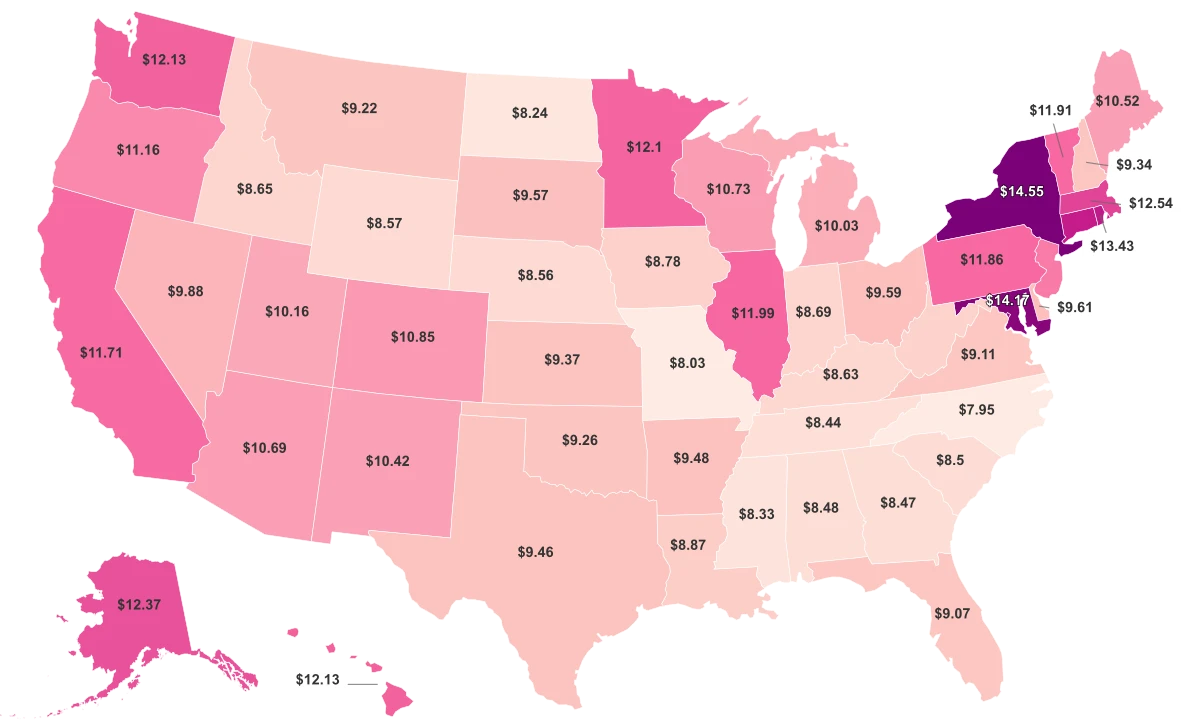
The price of a pack of cigarettes in the United States depends almost entirely on which side of a state line you are standing on. In 2025, according to data compiled by the Campaign for Tobacco-Free Kids, a single pack costs $14.55 in New York. In North Carolina, it costs $7.95. That $6.60 gap has nothing to do with the tobacco inside the package. It is a function of state tax policy.
A handful of high-tax states in the Northeast pull the whole picture upward. Most states price a pack under $10, but New York and its neighbors push the national average to $10.25. Maryland sits second at $14.17. The District of Columbia is third at $13.94. Rhode Island ($13.43) and Connecticut ($13.24) round out the top five.
The regional divide is clean. Northeastern states average $12.09 per pack. Western states average $10.61. The Midwest comes in at $9.64, and the South at $9.44. That $2.65 gap between the Northeast and the South is mostly explained by one variable: how much each state charges in excise taxes.
Prices have climbed sharply since 2020. Across all states, the average pack cost rose by roughly 44% in five years. But the increase was dramatically uneven: some states nearly doubled while others barely moved.
Cigarette Prices Rose 44% Since 2020, but Some States Nearly Doubled
Average pack price change from 2020 to 2025. Maryland, Colorado, and Oregon saw the steepest increases after passing new tobacco tax legislation.
All Metrics
| Region ↕ | Pack of Cigarettes Cost 2025↕ | Total Cigarette Taxes 2025↕ | Excise Tax 2025↕ | Cigarette State Sales Tax 2025↕ |
|---|---|---|---|---|
| New York | $14.55 | |||
| Maryland | $14.17 | |||
| District of Columbia | $13.94 | |||
| Rhode Island | $13.43 | |||
| Connecticut | $13.24 | |||
| Massachusetts | $12.54 | |||
| Alaska | $12.37 | |||
| Hawaii | $12.13 | |||
| Washington | $12.13 | |||
| Minnesota | $12.10 | |||
| Illinois | $11.99 | |||
| Vermont | $11.91 | |||
| Pennsylvania | $11.86 | |||
| California | $11.71 | |||
| New Jersey | $11.41 | |||
| Oregon | $11.16 | |||
| Colorado | $10.85 | |||
| Wisconsin | $10.73 | |||
| Arizona | $10.69 | |||
| Maine | $10.52 | |||
| New Mexico | $10.42 | |||
| Utah | $10.16 | |||
| Michigan | $10.03 | |||
| Nevada | $9.88 | |||
| Delaware | $9.61 | |||
| Ohio | $9.59 | |||
| South Dakota | $9.57 | |||
| Arkansas | $9.48 | |||
| Texas | $9.46 | |||
| Kansas | $9.37 | |||
| New Hampshire | $9.34 | |||
| Oklahoma | $9.26 | |||
| Montana | $9.22 | |||
| Virginia | $9.11 | |||
| Florida | $9.07 | |||
| Louisiana | $8.87 | |||
| Iowa | $8.78 | |||
| West Virginia | $8.75 | |||
| Indiana | $8.69 | |||
| Idaho | $8.65 | |||
| Kentucky | $8.63 | |||
| Wyoming | $8.57 | |||
| Nebraska | $8.56 | |||
| South Carolina | $8.50 | |||
| Alabama | $8.48 | |||
| Georgia | $8.47 | |||
| Tennessee | $8.44 | |||
| Mississippi | $8.33 | |||
| North Dakota | $8.24 | |||
| Missouri | $8.03 | |||
| North Carolina | $7.95 |
It Is Almost Entirely About the Tax
The relationship between a state's excise tax and its pack price is almost perfectly linear. The two metrics track each other with near-total consistency across all 51 jurisdictions.
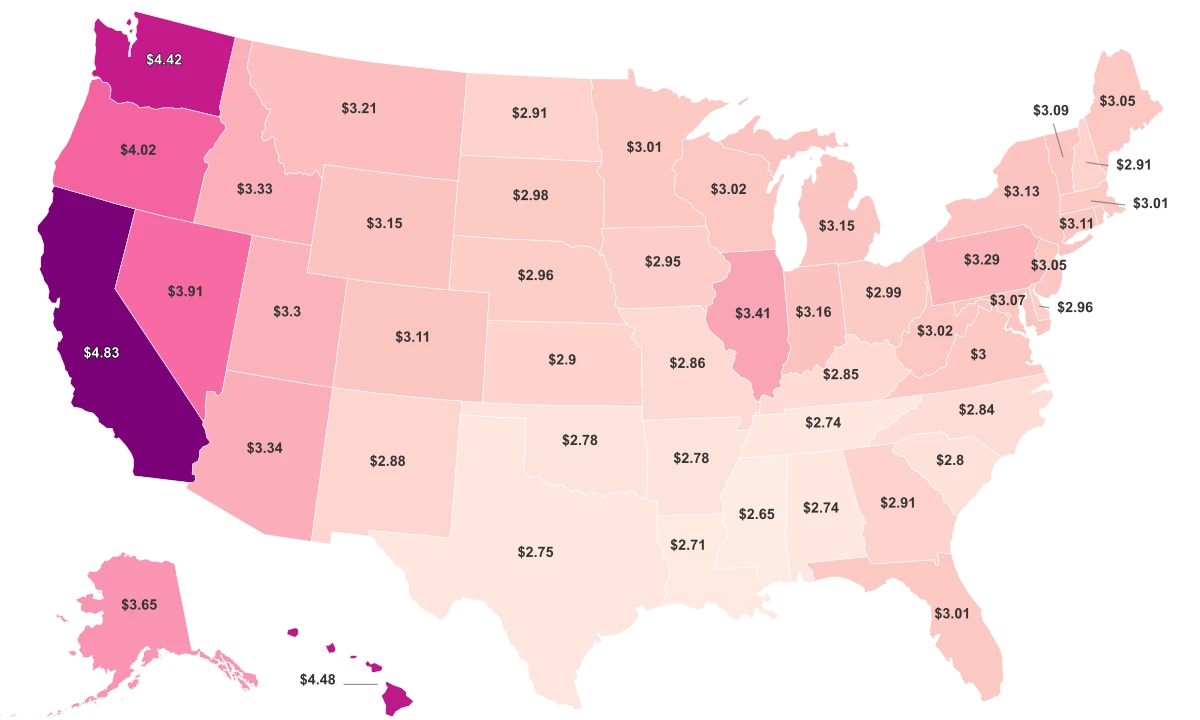
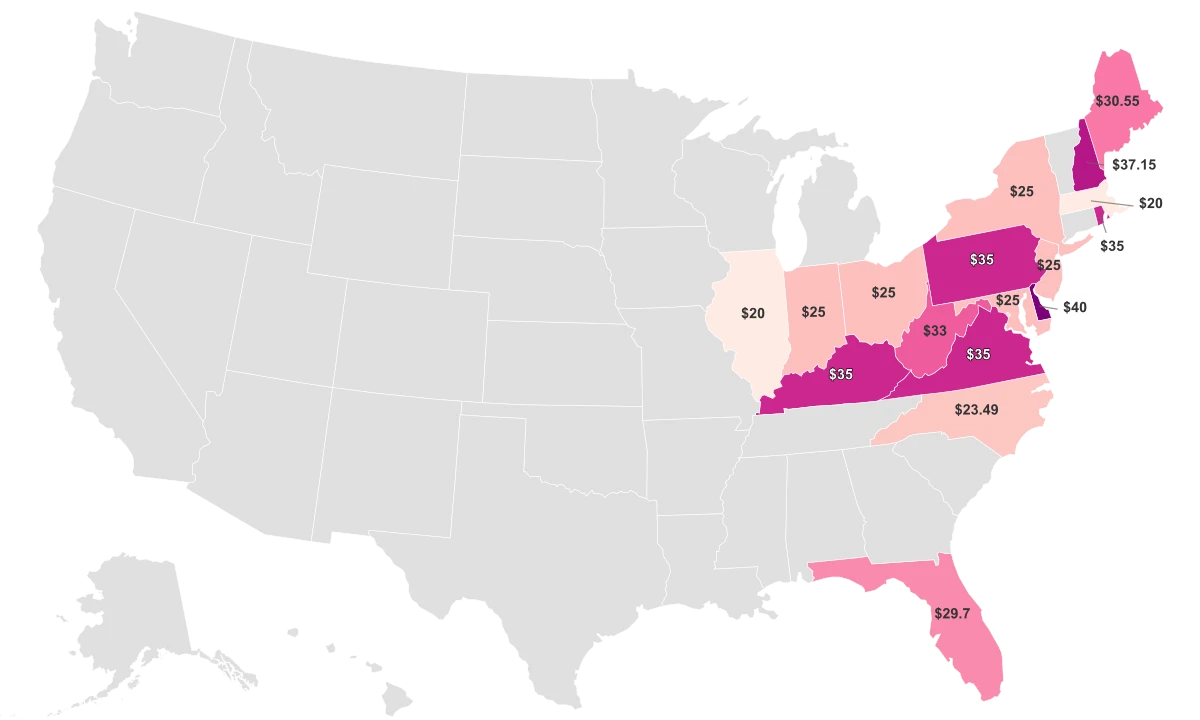
New York levies the highest excise tax at $5.35 per pack and charges the highest price. Missouri levies the lowest at $0.17 and charges the second-lowest. The gap between those two excise taxes is $5.18. The gap between the two pack prices is $6.52. Taxes account for nearly all of the difference.
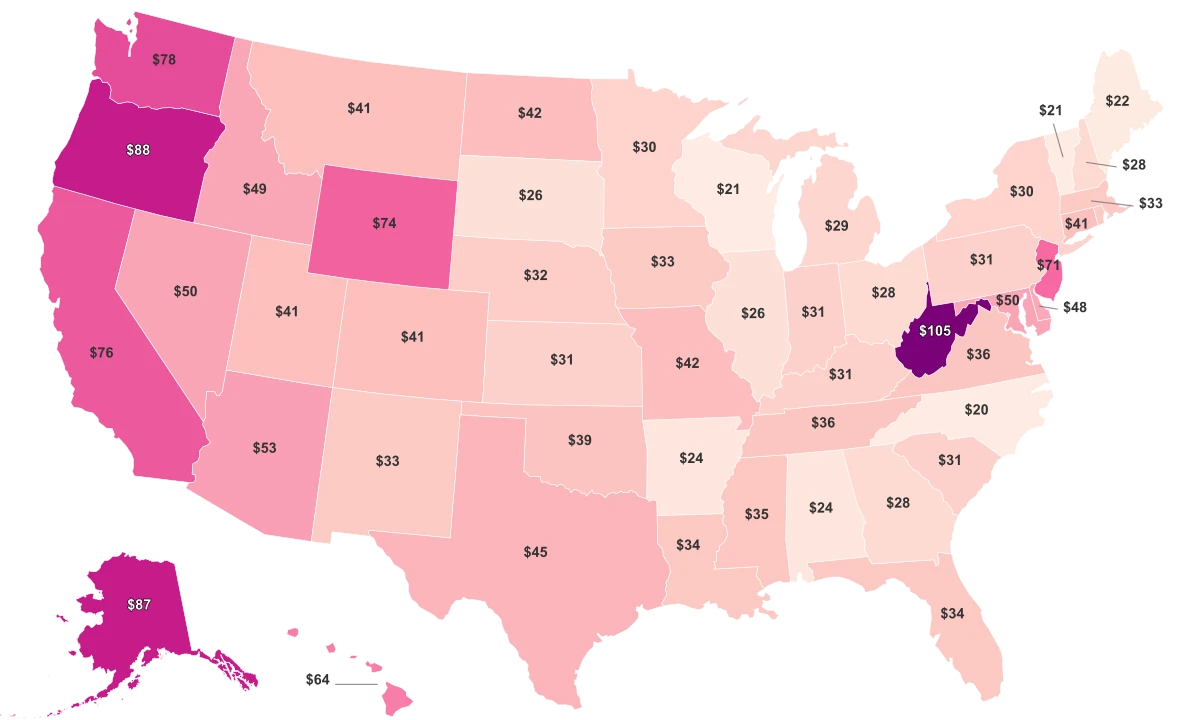
Every pack price includes two tax layers. The excise tax is a flat dollar amount per pack set by state legislation. It requires a legislative vote or a ballot initiative to change. The state sales tax is a percentage applied to the retail price, which fluctuates with cost. In most states, the excise tax is the much larger component. The Northeast averages $3.32 in excise taxes per pack compared to just $0.62 in sales taxes. The South averages $1.46 in excise and $0.46 in sales taxes.
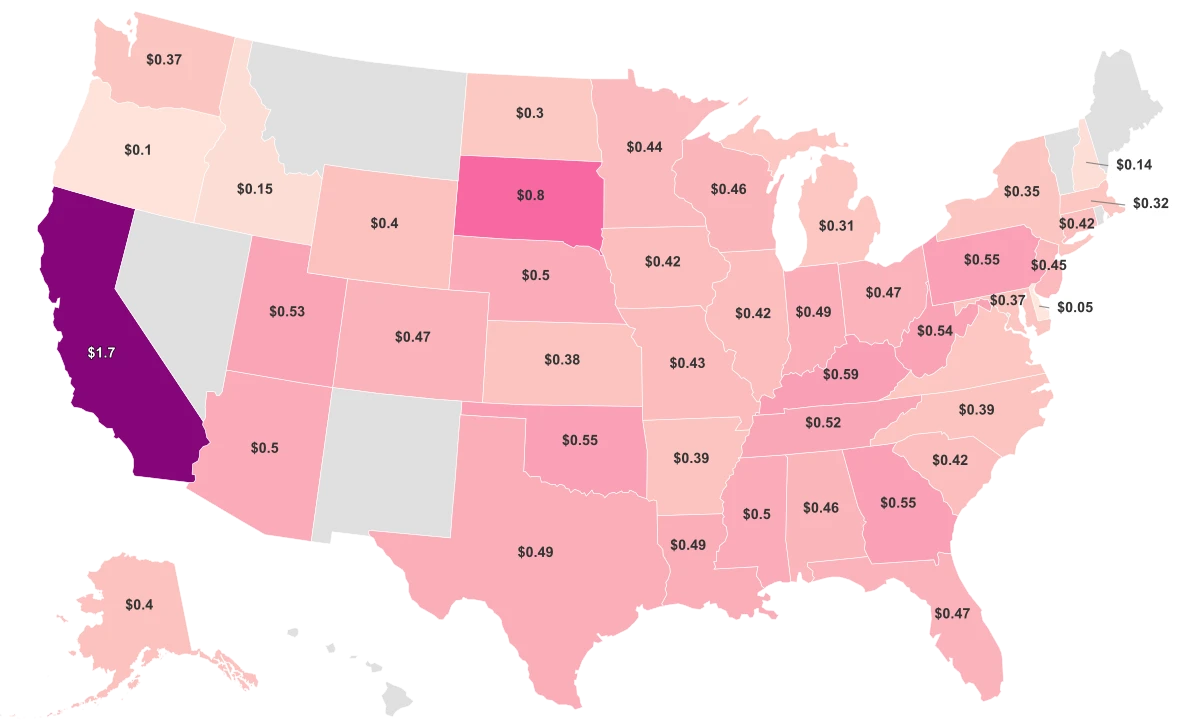
Six states charge no state sales tax on cigarettes at all: Delaware, Oklahoma, Alaska, Oregon, Montana, and New Hampshire. These states still appear across a wide range of the price ranking because their excise taxes vary enormously. Alaska charges a $2.00 excise and ranks 7th most expensive. New Hampshire charges $1.78 and sits in the bottom half.
Two States Jumped the Rankings in a Single Cycle
Most states shift position slowly. A few cents added to a sales tax might move a state one or two spots. But when a legislature passes a large excise tax increase, the effect is immediate and dramatic.
Maryland is the most striking recent example. In 2020, a pack cost $7.26 there, placing it 18th in the ranking. In May 2024, Governor Wes Moore signed the Budget Reconciliation and Financing Act, which raised the state's excise tax by $1.25 per pack, from $3.75 to $5.00. By 2025, a pack in Maryland cost $14.17. That is a 95% increase in five years, and the state jumped 16 spots to second place. The projected $91 million in new revenue was earmarked for K-12 education under the state's "Blueprint for Maryland's Future" program.
Colorado tells a similar story in slower motion. In November 2020, voters approved Proposition EE, which raised the cigarette tax from $0.84 per pack on a phased schedule reaching $2.64 by 2027. The measure also set minimum pack prices of $7.00, rising to $7.50 in 2024. Between 2020 and 2025, Colorado's average pack price climbed from $6.06 to $10.85, a 79% increase and a jump of 19 ranking spots, the largest of any state. The revenue funds universal preschool.
Oregon followed a similar trajectory, rising from $6.50 to $11.16 per pack, a 72% increase that moved it 12 spots up the ranking. In each case, the mechanism was the same: a discrete policy decision that reshaped the price map within a single legislative cycle.
New York's $1.1 Billion Smuggling Problem
The logic behind high cigarette taxes is straightforward: make smoking more expensive, and fewer people will do it. But when one state charges $14.55 per pack and its neighbor charges far less, the price gap creates its own economy.
New York has the most expensive cigarettes in the country and, by wide margin, the highest cigarette smuggling rate. A 2022 analysis by the Mackinac Center for Public Policy estimated that roughly 54% of cigarettes consumed in the state were smuggled from lower-tax jurisdictions. A separate 2024 Rutgers University study examined littered cigarette packs in New York City and found that only 16.6% bore the correct local tax stamp. The estimated annual revenue loss exceeds $1.1 billion.
The source states are predictable. Georgia charges an excise tax of just $0.37 per pack, the second-lowest in the nation. Virginia charges $0.60. Both sit within trucking distance of the Eastern Seaboard's largest market. A single van loaded with cigarettes purchased in Georgia and sold untaxed in New York City can generate tens of thousands of dollars in profit.
At the opposite end, Missouri illustrates how a low tax can become politically permanent. The state's $0.17 excise tax has not changed since 1993. Under the state's Hancock Amendment, significant tax increases require voter approval. Missouri voters have rejected cigarette tax increases at the ballot box four times: in 2002, 2006, 2012, and 2016. The result is a pack price of $8.03, almost half what New York charges, and a state that serves as a low-cost source for neighboring markets.
Do Higher Prices Actually Reduce Smoking?
The public health case for high cigarette taxes is well established. The CDC has consistently reported that increasing the price of cigarettes is one of the most effective tools for reducing tobacco consumption at the population level.
The economics are direct. Research published by the National Institutes of Health estimates that a 10% increase in cigarette prices reduces overall adult consumption by 3 to 5%. The effect on young people is even stronger: youth and young adults are two to three times more price-responsive than older smokers. A 2021 NIH simulation projected that a 40% tax-induced price increase could reduce adult smoking prevalence from 21% to 15.2% over two decades, saving an estimated $317 billion in medical costs.
The data in this ranking reflects that dynamic in real time. Between 2020 and 2025, the average pack price across all states climbed by roughly 44%. Over that same period, national adult smoking rates continued their long decline. States at the top of the price ranking, including New York, California, and Massachusetts, consistently report lower smoking prevalence than states at the bottom.
But the smuggling loophole complicates the picture. When more than half the cigarettes consumed in New York come from out-of-state sources, the effective price many smokers actually pay is well below $14.55. Public health researchers acknowledge this gap: the tax works best when neighboring states have comparable rates, and worst when dramatic tax differentials exist across short distances. The five cheapest states in this ranking are all in the South, where low excise taxes cluster together and cross-border shopping is unnecessary. That regional consistency, ironically, may make low taxes even stickier.
Sources & Notes
Average Retail Price Per Pack of Cigarettes with Exercise and State Taxes.
Combined amount of all taxes paid or total tax burden per package of cigarettes.
Tax amount imposed per pack of cigarettes sold.
Based on state sales tax percentage and the average price of a pack of cigarettes.