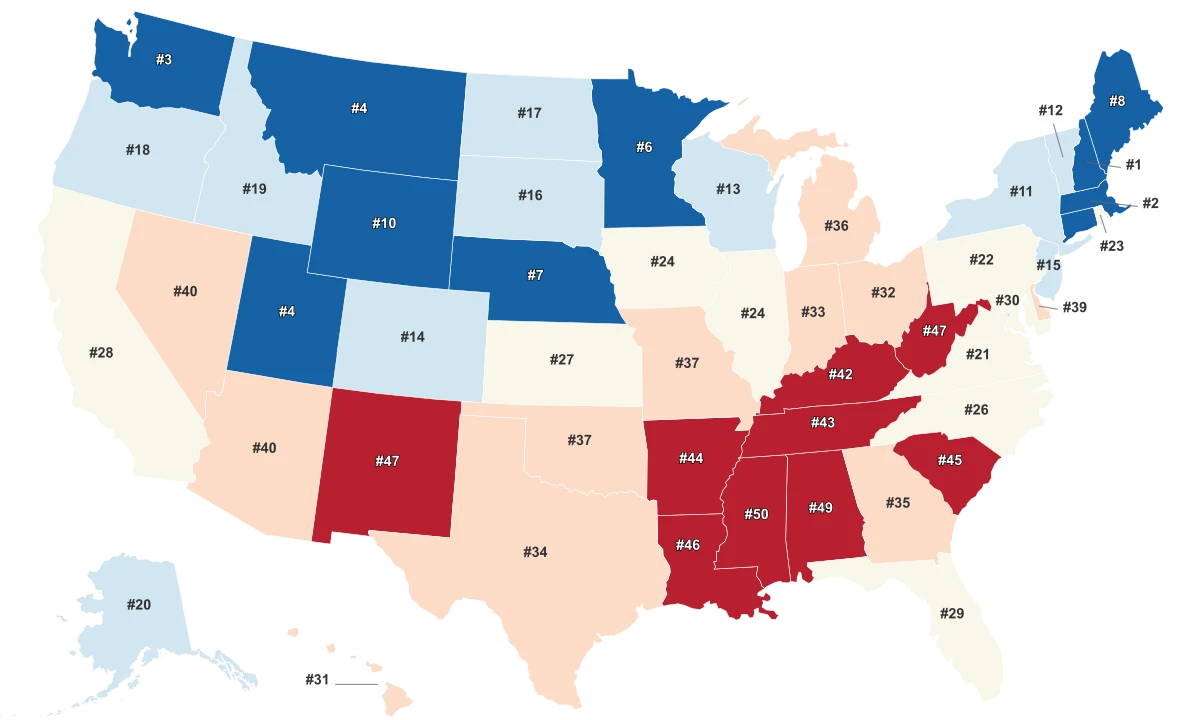
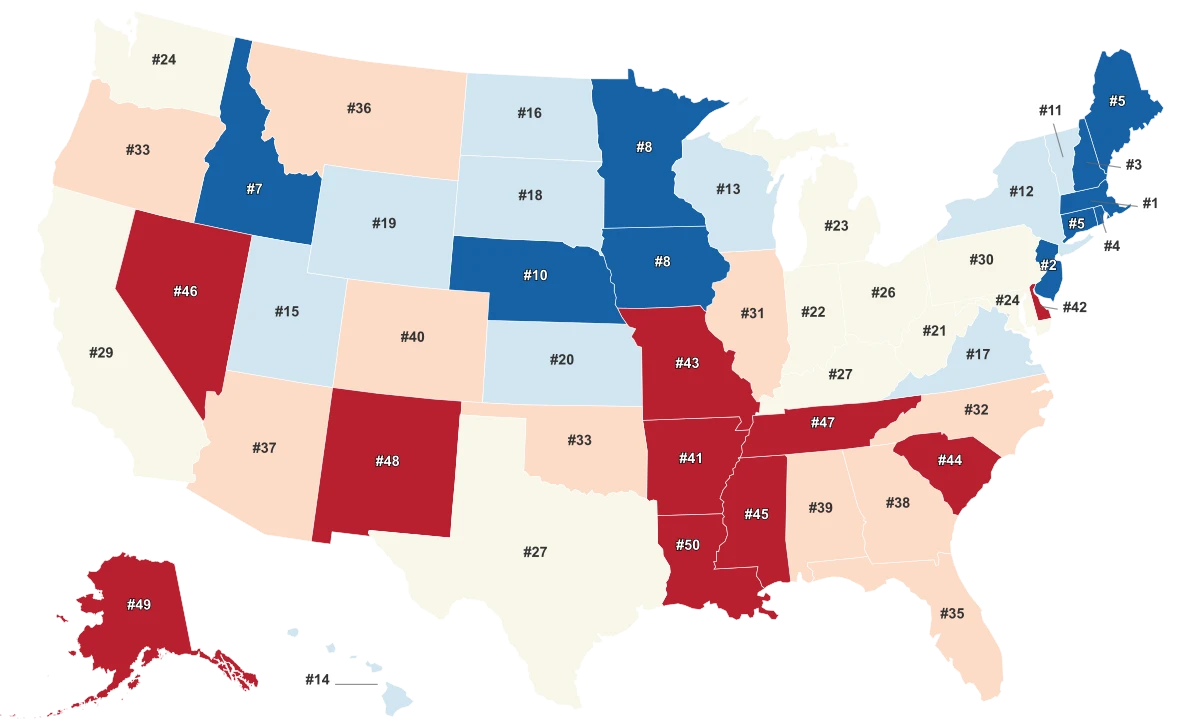
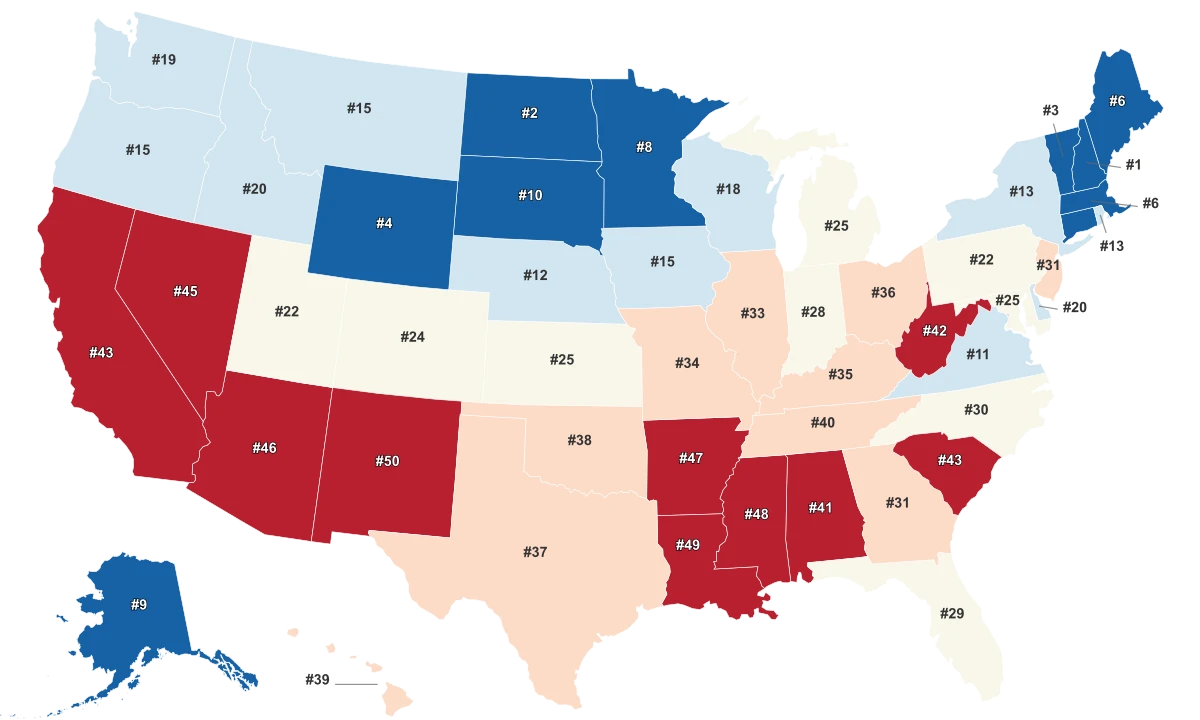
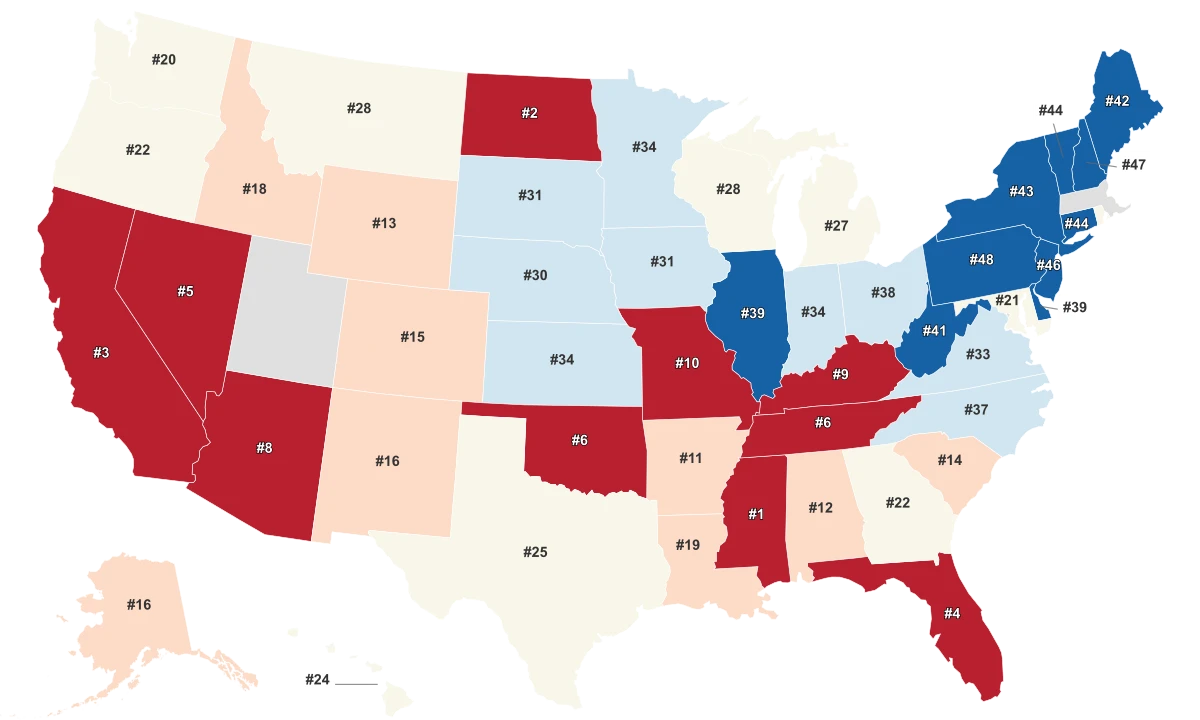
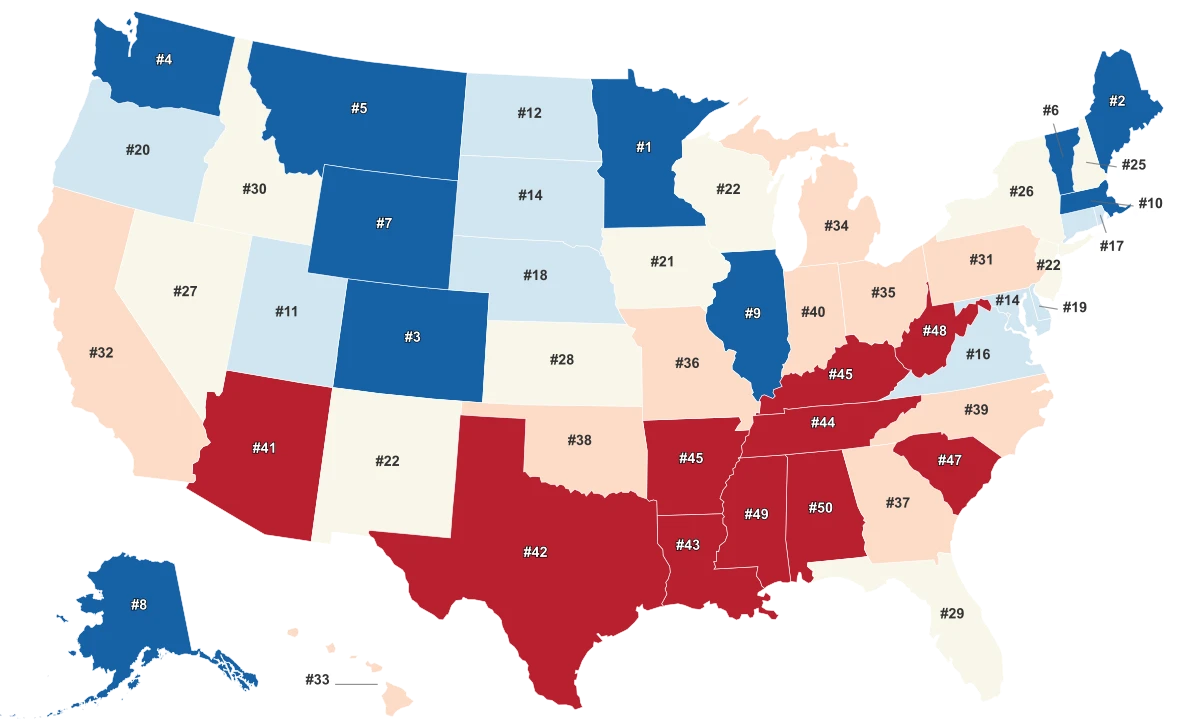
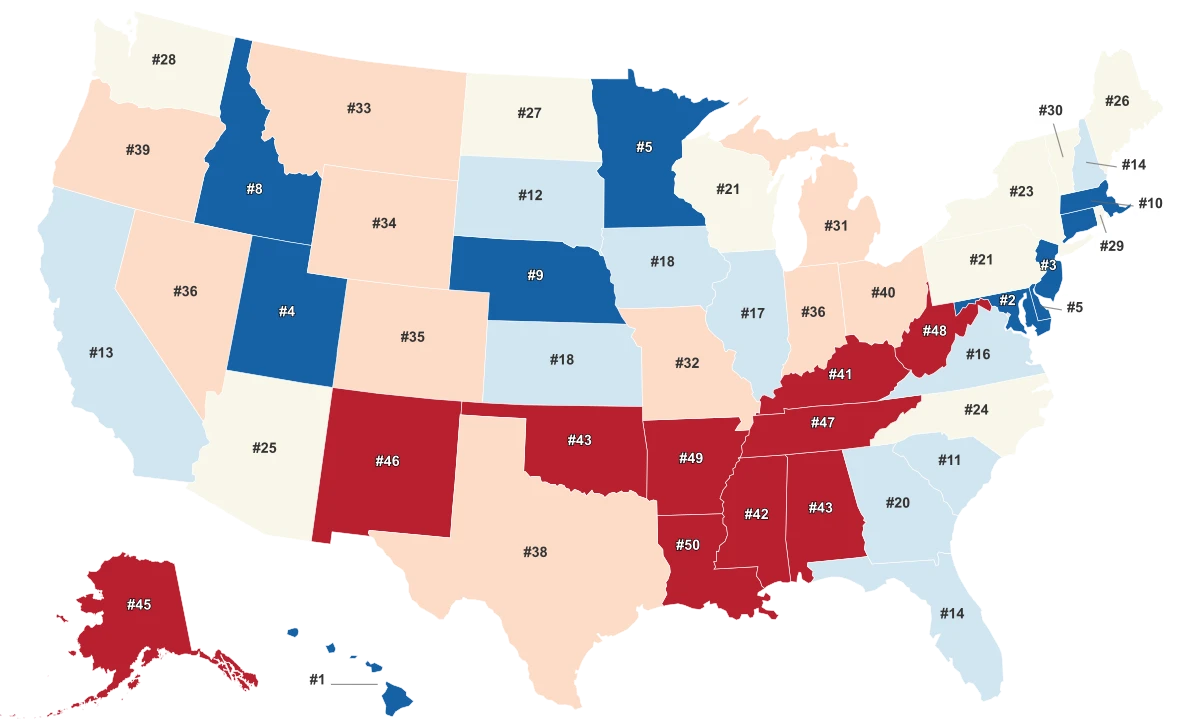
Best States To Start A Business

1 |  | Texas | 70.2 |
2 |  | Florida | 65.7 |
3 |  | New Mexico | 64 |
4 |  | Oregon | 63.9 |
5 |  | North Carolina | 63.3 |
6 |  | Wyoming | 63 |
7 |  | Georgia | 62.8 |
8 |  | Ohio | 61.7 |
9 |  | Colorado | 61.3 |
10 |  | Indiana | 61 |
11 |  | Nevada | 60.6 |
12 |  | Mississippi | 60.5 |
12 |  | Virginia | 60.5 |
12 |  | Arizona | 60.5 |
12 |  | Idaho | 60.5 |
16 |  | Washington | 60.1 |
17 |  | South Dakota | 59.9 |
18 |  | Oklahoma | 59.8 |
18 |  | South Carolina | 59.8 |
20 |  | Michigan | 59.4 |
21 |  | Missouri | 59.1 |
21 |  | Utah | 59.1 |
23 |  | Kentucky | 58.8 |
24 |  | Tennessee | 58.4 |
25 |  | California | 57.8 |
26 |  | Iowa | 57.4 |
27 |  | Nebraska | 56.9 |
27 |  | Minnesota | 56.9 |
27 |  | Louisiana | 56.9 |
30 |  | Delaware | 55.5 |
30 |  | Alabama | 55.5 |
32 |  | North Dakota | 55.3 |
33 |  | Massachusetts | 55.1 |
33 |  | Montana | 55.1 |
35 |  | Kansas | 54.4 |
36 |  | Pennsylvania | 54.2 |
37 |  | Wisconsin | 54 |
38 |  | Arkansas | 53.9 |
39 |  | West Virginia | 53.1 |
40 |  | Illinois | 52.6 |
41 |  | New York | 51.4 |
42 |  | New Jersey | 51 |
43 |  | Alaska | 50.2 |
44 |  | Maine | 49.5 |
44 |  | Maryland | 49.5 |
46 |  | Vermont | 48.8 |
47 |  | New Hampshire | 48.7 |
48 |  | Connecticut | 48.3 |
49 |  | Hawaii | 46.5 |
50 |  | Rhode Island | 43.3 |
Last updated May 24, 2025
Introduction
As the United States emerges from the shadows of the COVID-19 pandemic, entrepreneurship is back in the spotlight. With a burgeoning economy and the advent of new opportunities, many are contemplating taking the plunge into the world of business ownership. However, the success of a startup hinges significantly on its geographical location. The question innately arises - which states provide the optimal environment for nurturing a new business? The 'Business Friendliness Index Score' is a comprehensive score determined by comparing the 50 US states across three key dimensions: 1) Business Environment, 2) Access to Resources, and 3) Business Costs, using 25 relevant metrics.
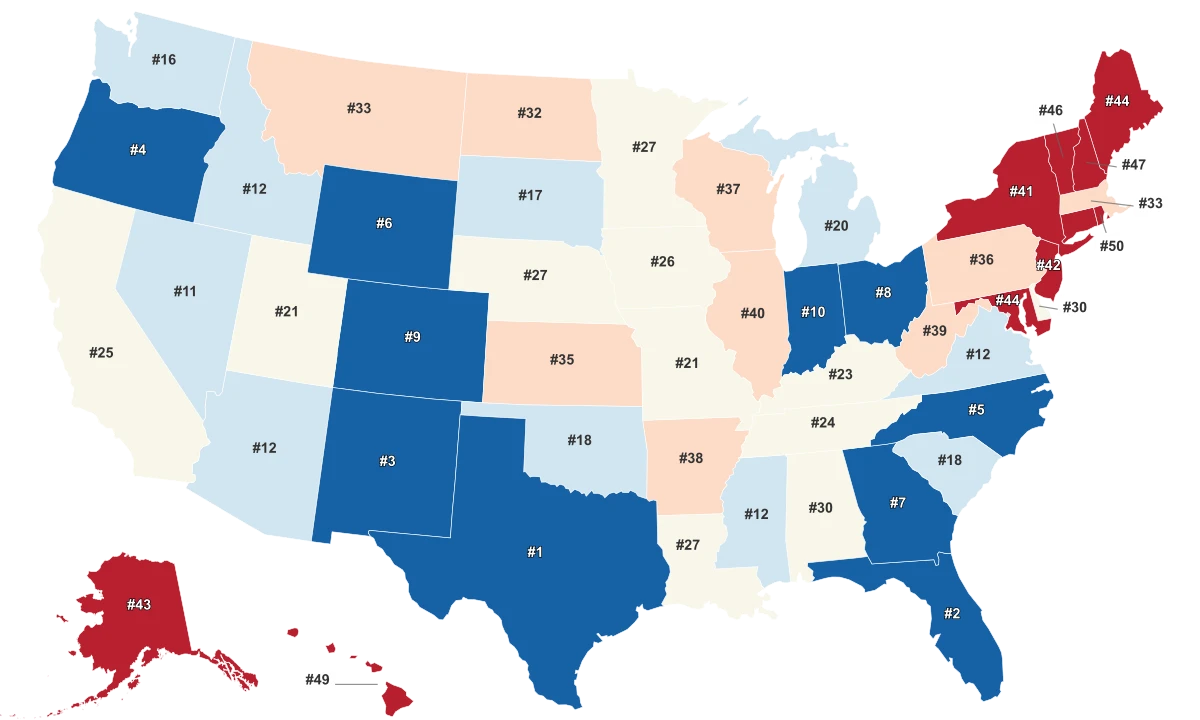
- Texas takes the crown as the most accommodating state in which to launch a business, boasting the highest 'Business Friendliness Index Score' of 70.2, thanks to its robust economy, low taxes, and friendly regulatory environment.
- Generally, states in the Southern and Western regions tend to rank higher in terms of business friendliness, with states like Texas, Florida, New Mexico, and Oregon scoring above 63.0 points.
- Surprisingly, traditional economic powerhouses like New York and California lag behind in this ranking, with scores of 51.4 and 57.8 respectively, due to higher business operating costs and relatively stricter regulatory systems.
- The data reveals the Northeastern states like Vermont, New Hampshire, and Connecticut, and the Island state of Hawaii, display less favorable conditions for startups due to factors such as high costs of living, complex regulation, and comparatively smaller markets.
- Available resources and business costs hold particular importance in determining a state's favorability towards startups. Wyoming, with a score of 63.0, stands out in these sectors with its abundant natural resources and competitive business costs, making it a lucrative choice for entrepreneurs.
All Metrics
| Region ↕ | Business Friendliness Index↕ | Business Environment Index↕ | Cost of Doing Business Index↕ | Business Funding & Resources Index↕ |
|---|---|---|---|---|
| Texas | ||||
| Florida | ||||
| New Mexico | 64.0 | |||
| Oregon | ||||
| North Carolina | ||||
| Wyoming | 63.0 | |||
| Georgia | ||||
| Ohio | ||||
| Colorado | ||||
| Indiana | 61.0 | |||
| Nevada | ||||
| Mississippi | ||||
| Virginia | ||||
| Arizona | ||||
| Idaho | ||||
| Washington | ||||
| South Dakota | ||||
| Oklahoma | ||||
| South Carolina | ||||
| Michigan | ||||
| Missouri | ||||
| Utah | ||||
| Kentucky | ||||
| Tennessee | ||||
| California | ||||
| Iowa | ||||
| Nebraska | ||||
| Minnesota | ||||
| Louisiana | ||||
| Delaware | ||||
| Alabama | ||||
| North Dakota | ||||
| Massachusetts | ||||
| Montana | ||||
| Kansas | ||||
| Pennsylvania | ||||
| Wisconsin | 54.0 | |||
| Arkansas | ||||
| West Virginia | ||||
| Illinois | ||||
| New York | ||||
| New Jersey | 51.0 | |||
| Alaska | ||||
| Maine | ||||
| Maryland | ||||
| Vermont | ||||
| New Hampshire | ||||
| Connecticut | ||||
| Hawaii | ||||
| Rhode Island |
Methodology
To determine the best states to start a business, the 50 states were compared across three key categories:
- Business Environment
- Cost of Doing Business
- Funding & Resource Availability Each of these was defined via individual metrics that were representative of the category. There were a total of 22 metrics which are listed below. Each metric was graded on a 100-point scale, with a score of 100 being the max. Each metric had state scores distributed from 0 to 100. Finally, each state’s weighted average was determined across all metrics to calculate category scores. These were then summed to generate the final rank order of the states.
Business Environment (50%)
- **State GDP Growth: Regular Weight (3.6 Points) - **This metric measures the yearly growth in Gross domestic product (GDP) in 2023.
- **State Job Growth: Regular Weight (3.6 Points) - **This metric measures the percent increase in employment count from 2022-2023.
- **Startups per 100K: Regular Weight (3.6 Points) - **This metric measures the number of new employer businesses per 100 people in 2021.
- **Five-Year Business Survival Rate: Triple Weight (10.7 Points) - **This metric measures the percent of businesses that are still active after five years.
- Entrepreneurship Index: Double Weight (7.1 Points) - This metric measures the percent of population that starts a new business in 2021.
- **Growth of Business Revenue: Double Weight (7.1 Points) - **This metric measures the percent increase in total business revenues.
- **Worker Productivity: Regular Weight (3.6 Points) - **This metric measures the amount of GDP per hour worked by employees.
- **Patent Creation Rate: Half Weight (1.8 Points) - **This metric measures the number of patents granted by the U.S. Patent and Trademark Office per 100k residents.
- Growth in Number of Small Businesses: Double Weight (7.1 Points) - This metric measures the percent growth in business applications from 2022 to 2023.
- **Job Training Support: Half Weight (1.8 Points) - **This metric measures the percentage of paid training programs offered by employers.
Cost of Doing Business (30%)
- **Livable Wage: Regular Weight (3.8 Points) - **This metric measures the income level that allows individuals or families to afford an adequate life.
- **Corporate Tax Rate: Double Weight (7.5 Points) - **This metric measures the percentage of tax on the profits of a corporation in 2023.
- **Labor Costs: Double Weight (7.5 Points) - **This metric measures the per capita income.
- **Formation Fees: Half Weight (1.9 Points) - **This metric measures the state filing fees for incorporating LLC business.
- **Unemployment Insurance Taxes: Regular Weight (3.8 Points) - **This metric measures the amount businesses have to pay to support the unemployment insurance benefit.
- Business Incentives/Tax Breaks: Regular Weight (3.8 Points) - This metric measures the percentage reduction of a company's tax liability to the state or federal government.
- **Energy Costs: Half Weight (1.9 Points) - **This metric measures the retail electricity price (cents/kWh).
Funding & Resource Availability (20%)
- **Small Business Loan Availability: Regular Weight (3.6 Points) - **This metric measures the percentage of available loans for small enterprises in 2023.
- **Business Regulation Index: Double Weight (7.3 Points) - **This metric measures the percentage of loans available for small enterprises in 2023.
- **Population Growth : Half Weight (1.8 Points) - **This metric measures the increase in total population from 2022-2023.
- **Venture Capital Investments: Regular Weight (3.6 Points) - **This metric measures the amount of venture capital investments per GDP.
- **Share of College Educated Workforce: Regular Weight (3.6 Points) - **This metric measures the college educated employees based on the total workforce in 2023.